![Fragment of portrait of Joachim Murat, Prince d’Empire, Grand Duke of Clèves and of Berg, King of Naples under the name of Napoleon in 1808 (1767-1815), Marshal of France in 1804 By François Gérard - [1] See full portrait:[2], Public Domain, https://commons.wikimedia.org/w/index.php?curid=264241](https://italynews.online/wp-content/uploads/2026/03/Murat2.jpg)
On 30 March 1815, a declaration was made in the Adriatic city of Rimini that would echo through Italian history for generations. “Italians! The hour has come to engage in your highest destiny… From the Alps to the straits of Sicily, there is but one cry — Italian independence.” The words were stirring, visionary, and historic. They were also written by a Frenchman – Gioacchino Murat.
Gioacchino Murat, known in French as Joachim, was at the time the King of Naples, a throne gifted to him by his brother-in-law, Napoleon Bonaparte. On the day he issued what became known as the Rimini Proclamation, he had just declared war on Austria and was desperately seeking Italian allies to help him hold onto his crown. His motives were nakedly self-interested. His legacy, as it turned out, was something else entirely.
The Rimini Proclamation is today widely regarded as the opening statement of the Risorgimento — the great political and cultural movement that would, over the following decades, awaken Italian national consciousness and ultimately unify the peninsula’s fractured states into a single nation. The man who issued it would be shot by a firing squad before the year was out.
A Frenchman on a Neapolitan throne
Murat’s path to Naples was entirely a product of Napoleonic Europe. Napoleon had originally installed his brother Joseph as King of Naples in 1806, but two years later moved him to Spain and placed Murat, husband of his sister Carolina, on the Neapolitan throne instead. It was a typically ruthless piece of dynastic reshuffling, and Murat — one of Napoleon’s most brilliant cavalry commanders — proved to be a surprisingly capable administrator. He reformed the University of Naples, introduced new scientific institutions, built new roads, and began work on what would become the Piazza del Plebiscito and the Church of San Francesco di Paola, landmarks that still define central Naples today.
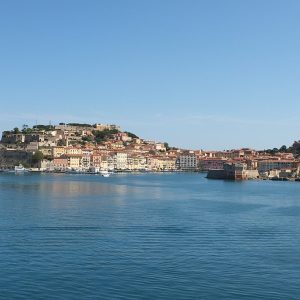
But his political survival always depended on Napoleon’s own fortunes, and when those began to collapse, Murat moved quickly. After Napoleon’s exile to Elba in 1814, he signed a treaty with Austria, pledging assistance against the French in the north in exchange for an Austrian guarantee that he would remain King of Naples. He occupied the Papal States and Tuscany as part of the arrangement. For a moment, his throne seemed secure.
Then Napoleon escaped from Elba.
The Rimini Proclamation and its aftermath
With his former patron marching back towards Paris, Murat faced a choice. He chose Napoleon and, with him, confrontation with Austria. To build support for the coming conflict, he issued the Rimini Proclamation, calling on all Italians to rise up against Austrian occupation and embrace their destiny as a unified, independent people. “Providence has called you to be an independent nation,” he wrote. It was the first political document to frame Italian independence in explicitly national terms, addressing all Italians as a single people rather than as the subjects of various competing states.
The irony that these words came from a Frenchman who had himself occupied Italian territory was not lost on contemporaries. But the power of the sentiment outlasted its cynical origins. The Milanese writer Alessandro Manzoni was moved enough to begin writing a poem about it that same year, Il proclama di Rimini. He abandoned it unfinished when Murat’s military campaign collapsed, but the fact that he began it at all speaks to the proclamation’s immediate resonance.
That collapse came swiftly. Murat’s forces were decisively defeated at the Battle of Tolentino in May 1815. His army disintegrated. He fled Italy for France, where Napoleon — in the final weeks before Waterloo — refused to receive him. His kingdom was restored to the Bourbon dynasty.
The last gamble
Murat refused to accept defeat. In the autumn of 1815, with a small band of loyal followers, he sailed back to the Italian coast, landing at Pizzo in Calabria with a plan to march north, rouse the population, and retake Naples. It was a spectacular miscalculation. Far from rallying to his cause, the locals seized him. He was imprisoned, tried, and sentenced to death.
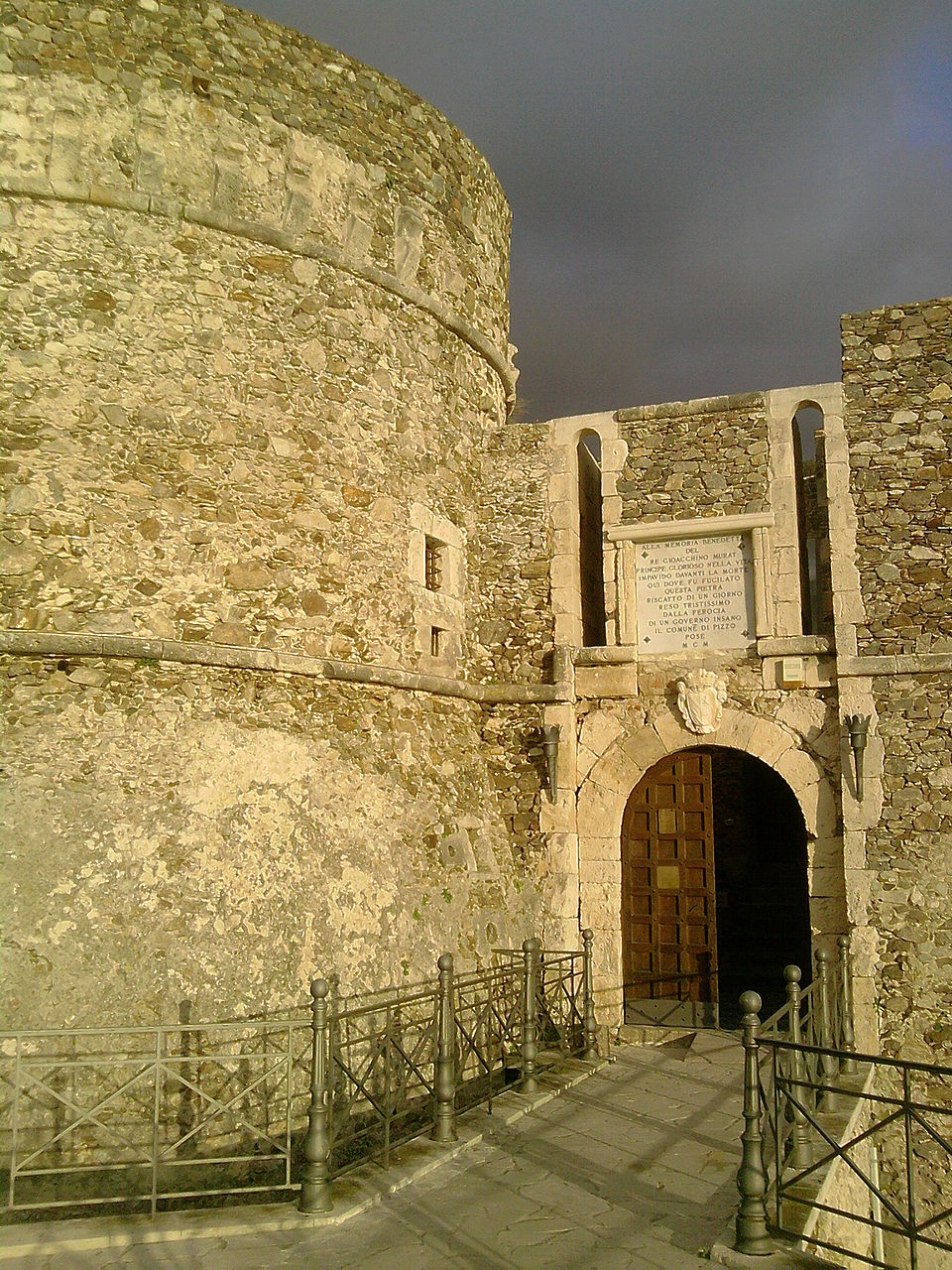
On 13 October 1815, Joachim Murat faced his firing squad in Pizzo. He declined the offer of a blindfold, arranged his own execution with characteristic theatrical flair, and died as he had lived, with considerable personal style and in circumstances largely of his own making.
He was 48 years old. Italy’s unification would come 46 years later.
A legacy larger than its author
Gioacchino Murat did not live to see what his words helped set in motion. The Risorgimento, the movement he inadvertently helped to launch from a coastal city in March 1815, would eventually — through the work of Mazzini, Garibaldi, Cavour and Victor Emmanuel II — produce the unified Kingdom of Italy in 1861. The Rimini Proclamation was not the cause of that transformation, but it was its first articulation: the moment when someone, however improbably, said out loud that Italy was one people with one destiny.
Pizzo, where Murat was executed, still commemorates his memory. His tomb is in the town’s Church of San Giorgio. The Piazza del Plebiscito in Naples, which he commissioned, bears his legacy in stone.