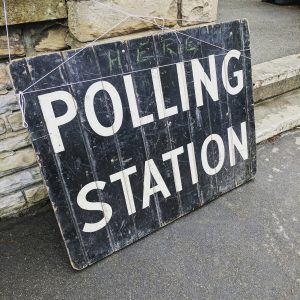
From a League candidate in a hijab to a Tunisian-Italian councillor hopeful, the mayoral contests playing out across 750 Italian municipalities this weekend are shaping up as a dress rehearsal for the 2027 general election. The local elections are also a snapshot of a country in the midst of demographic change.
Polls will close at 3pm on Monday in the second and final day of Italy’s spring local elections. Counting begins immediately after the close of polls.
More than six million voters across approximately 750 municipalities — including 18 provincial capitals — have been casting ballots in what commentators are calling the last major electoral test before next year’s general election. Venice is the highest-profile battleground, with the centre-left attempting to reclaim the city after a decade of centre-right rule under outgoing Mayor Luigi Brugnaro. Meanwhile, in Reggio Calabria, the dynamic is reversed, with the right seeking a breakthrough after years of Democratic Party governance.
Turnout has attracted attention for all the wrong reasons. First-day participation stood at 46.31% by 11pm on Sunday. The drop was particularly marked in Venice, where only 31.31% of voters had gone to the polls by 7pm on Sunday, compared with 36.20% at the same hour in the previous election.
A coalition under strain
The vote is exposing significant fractures within both major blocs. The centre-right heads into the count without the unity that reinforces its strength at national level. In several areas, coalition parties are running separately, with Lega dropping its own symbol in Crotone and fielding autonomous lists in Avellino, Chieti and Agrigento, while Forza Italia has pulled away in parts of Le Marche.
On the other side, the so-called “campo largo” continues to present itself with variable geometry, with the Democratic Party, Five Star Movement and the Greens and Left Alliance converging only partially, and frequently splitting in the most symbolically important cities.
The Vigevano question
Nowhere has the election thrown up a more striking paradox than in Vigevano, a Lombard industrial city of 62,000 people where 15% of the population is foreign-born. The city is held by Lega, whose national leader Matteo Salvini has argued that citizenship should be revoked for second-generation immigrants who commit crimes. Yet the local Lega mayoral candidate, jeweller Riccardo Ghia, made headlines when he placed two Muslim candidates on his councillor list — a calculated move to attract votes from immigrant communities.
One of the two, Italian-Egyptian Hagar Haggag, 20, who wears an Islamic headscarf and is studying diplomacy, said she had received a flood of insults and threats since her candidacy was announced. She told AFP she had “never felt racism” within the local section of the party, and said she was running partly to “put an end to the left-wing cliché that Muslim women are ignorant.” The other candidate, Ibrahim Hussein, a spokesman for the local prayer hall, presented his bid “in the name of Allah,” writing on Facebook that he chose Lega because he sees himself as “a real example of integration.”
Lega’s national leadership promptly distanced itself from both candidates. Meloni’s Brothers of Italy is supporting them. Forza Italia, meanwhile, is backing a different mayoral list entirely.
Hard-right and centre-left
The divisions may benefit Roberto Vannacci’s new hard-right party, Futuro Nazionale, whose local candidate has called for the closure of the Muslim prayer hall and army intervention against groups of young people near Vigevano’s station.
In previous local elections, Futuro Nazionale polled at 4.2% of the vote.
On the centre-left, 23-year-old Sabrine Hamrouni — daughter of a Tunisian construction worker who came to Vigevano in the 1990s — is also standing for a seat on the council. “I was born here. I have always lived here but I am still a foreigner,” she told AFP.
Reading the national mood
Sociologist Maurizio Ambrosini of Milan’s Università Statale notes that candidates with immigrant backgrounds remain relatively rare in Italian elections, where immigration is more recent than in France or Germany. “Many naturalised migrants tend towards the right,” he said; a trend the Vigevano candidacies bring into sharp relief.
With general elections expected in 2027, the governing coalition currently holds around 47.5% of projected seat share in national polls. However, rising energy prices and ongoing social tensions, including a further general strike announced for 29 May, are clouding the government’s outlook. How the balance of power shifts across Italy’s city halls tonight will be studied closely in Rome as an early indicator of the national mood.
Any municipalities failing to produce a first-round winner go to a run-off on 7 and 8 June.