On 7th March 1785, Italian writer Alessandro Manzoni was born in Milan. He would go on to shape the modern Italian language and produce what is widely regarded as the most important novel in Italian literature.
Manzoni is best known for his masterpiece, I promessi sposi (The Betrothed), a historical novel that helped define the development of a national literary language in Italy. Published in the early 19th century, the book is the first major novel written in modern Italian that could be widely understood across the country.
At a time when Italy was divided into different states and dialects, Manzoni deliberately revised his novel to reflect the Tuscan-based Italian that later became the national standard.
A novel that shaped a nation
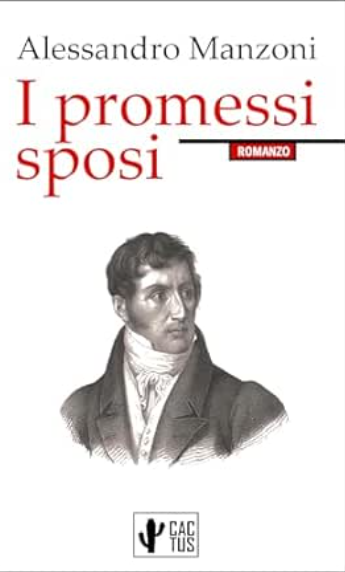
First published in 1825 and later revised in 1840–42, I promessi sposi tells the story of two young lovers, Renzo and Lucia. The tyrannical nobleman Don Rodrigo blocks their planned marriage. Set in 17th-century Lombardy during Spanish rule, the novel blends romance with detailed depictions of famine, plague and political injustice.
Beyond its literary value, the work resonated strongly with readers during the movement for Italian unification known as the Risorgimento. By portraying ordinary people struggling against oppression, the novel inspired patriotic sentiment and a shared cultural identity among Italians.
Today, I promessi sposi remains compulsory reading in many Italian schools and continues to influence Italian language, culture and popular expressions.
One famous line from the novel — “Questo matrimonio non s’ha da fare” (“This marriage is not to be performed”) — is still widely used in Italy, often humorously, when referring to weddings or plans that have been blocked.
Inspiration from Lake Lecco
Although born in Milan, Manzoni spent part of his childhood in Lecco, on the shores of Lago di Lecco, an eastern branch of Lake Como. The dramatic scenery of mountains and lake landscapes inspired the setting for much of I promessi sposi.
More than two centuries later, readers still visit Lecco to see locations associated with the story. Among the most famous is the historic fishing district of Pescarenico. It appears in the novel as the site of Padre Cristoforo’s convent and the lakeshore where Lucia escapes by boat from Don Rodrigo’s men.
The district retains much of its historic character, with narrow streets and lakeside buildings. A 19th-century inn that once served fishermen now survives as the well-known restaurant Trattoria Vecchia Pescarenico, which specialises in seafood and remains a popular stop for visitors exploring Manzoni’s Lecco.
The legacy of Alessandro Manzoni
Manzoni’s influence extended beyond literature. His careful work on language helped standardise Italian at a time when regional dialects dominated everyday speech.
The writer died in 1873 at the age of 88 after falling on the steps of the Church of San Fedele in central Milan. Today a statue of Manzoni stands in nearby Piazza San Fedele.
![Fragment of portrait of Joachim Murat, Prince d’Empire, Grand Duke of Clèves and of Berg, King of Naples under the name of Napoleon in 1808 (1767-1815), Marshal of France in 1804 By François Gérard - [1] See full portrait:[2], Public Domain, https://commons.wikimedia.org/w/index.php?curid=264241](https://italynews.online/wp-content/uploads/2026/03/Murat2-300x300.jpg "On this day: Gioacchino Murat issues Rimini Proclamation")