On 17th May 1510, Florence lost the painter who gave the Renaissance its most enduring face. Sandro Botticelli was a man whose genius was forgotten almost as soon as he died, and whose rediscovery centuries later would reshape how the world understood Italian art.
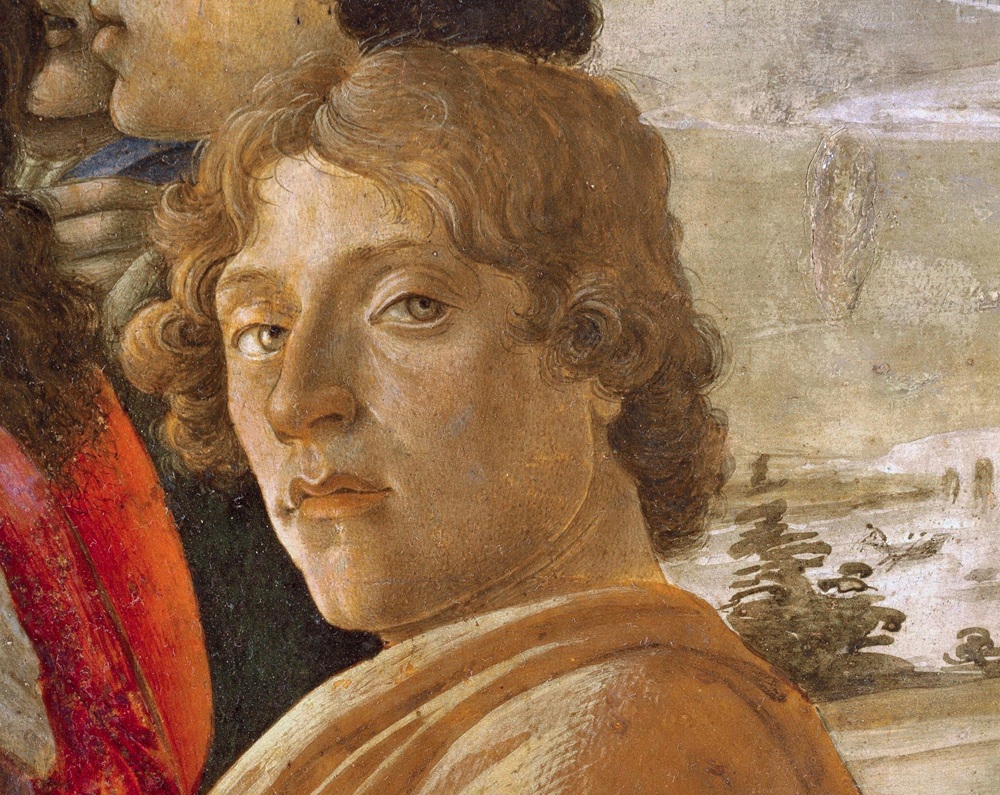
Alessandro di Mariano di Vanni Filipepi, born in Florence around 1445 and known to the world as Sandro Botticelli, was one of the defining painters of the Early Renaissance. His nickname derived from that of his elder brother Giovanni. A pawnbroker he was known as botticella (fat barrel); Sandro’s name Botticelli meant “little barrel.”
The son of a tanner, the young Botticelli was known for his sharp wit, his love of practical jokes, and a reputation as a restless, hyperactive and impatient child. His precocious talent was recognised early, and he was withdrawn from school and sent to work as an apprentice. He started life as a goldsmith, before entering the studio of Fra Filippo Lippi.
The Medici years
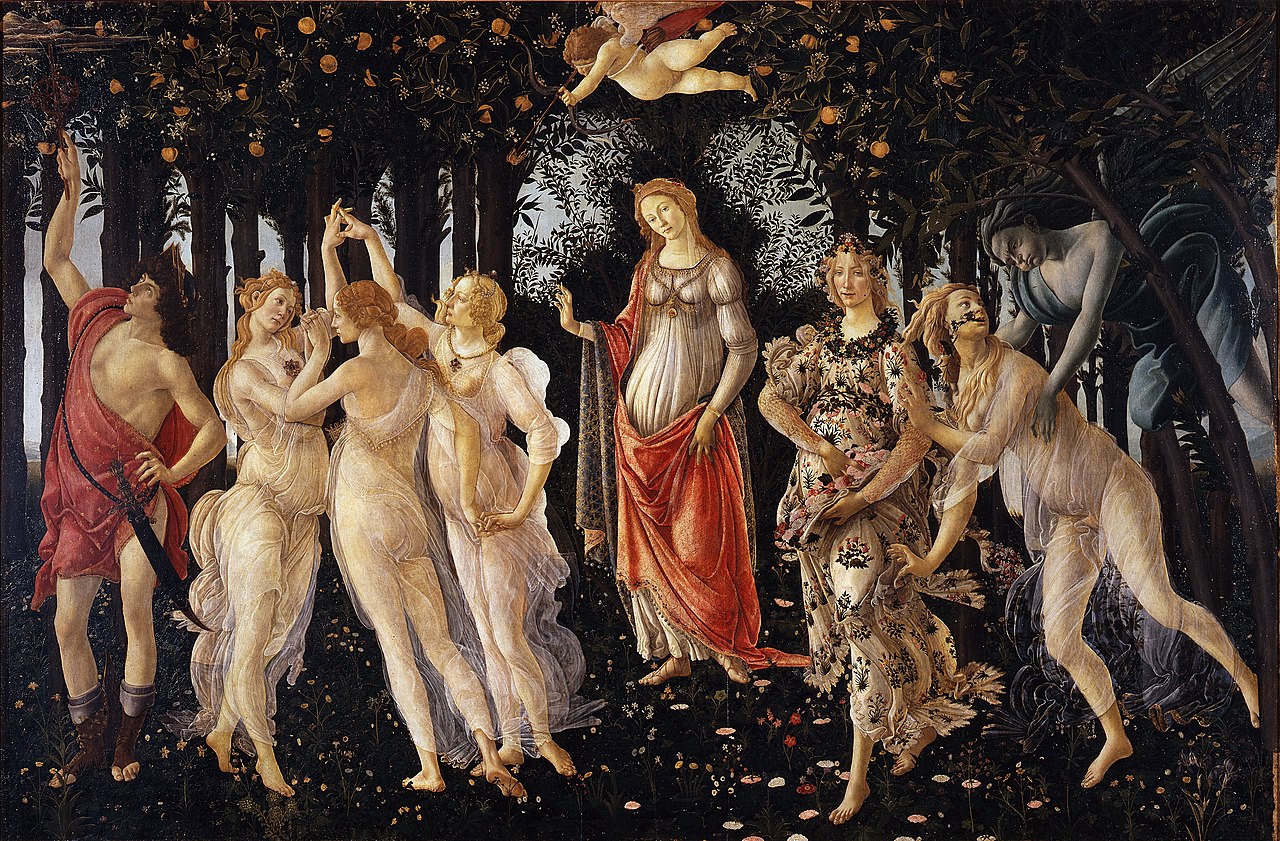
Botticelli spent almost all his life working for the Medici family and their circle including the Vespucci family, for whom he painted some of his most ambitious secular works, including Primavera, now in the Uffizi. Around 1478–81 he entered his artistic maturity; all tentativeness disappeared and was replaced by a consummate mastery.
In 1481 he was among a team of Florentine and Umbrian artists summoned to Rome to decorate the Sistine Chapel; three of his finest religious frescoes, completed in 1482, can still be seen there. Though the chapel would later be dominated by Michelangelo’s ceiling, Botticelli’s contributions, including scenes from the life of Moses, remain masterworks in their own right.
His mythological canvases, above all The Birth of Venus (c.1485, painted on canvas) and Primavera (painted on wood), established an aesthetic vocabulary for the Renaissance. These two paintings are often said to epitomise for modern viewers the spirit of the Renaissance itself.
Bridging the Renaissance eras
The Early Renaissance period (c.1400-1490) saw a boom in innovation as the Medici family in Florence gave patronage to many artists. Brunelleschi, Donatello adn Massacio pioneered linear perspective and classical proportions and Botticelli joined them.
Botticelli’s early work is the peak of the Early renaissance style. he focused on crisp outlines rather than hazy sfumato (smokiness). And during the 1470s-1480s, he created Primavera and The Birth of Venus, embodying the era’s love for mythology and decorative beauty.

When he was in his 50s, Michelangelo, da Vinci and Raphael dominated what has become known as the High Renaissance period (c. 1490-1527). This period demanded ‘realism’ with muscular figures and a serious study of anatomy to achieve this. Botticelli’s rather more ethereal figures started to look old-fashioned. And then enter the priest Savonarola.
Did he burn his own paintings?
The turbulent political climate in Florence marked the end of Botticelli’s career. The firebrand preacher Savonarola rose in popularity. Botticelli’s own relationship with him is up for question. Giorgio Vasari claimed he became a zealous devotee who gave up painting, and was “sor ardent a partisan” that he burned his own works during the “Bonfire of the Vanities” in the Piazza della Signoria.
There is no conclusive, contemporary proof that Botticelli burned some of his works. However, there are relatively few secular works of his surviving from his late period, so it is plausible.
There was also the change in Botticelli’s style as he moved away from Neoplatonic, sensual towards a distorted sombre approach. His late work often rejected the new perspective techniques of the High Renaissance, returning to a flatter, more medieval-looking aesthetic to emphasise spiritual intensity over physical realism.
Decline and Death

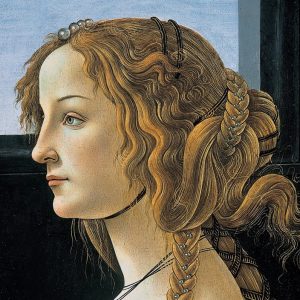
Vasari, who was writing later, suggests that as his work fell out of favour, Botticelli became melancholic and depressed. He had never married, yet there was his alleged muse – Simonetta Vespucci, the most beautiful woman in Florence, who died very young. Having always been known for his high spirits and quick wit, the image of his final years as a rapid decline into poverty, isolation and mental anguish is a poignant one.
The cause of his death has not been widely documented. Vasari described him as impoverished and disabled in his last years. He was buried in his neighbourhood church of Ognissanti near to Simonetta Vespucci. It is the same parish in which he had been born some six decades earlier and where his workshop was in Via Porcellana.
Forgotten then reclaimed
Botticelli’s posthumous reputation suffered more thoroughly than that of almost any other major European artist. His paintings remained in the churches and villas for which they had been made, and his Sistine frescoes were eclipsed by Michelangelo’s later ceiling. After his death, his name all but disappeared.
It was not until the late nineteenth century that he was rediscovered, first by the Pre-Raphaelites, who stimulated a wholesale reappraisal of his work. Yet today, The Birth of Venus is among the most reproduced images in Western art history.