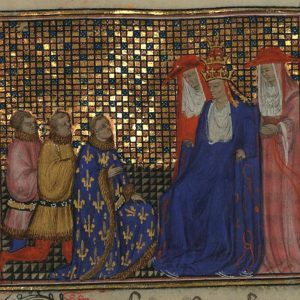
29 May 1415: Baldassare Cossa, reigning as Pope John XXIII, is formally deposed by the Council of Constance after fleeing the city in disguise. The Council’s decision brought one of the most colourful and scandalous careers in Church history to an end.
On 29th May 1415, the Council of Constance pronounced itself supreme, ordered the arrest of John XXIII and formally deposed him, then received Gregory XII’s resignation, condemned Benedict XIII, and elected Pope Martin V. Quite a busy day! It thus finally restoring unity to a Church that had been split between rival claimants for nearly four decades.
The man deposed that day, Baldassare Cossa, had arrived at the papacy via a route that no Church reformer would have designed. Born on the island of Procida in the Bay of Naples around 1370, he is said to have begun life as a soldier, and quite possibly as a pirate. His two brothers were, by some accounts, sentenced to death for piracy by King Ladislaus of Naples.
After this unpromising start, Cossa studied canon law at the University of Bologna and entered the service of Pope Boniface IX in 1392, becoming archdeacon of Bologna and then Cardinal Deacon and papal legate in Romagna. He was remembered as unscrupulous, ambitious, and, by the standards of even a corrupt medieval Church, exceptionally immoral. He seduced, by various accounts, a remarkable number of women, and maintained links with local bandit gangs he used to intimidate rivals and attack carriages on the roads.
Three popes at once
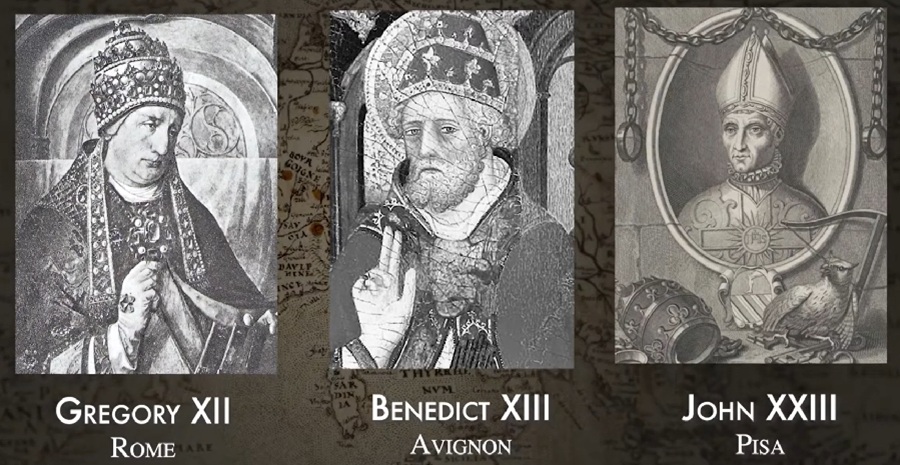
He came to power at the height of the Western Schism — the great fracture in the Catholic Church that had produced simultaneous claimants to the papacy from Rome and Avignon since 1378. The papacy had resided in Avignon since 1309, when political turmoil made Rome ungovernable. However, Gregory XI returned it to Rome in 1377. A year later, following Gregory’s death and the election of Urban VI, a group of French cardinals declared the election invalid and installed Clement VII at Avignon. There were then two competing popes and two competing lines of succession.
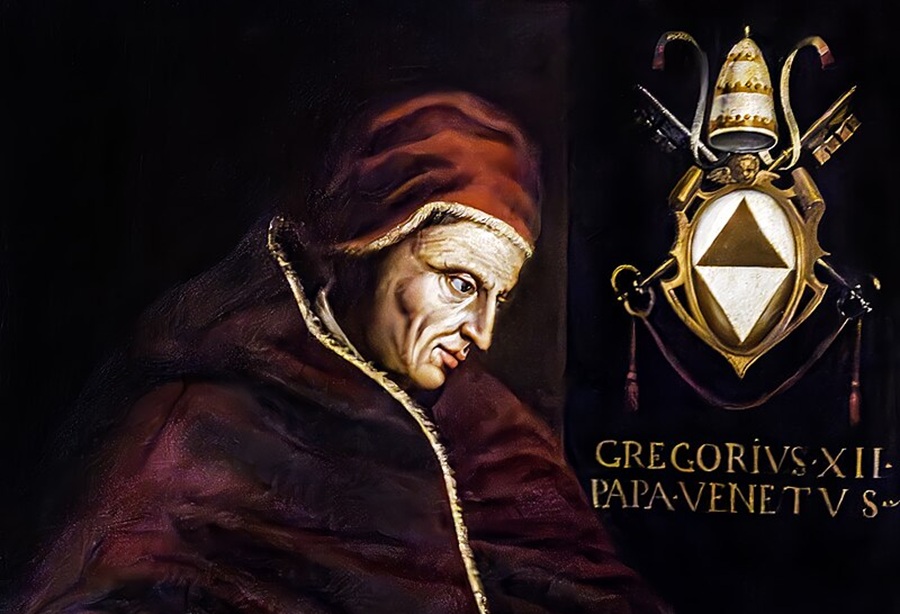
The attempt to resolve the crisis by a third route only made things worse. The Council of Pisa in 1409, at which Cossa was a leading figure, deposed both Gregory XII and Benedict XIII and elected Alexander V. But since neither of the deposed claimants accepted the decision, there were briefly three simultaneous popes.
Alexander V died on 3 May 1410 and was succeeded by Cardinal Baldassare Cossa as John XXIII. The speed of the transition raised eyebrows. Cossa was ordained a bishop and consecrated pope within a day of his predecessor’s death in Bologna, where the two had been together. The circumstances prompted speculation, then as now, about the cause of Alexander’s convenient demise.
As pope, John XXIII made the Medici Bank the official bank of the papacy, a relationship that would prove mutually advantageous in more ways than one. His main political enemy remained King Ladislaus of Naples, who continued to support the Roman claimant Gregory XII. When Ladislaus took Rome in 1413, Cossa fled to Florence, where he met the Holy Roman Emperor Sigismund of Luxembourg. Sigismund pressed him to convene a general council to resolve the schism once and for all.
The flight from Constance
The Council of Constance opened on 5 November 1414. Although most members acknowledged the Council of Pisa and its candidate John, political rivalries soon arose. Eventually, the Germans, English, and French demanded the abdication of John, Gregory, and Benedict alike. On 2 March 1415, John agreed to resign if his rivals would do the same. Then, on the night of 20 March, he fled Constance for Schaffhausen, in the territory of the Duke of Austria, hoping to deprive the council of its authority and cause its disintegration.
It did not work. He was compelled to flee again, this time to Burgundy, but the Duke of Burgundy refused him safe conduct and he retreated to Freiburg instead. Formally deposed in the twelfth session on 29 May 1415, John made his submission and commended himself to the mercy of the council. He had been tried in absentia on charges of piracy, rape, sodomy, murder, and incest — charges whose full veracity later historians have questioned, though few have argued that his character was misrepresented in spirit.
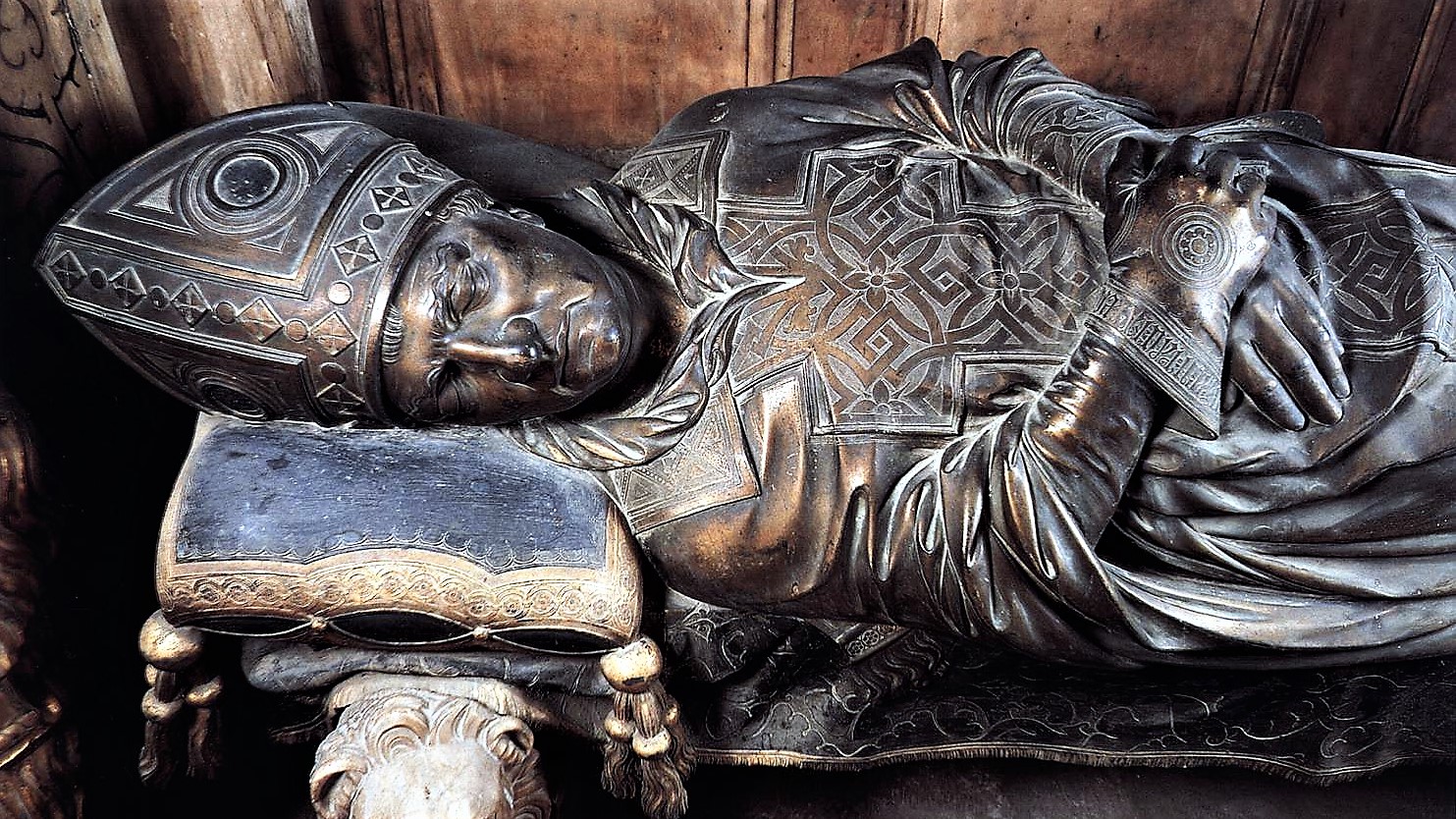
After being caught in Germany and handed over to Ludwig III, Elector Palatine, Cossa was imprisoned for three years until the Medici paid a large ransom for his release. In a final twist, Pope Martin V, the man elected to replace him, appointed Baldassare Cossa Cardinal Bishop of Frascati. He died in Florence in 1419, and the Medici commissioned Donatello and Michelozzo to create a magnificent tomb for him in the Battistero di San Giovanni, inscribed simply: Ioannes quondam papa — John, the former pope — despite protests from Martin V.
Consigned to antipope status
When Angelo Roncalli from Bergamo was elected pope in 1958, there was uncertainty over whether he should be called John XXIII or John XXIV. The new pope resolved the question by declaring himself John XXIII — consigning Baldassare Cossa definitively to the footnotes of history as Antipope John XXIII.