From a Rome notary’s office in 1966 to over 100 nature reserves today, WWF Italy says its diamond anniversary is a stepping stone rather than a finish line.
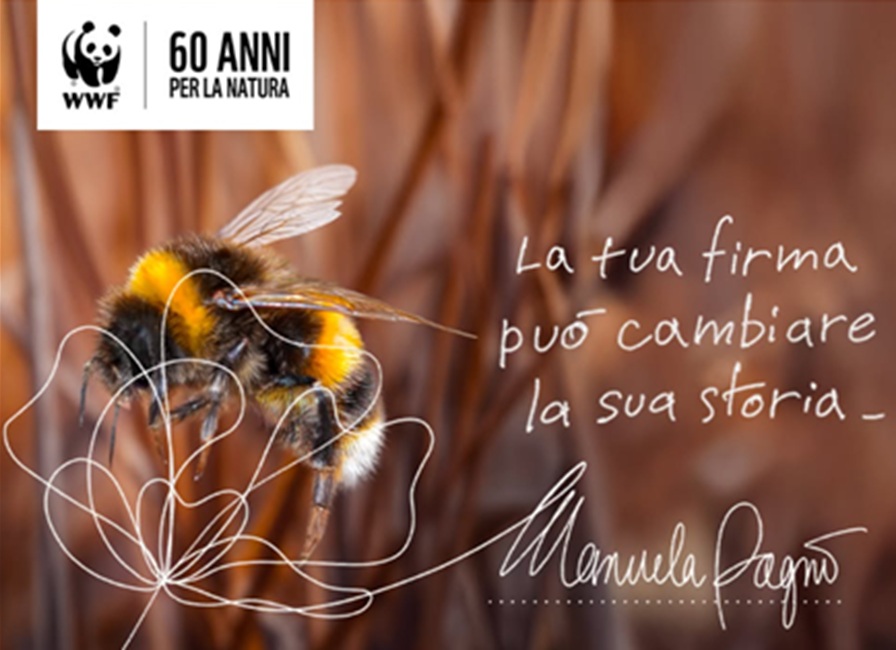
WWF Italy celebrates 60 years since its founding on 5 July, marking six decades since a small group of pioneers led by Fulco Pratesi established the organisation in a Rome notary’s office in 1966.
Quirinale meeting and a papal blessing
To mark the occasion, a WWF delegation led by president Luciano Di Tizio met Italy’s president Sergio Mattarella at the Quirinale Palace, presenting him with the first copy of a new book, WWF 60 anni per la natura, charting the association’s six decades of work in Italy.
Pope Leo XIV sent an apostolic blessing for the occasion, encouraging the organisation to continue its work of raising awareness and caring for creation. In his message, the Pope called for a shift away from simply collecting data toward genuine care, urging a form of ecological conversion capable of transforming both personal and collective ways of living.
A long list of public figures who have supported WWF over the years — among them Luca Argentero, Fiorello and Licia Colò — contributed messages of support, compiled into a video released to mark the anniversary.
From near-total neglect to institutional influence
WWF Italy was founded at a moment when environmental protection barely featured in Italian public life: in the 1960s, as the country underwent rapid industrialisation, just 0.6 per cent of its territory was protected, hunting was widespread, and wetlands were routinely earmarked for drainage rather than conservation.
Against that backdrop, the organisation’s first Oasis was created in 1967 with the purchase of hunting rights at Lake Burano, laying the foundation for a protected-area network that today spans more than 100 Oasis sites and over 30,000 hectares. From its earliest years, WWF Italy also invested in environmental education, giving younger generations direct experience of nature in the belief that conservation depends on cultural change as much as legal protection.
The 1970s saw the organisation lead efforts to save the Apennine wolf from extinction through its Operation San Francesco, alongside campaigns against pesticide use and habitat destruction. The following decade brought the “10% Challenge,” a call for a tenth of Italian territory to be placed under protection — pressure that contributed to the creation of Italy’s environment ministry in 1986 and to landmark legislation including the Galasso law.
The 1990s marked a shift from protest to structured environmental governance, with WWF Italy playing a role in the 1991 framework law on protected natural areas, the creation of new national parks, and the rollout of the Natura 2000 network, while also engaging with the international sustainability agenda that emerged from the 1992 Rio Earth Summit. From the 2000s, climate change moved to the centre of the organisation’s work, with campaigns on energy transition, emissions reduction and renewable energy running alongside continued efforts against habitat loss and illegal wildlife trafficking.
Recent wins and a call for deeper change
More recently, WWF Italy has campaigned against plastic pollution, championed pollinator protection and sustainable fishing, and backed forest conservation. The organisation says it played a role in enshrining environmental protection in the Italian constitution in 2022 and in pushing for the European Union’s Nature Restoration Law, while its Oasis network has increasingly become a testing ground for habitat restoration and sustainable land management.
Looking ahead, president Luciano Di Tizio said the anniversary marked not an achievement to rest on but a step toward larger and more pressing challenges still to come. He pointed to the international goal of protecting at least 30 per cent of land and sea areas by 2030 and restoring 20 per cent of degraded ecosystems, and stressed the need to accelerate away from fossil fuels toward renewables, citing Europe’s heatwaves as a stark reminder of the stakes.
Director general Alessandra Prampolini said nature protection needed to be built more deeply into economic models themselves, from the circular economy to sustainable food, urban and water systems. She argued that neither regulation nor technology alone could deliver that shift, and that lasting change would depend on stronger community engagement, education, and cooperation between governments, civil society and business.