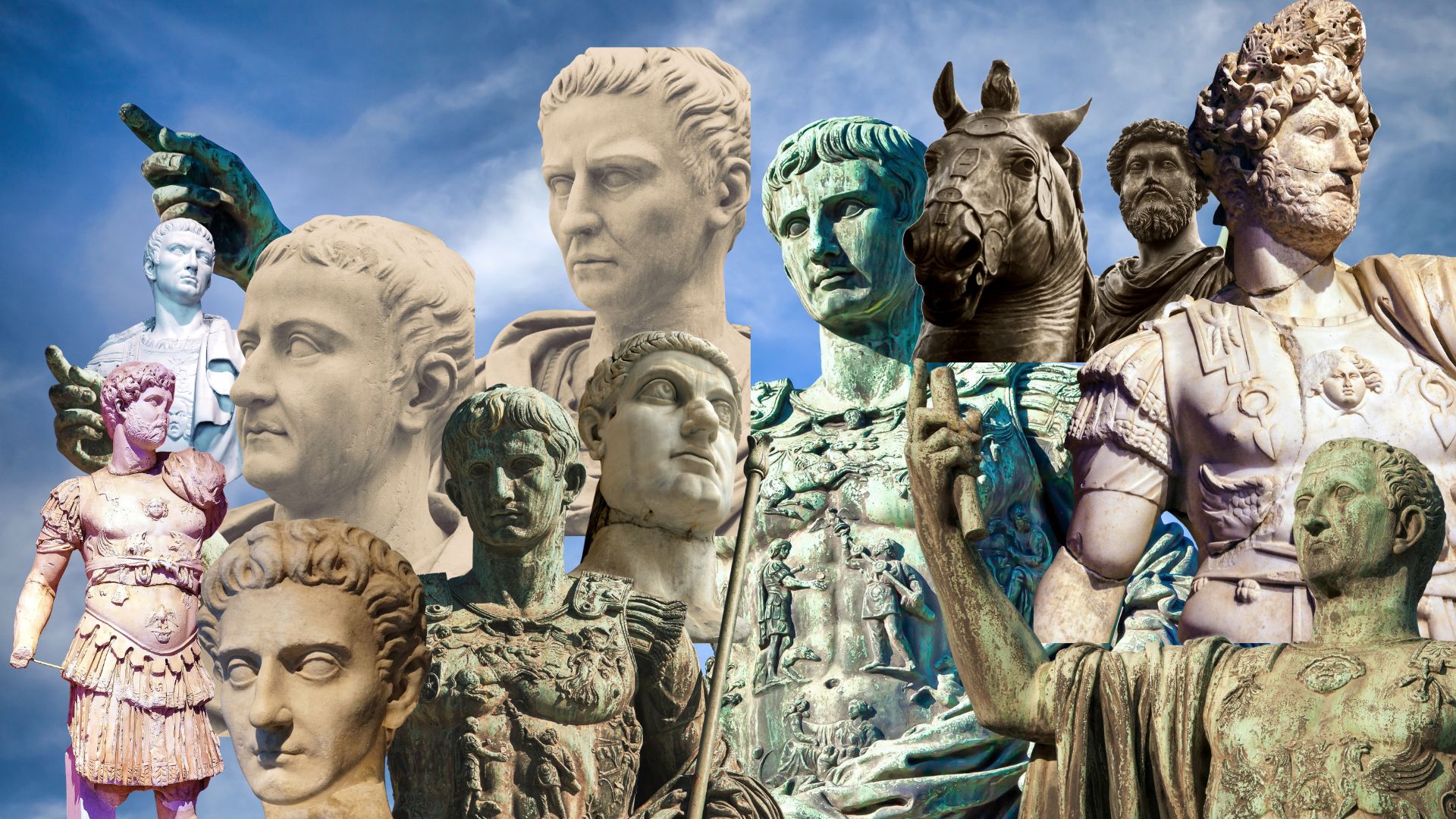
From Augustus to the last emperors of the West, the story of Rome is, in large part, the story of the families who fought, adopted and murdered their way onto the throne. This is a guide to the dynasties that shaped the Roman Empire.
When people talk about the Roman Empire, they often picture a single, continuous entity ruled by an unbroken line of emperors. The reality was far messier. Over nearly five centuries, power in Rome passed through a series of distinct families, some connected by blood, others stitched together through adoption, marriage, or outright conquest. Understanding these dynasties is one of the clearest ways to make sense of Roman history, since each family’s rise and fall tended to correspond with a distinct era of expansion, stability, or crisis. For a broader introduction to the empire itself, see our companion piece on what the Roman Empire was.
This guide takes each of the major dynasties in turn, from the family that created the imperial system to the ones that presided over its slow fragmentation in the West.
The Julio-Claudian dynasty (27 BC–AD 68)
The Julio-Claudian dynasty was, in every sense, the founding house of imperial Rome. It takes its name from two aristocratic Roman families that became intertwined through marriage: the Julii Caesares, the family of Julius Caesar, and the Claudii Nerones, one of Rome’s oldest and most distinguished patrician clans.

The dynasty began with Augustus, Julius Caesar’s adopted heir, who took the reins of the Roman state after the chaos of civil war following Caesar’s assassination in 44 BC. In 27 BC, Augustus was granted extraordinary powers by the Senate, a moment generally treated as the formal beginning of the Roman Empire itself. He would rule for over four decades, reshaping Rome’s government, economy and military into a system built to outlast him.
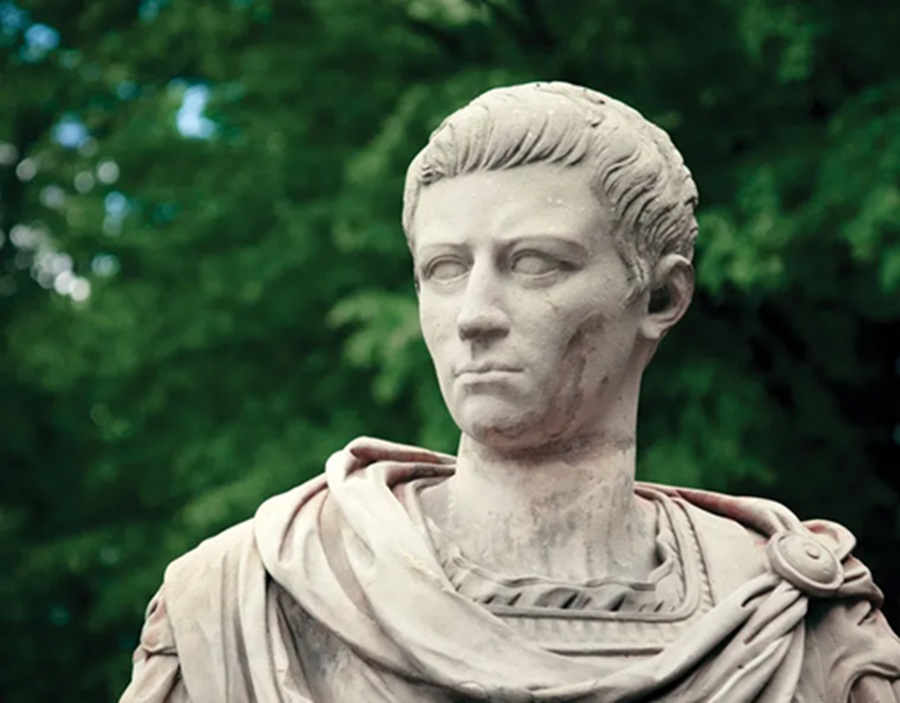
Augustus was followed by four more emperors, each connected to the founding family through blood or adoption: Tiberius, his stepson; Caligula, his great-nephew; Claudius, Caligula’s uncle; and finally Nero, Claudius’s stepson and adopted heir. It is worth noting that Caligula was arguably the first genuinely “Julio-Claudian” emperor in the strictest sense, since he was the first to carry blood from both the Julian and Claudian branches of the family simultaneously.
Notorious rulers
The Julio-Claudian era produced some of Rome’s most notorious rulers. Tiberius grew increasingly withdrawn and paranoid in his later years, retreating to the island of Capri. Caligula‘s short reign became a byword for erratic and cruel behaviour.
Claudius, initially dismissed by his own family as unfit to rule, proved to be a capable administrator who oversaw the conquest of Britain. Nero, the last of the line, is remembered for his extravagance, his persecution of Christians following the Great Fire of Rome in AD 64, and his eventual suicide in AD 68 as rebellion closed in around him. His death brought the dynasty, and the Julian bloodline’s direct hold on power, to an end.
The Year of the Four Emperors and the rise of the Flavians (AD 69–96)
Nero’s death without an heir plunged Rome into a year of brutal civil war, remembered as the Year of the Four Emperors. Galba, Otho and Vitellius each seized power in rapid succession during AD 69, none of them lasting long enough to establish anything resembling stability.
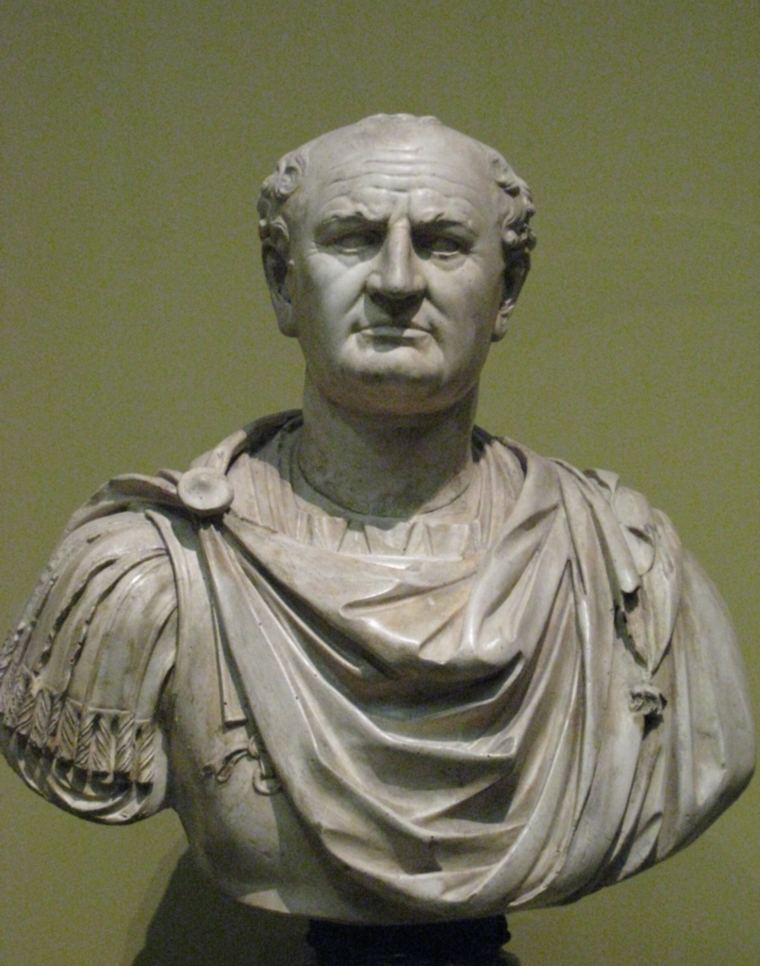
Order was eventually restored by Vespasian, a general who had made his name commanding Roman forces during the Jewish revolt in Judaea. Vespasian founded the Flavian dynasty, a shorter-lived but historically significant family that ruled from 69 to 96 AD. Unlike the Julio-Claudians, the Flavians came from relatively modest provincial origins rather than Rome’s oldest aristocracy, and their rise reflected a changing empire in which military command increasingly mattered more than ancient bloodline.
Vespasian’s reign was defined by reconstruction and major public works, most famously the beginning of construction on the Flavian Amphitheatre — better known today as the Colosseum. His elder son, Titus, completed the project after succeeding his father in 79 AD, though Titus’s own reign is remembered chiefly for the catastrophic eruption of Mount Vesuvius that same year, which buried the cities of Pompeii and Herculaneum.
The dynasty’s final ruler, Domitian, Vespasian’s younger son, proved a far more controversial figure. His increasingly autocratic style of rule alienated the Senate, and he was assassinated in a palace conspiracy in 96 AD, bringing the Flavian line to an abrupt end.
The Nerva-Antonine dynasty and the “Five Good Emperors” (AD 96–192)
What followed is often regarded, even by contemporary Roman historians, as something close to a golden age. The Nerva-Antonine dynasty was unusual in that it was held together not primarily by blood, but by adoption. It was a system in which each emperor selected and formally adopted a capable successor rather than relying on biological inheritance.

The line began with Nerva, an elderly senator chosen to restore stability after Domitian’s assassination. Nerva’s short reign was followed by four emperors traditionally grouped together as the “Five Good Emperors”: Trajan, Hadrian, Antoninus Pius and Marcus Aurelius .
Trajan presided over the Roman Empire’s greatest territorial extent, pushing its borders into Dacia and Mesopotamia. Hadrian, his successor, took a different approach, consolidating and fortifying the empire’s frontiers. His wall across northern Britain remains one of the most visible surviving monuments of Roman rule anywhere in the former empire. Antoninus Pius oversaw a long, largely peaceful reign, while Marcus Aurelius, remembered today as much for his philosophical writings as his generalship, spent much of his rule defending the empire’s borders against Germanic incursions.
The adoptive system that had served the dynasty so well broke down with Marcus Aurelius’s decision to be succeeded by his biological son, Commodus, rather than another adopted heir. Commodus’s reign was erratic and self-aggrandising, and he was assassinated in 192 AD — strangled by his own wrestling partner while bathing — bringing the Nerva-Antonine dynasty to a violent close.
Crisis, the Severans, and the Year of the Five Emperors (AD 193–235)
Commodus’s murder triggered another period of instability, known as the Year of the Five Emperors, echoing the chaos that had followed Nero’s death over a century earlier. Pertinax, who may well have had a hand in orchestrating Commodus’s assassination, lasted barely three months before he too was killed. A rapid succession of further claimants followed until Septimius Severus, a general born in North Africa, emerged victorious and established the Severan dynasty.
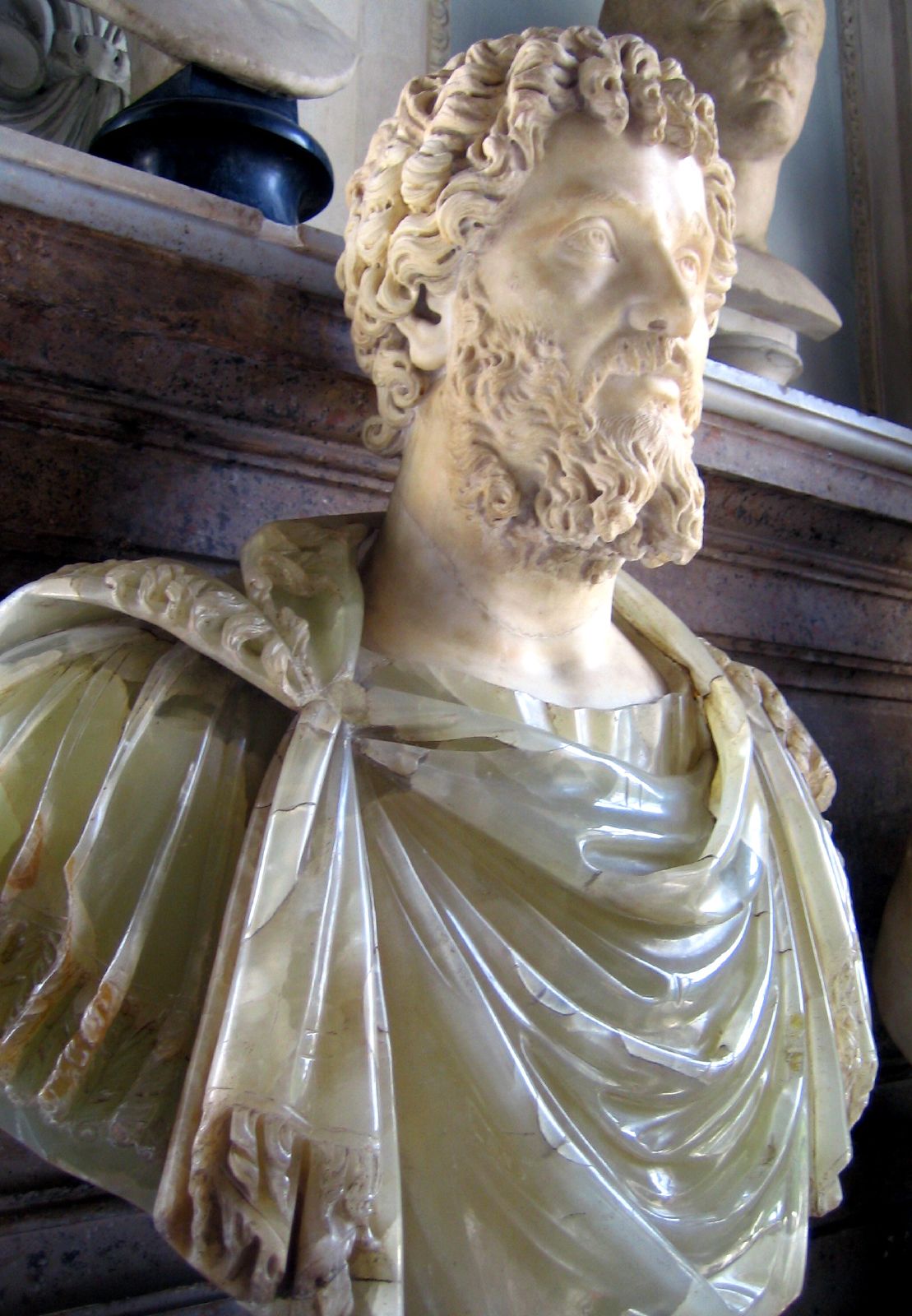
The Severan period, running roughly from 193 to 235 AD, is notable for the prominent role played by the women of the family. Julia Domna, Septimius Severus’s wife, and later Julia Maesa, her sister, wielded significant behind-the-scenes influence over successive emperors, effectively managing imperial politics during the reigns of younger and less capable rulers.
The dynasty’s most infamous member was Elagabalus, who became emperor as a teenager and whose brief, scandal-ridden reign shocked Roman society before his own assassination. The line ended with the murder of Alexander Severus in 235 AD, an event that plunged the empire into the Crisis of the Third Century. The crisis was nearly fifty years of near-constant civil war, invasion and economic collapse, during which the throne changed hands with alarming frequency, often through military coup rather than any dynastic process at all.
Stability restored: the Constantinian dynasty (AD 306–363)
The chaos of the third century was eventually brought under control by a series of soldier-emperors, culminating in the rise of Constantine the Great, who founded the Constantinian dynasty.
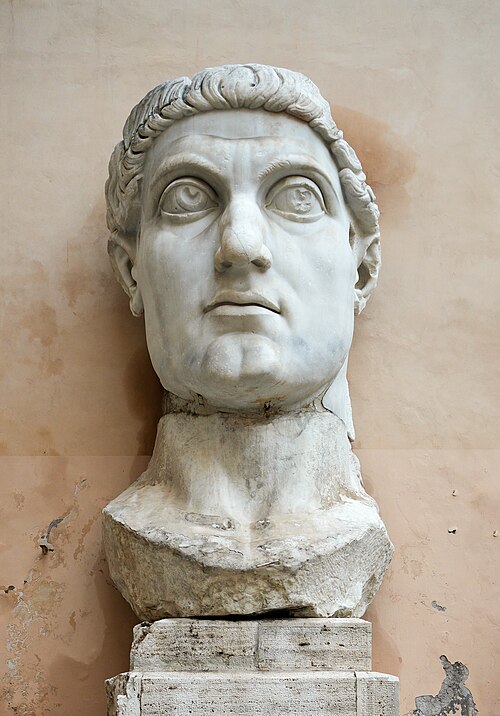
Constantine reunified an empire that had been divided among rival claimants, moved the imperial capital eastward to the city that would become Constantinople. In one of the most consequential decisions in Roman history, he extended official tolerance to Christianity — a faith that would go on to become the empire’s dominant religion within a few generations.
The Constantinian dynasty held power for several decades after Constantine’s death in 337 AD, though it was frequently marked by internal rivalry among his sons and successors, before giving way to new imperial houses as the fourth century progressed.
The Valentinianic and Theodosian dynasties, and the end in the West (AD 364–476)
The final significant dynasties of the united and then divided Roman Empire were the Valentinianic and Theodosian houses. The Valentinianic dynasty, beginning with Valentinian I in 364 AD, oversaw a period in which the pressures on Rome’s frontiers, particularly from Germanic peoples pushed westward by the Huns, grew increasingly difficult to manage.
The Theodosian dynasty, founded by Theodosius I in 379 AD, is significant for one event above all others: in 395 AD, Theodosius formally divided the empire between his two sons, creating separate Western and Eastern Roman Empires that would never again be reunited under a single ruler. The Western Empire, weakened by decades of invasion, internal instability and economic decline, limped on for another eighty years before the deposition of its last emperor, Romulus Augustulus, in 476 AD — an event traditionally marked as the fall of Rome in the West.
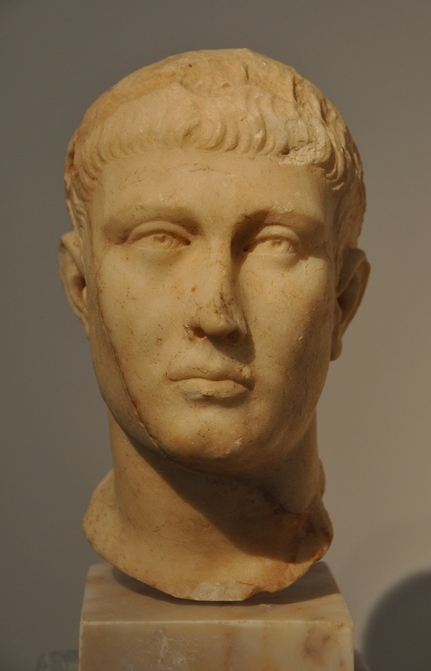
The Eastern Empire, by contrast, endured for nearly a thousand years more as what historians now call the Byzantine Empire, eventually developing its own distinct imperial dynasties, including the Justinian dynasty of the sixth century, before finally falling to the Ottomans in 1453.
The importance of the dynasties
Tracing the imperial families of Rome offers more than a list of names and dates. Each transition between dynasties — whether through adoption, conquest, or assassination — tended to reshape Roman government, military strategy, and even religious life in ways that rippled across the empire for generations.
The adoptive stability of the Nerva-Antonine era looks very different from the hereditary chaos that plagued the Julio-Claudians, just as the soldier-emperors of the third-century crisis operated according to entirely different rules of legitimacy than the aristocratic houses that preceded them.
For anyone trying to understand how a single city-state grew into the empire that shaped the modern world — and how it eventually came apart — the story of these families offers one of the clearest threads to follow.