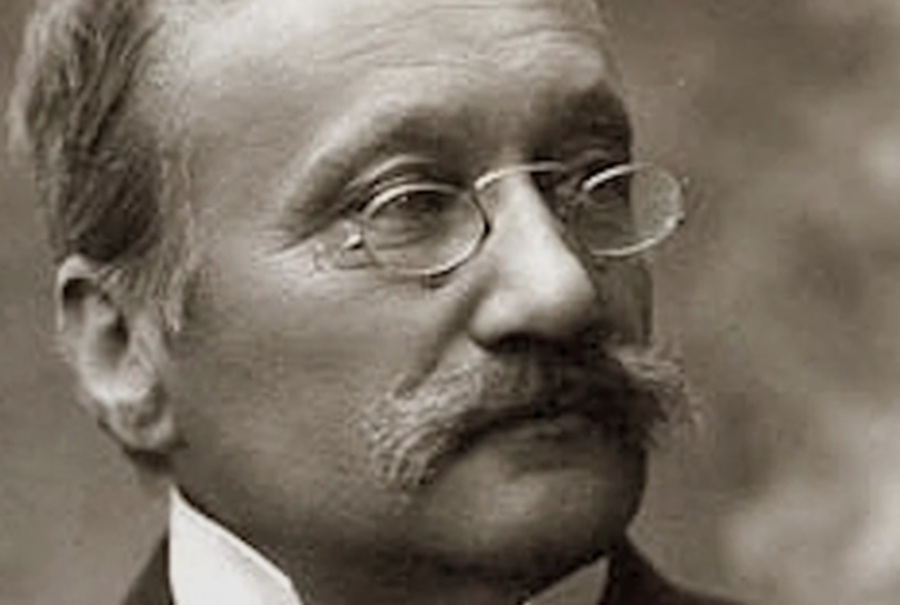
On 10 June 1918, Milan lost one of the most singular figures in Italian cultural life — Arrigo Boito. He was a composer who nearly destroyed his relationship with the country’s greatest opera composer, then went on to make him immortal.
Arrigo Boito was born on 24 February 1842 in Padua, the son of an Italian painter of miniatures and a Polish countess. He attended the Milan Conservatory and travelled to Paris on a scholarship, where he met Verdi and, in 1862, wrote the text for his Hymn of the Nations.
But Boito was never simply a man of the theatre. When war broke out in 1866, he joined Giuseppe Garibaldi’s volunteers in the Third Italian War of Independence — the campaign that finally wrested Venice from Austrian control and delivered it to the new Italian state. His patriotism was as fierce as his opinions.
Back in Milan, he threw himself into the Scapigliatura — the Italian bohemian artistic movement — alongside his brother Camillo and poet Emilio Praga. It was a milieu defined by its rejection of convention, and Boito embodied it fully. He wrote essays under the anagrammatic pseudonym Tobia Gorrio, a coded identity that allowed him to attack the musical establishment while maintaining a degree of deniability.
The opera that nearly caused a riot
While working on his opera Mefistofele, Boito published articles, influenced by Wagner, in which he vigorously attacked Italian music and musicians. Verdi was deeply offended, and by 1868, when Mefistofele was produced in Milan, Boito’s polemics had provoked so much hostility that a near riot resulted. The opera was withdrawn after two performances.
Of all the operas inspired by Goethe’s Faust, Mefistofele is considered the most faithful to the original play, and Boito’s libretto — written by himself — is regarded as a work of unusual literary quality. A much-revised version, produced at Bologna in 1875, has remained in the Italian repertory. After that bruising premiere, Boito never completed another opera, preferring to concentrate on the written word.
The reconciliation that transformed opera
Boito and Verdi were reconciled in 1873, and Boito undertook the revision of the libretto for Simon Boccanegra. What followed was one of the most productive creative partnerships in the history of music. Work on the libretti of Otello and Falstaff was a true collaboration — Verdi made structural suggestions as well as textual corrections, while Boito prompted Verdi to new musical thoughts.
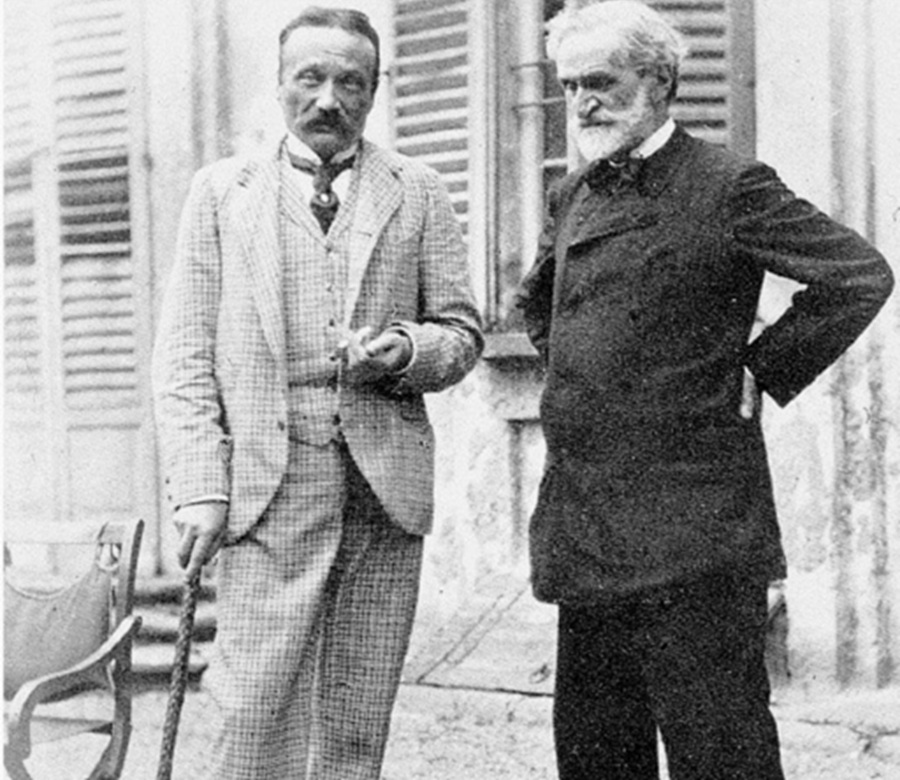
After the success of Otello in 1887, Boito managed to convince a Verdi weighed down by old age to embark on an entirely new collaboration. The result was Falstaff, adapted from The Merry Wives of Windsor and scenes from Henry IV, which premiered at La Scala in 1893 and is now considered one of the supreme achievements of Italian opera. When Verdi died in 1901, Boito was at his bedside.
Boito also wrote a libretto for Amleto, composed by his friend Franco Faccio, and translated and condensed Antony and Cleopatra for performance by his lover, the great Italian actress Eleonora Duse.
Legacy
Boito received an honorary doctorate from Cambridge in 1893. His second opera, Nerone, on which he had laboured for decades, was left unfinished at his death and completed by Vincenzo Tommasini and Arturo Toscanini for a 1924 production in Milan. Toscanini conducted a memorial concert in Boito’s honour at La Scala in 1948.
Periodic revivals of Mefistofele have kept his legacy as a composer alive, while his reputation as Verdi’s most assured librettist has never been in danger of waning. He is buried at the Cimitero Monumentale in Milan.