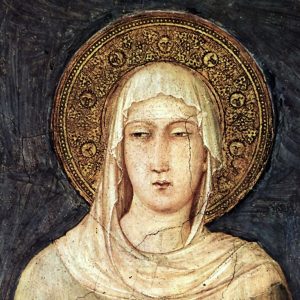
On 21 March 1474, Angela Merici was born in Desenzano del Garda, then part of the Republic of Venice. She would go on to found the Ursuline Order, the first community of women in the Catholic Church dedicated specifically to the education of girls.
Merici’s work marked a significant shift in religious life, moving beyond the confines of the convent and into the wider community.
Orphaned at the age of 15, Merici moved to Salò to live with an uncle. During this period, she developed a strong religious vocation and joined the Third Order of Saint Francis.
After her uncle’s death, she returned to Desenzano, where she became increasingly aware of the lack of education available to girls. At a time when formal schooling was largely reserved for boys, Merici began gathering young girls and teaching them basic Christian doctrine.
Her approach was informal but radical for the period, focusing on education within everyday life rather than within enclosed religious institutions.
Vision and foundation of the Ursulines
In 1506, while praying in the countryside, Merici is said to have experienced a vision in which she was called to found a new religious community. The idea took shape over the following decades.
In 1535, in Brescia, Merici and 28 companions consecrated themselves to God, forming the Company of St Ursula. The group placed itself under the protection of Saint Ursula, a martyr, and committed to educating girls and strengthening Christian family life.
Unlike traditional orders, the Ursulines did not initially live in cloistered convents. Instead, they remained active within their communities, teaching and supporting young women and children. This model would later influence the development of female religious life across Europe.
Merici was elected Superior of the company in 1537 and led the group until her death.
Pilgrimage and legend
Accounts of Merici’s life include a widely cited episode during a pilgrimage to the Holy Land. It is said she was struck blind while visiting Crete but continued her journey regardless. According to tradition, her sight was restored on her return journey while praying at the same location.
While such accounts form part of her spiritual legacy, her practical achievements in education and community organisation remain central to her historical significance.
Angela Merici died in 1540 in Brescia. She was buried in the Church of St Afra, a site associated with early Christian martyrs. The church was later rebuilt after damage during the Second World War and rededicated in her honour.
She was beatified in 1768 and canonised in 1807 by the Catholic Church. Today, she is recognised as the patron saint of sickness, disability and those who have lost their parents.
The Ursuline Order spread rapidly after her death, establishing schools and centres of learning across Europe and later in North America. Many institutions continue to bear her name, reflecting her lasting influence on education.
At a time when opportunities for girls were limited, Angela Merici’s work helped establish the principle that education should be accessible to all.