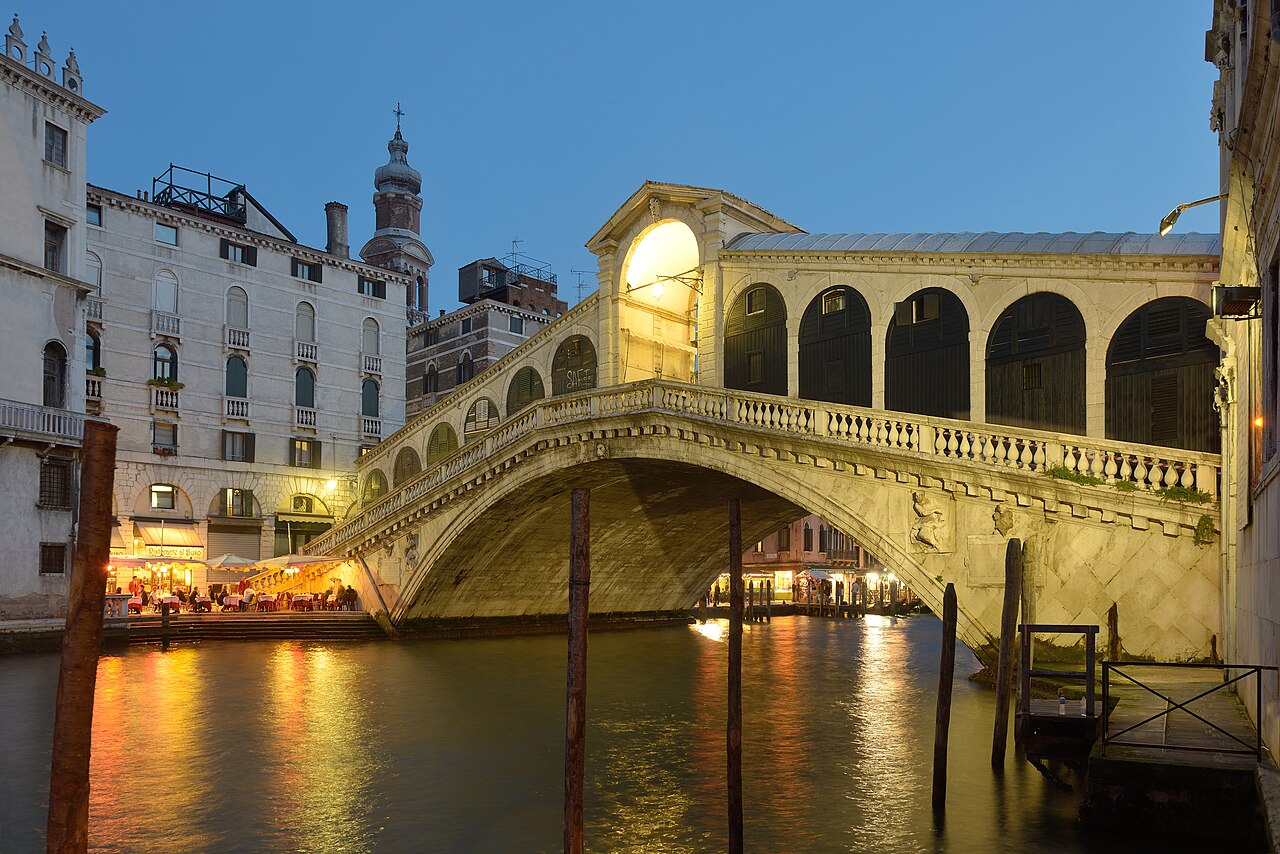
On 20th March 1597, Venetian architect Antonio da Ponte died in Venice, leaving behind one of the most recognisable landmarks in the world: the Rialto Bridge.
Completed in 1591, the stone bridge spanning the Grand Canal remains one of the defining images of Venice and a focal point for visitors centuries after its construction.
A bridge that defined a city
Da Ponte’s design was selected following a competition launched in 1587 by Venetian authorities seeking a permanent replacement for a series of wooden crossings at the Rialto. The earlier structure, known as the Ponte da Moneta, had collapsed multiple times since its construction in the 12th century.
At the time, several leading architects proposed classical multi-arch designs. Da Ponte’s winning concept stood out for its simplicity and boldness: a single-span stone arch supporting a wide passage lined with arcaded shops.
Doge Pasquale Cicogna ultimately favoured Da Ponte’s approach over rival proposals, including that of Vincenzo Scamozzi.
The result was a structure that combined engineering innovation with commercial function. The shops built along the bridge turned it into both a crossing point and a centre of trade, reflecting the economic life of the surrounding Rialto district.

Building the Rialto
Construction of the bridge required careful planning and technical skill. The Grand Canal’s depth and tidal movement posed challenges, while the decision to use stone rather than wood demanded a stable and durable foundation.
Da Ponte worked with his nephew, Antonio Contin, who would later design the Bridge of Sighs. Their collaboration ensured continuity in Venetian architectural style at a time when the city was investing heavily in infrastructure.
By the time the bridge was completed in 1591, Da Ponte was already in his seventies. He lived long enough to see it become a central feature of the city’s landscape.
A career rooted in Venice
Although best known for the Rialto Bridge, Da Ponte worked on a range of projects across Venice, including warehouses, a hospital, and parts of the Doge’s Palace and the Venetian Arsenal.
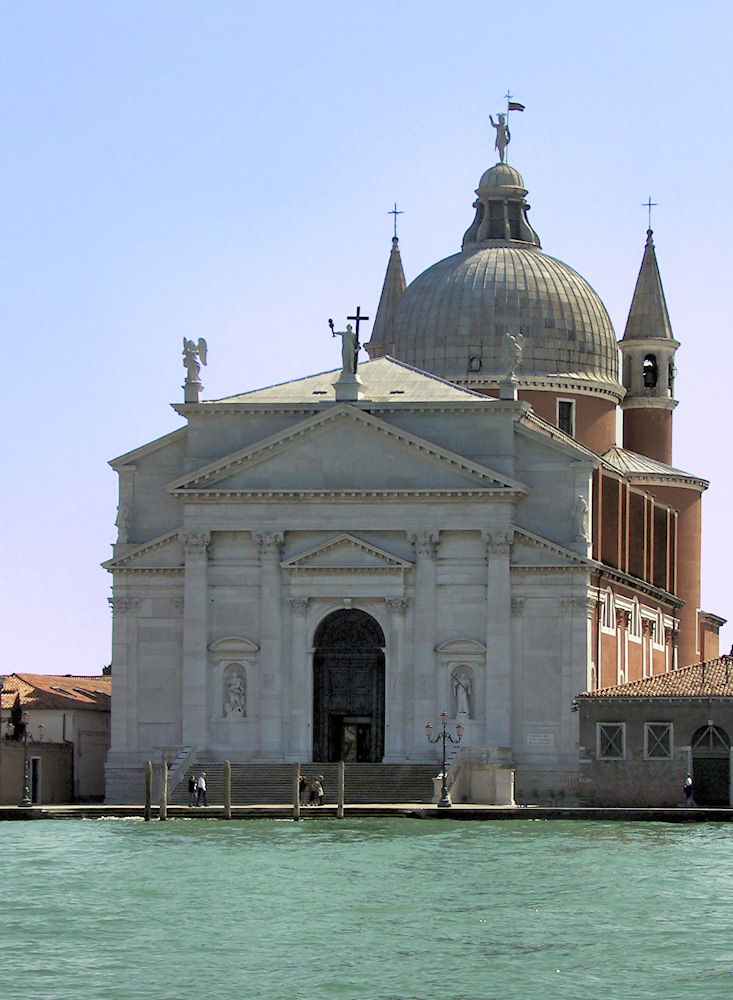
He also collaborated with the renowned Renaissance architect Andrea Palladio on the Church of the Redeemer on the island of Giudecca. The church was commissioned after the plague of 1576, built as a gesture of thanks for the city’s recovery.
Contemporary records indicate that Da Ponte’s expertise was highly regarded by Venetian authorities, who regularly sought his input on construction and design matters.
Cultural echoes
The Rialto quickly became more than an engineering achievement. Its location in Venice’s commercial heart meant it featured prominently in the daily life of the city. It also entered literary history. In The Merchant of Venice, written between 1596 and 1598, William Shakespeare refers to the Rialto district, including the line: “What news on the Rialto?”
Although there is no evidence Shakespeare visited Italy, his references suggest familiarity with Venetian life and its trading hub.
Enduring image
More than four centuries after its completion, the Rialto Bridge remains unchanged in its essential form. Its single arch, stone construction and integrated shops continue to define the structure, making it one of the most photographed and recognisable sites in Venice.
Da Ponte died in his early eighties and was buried in the Church of San Maurizio in Venice. His work on the Rialto secured his place in architectural history.
Also read: Ten facts about Venice