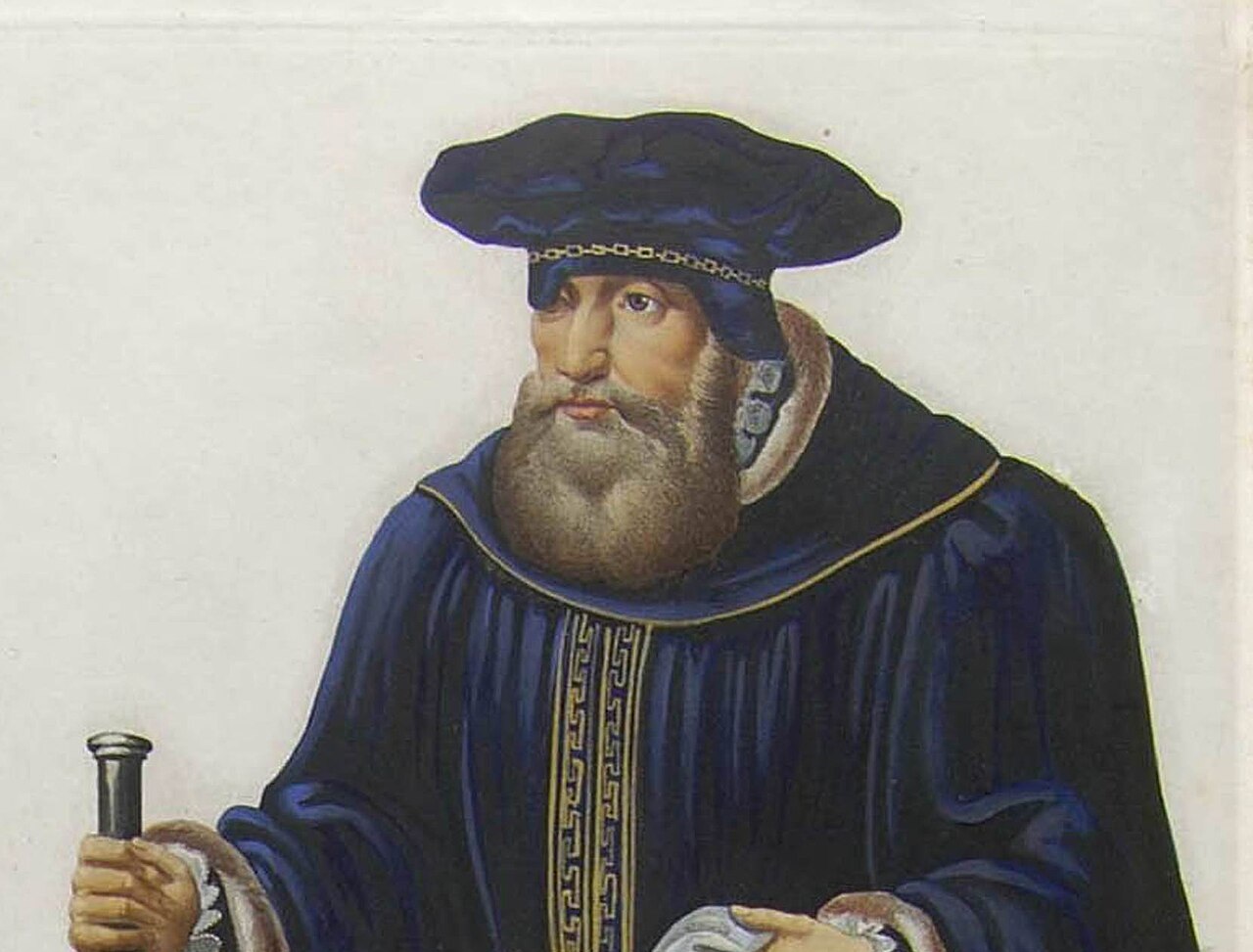
Giulio d’Este, who spent more than half of his life in prison for taking part in a failed conspiracy against his half-brother, the Duke of Ferrara, was born 13 July 1478 in Ferrara.
Giulio d’Este was the illegitimate son of Ercole I d’Este, Duke of Ferrara, the result of an affair the Duke had with Isabella Arduin, a lady-in-waiting to his wife. He was often in conflict with his half-brothers, Alfonso and Ippolito, which led to him eventually playing his part in a plot to assassinate them.
A palace built by a Renaissance master
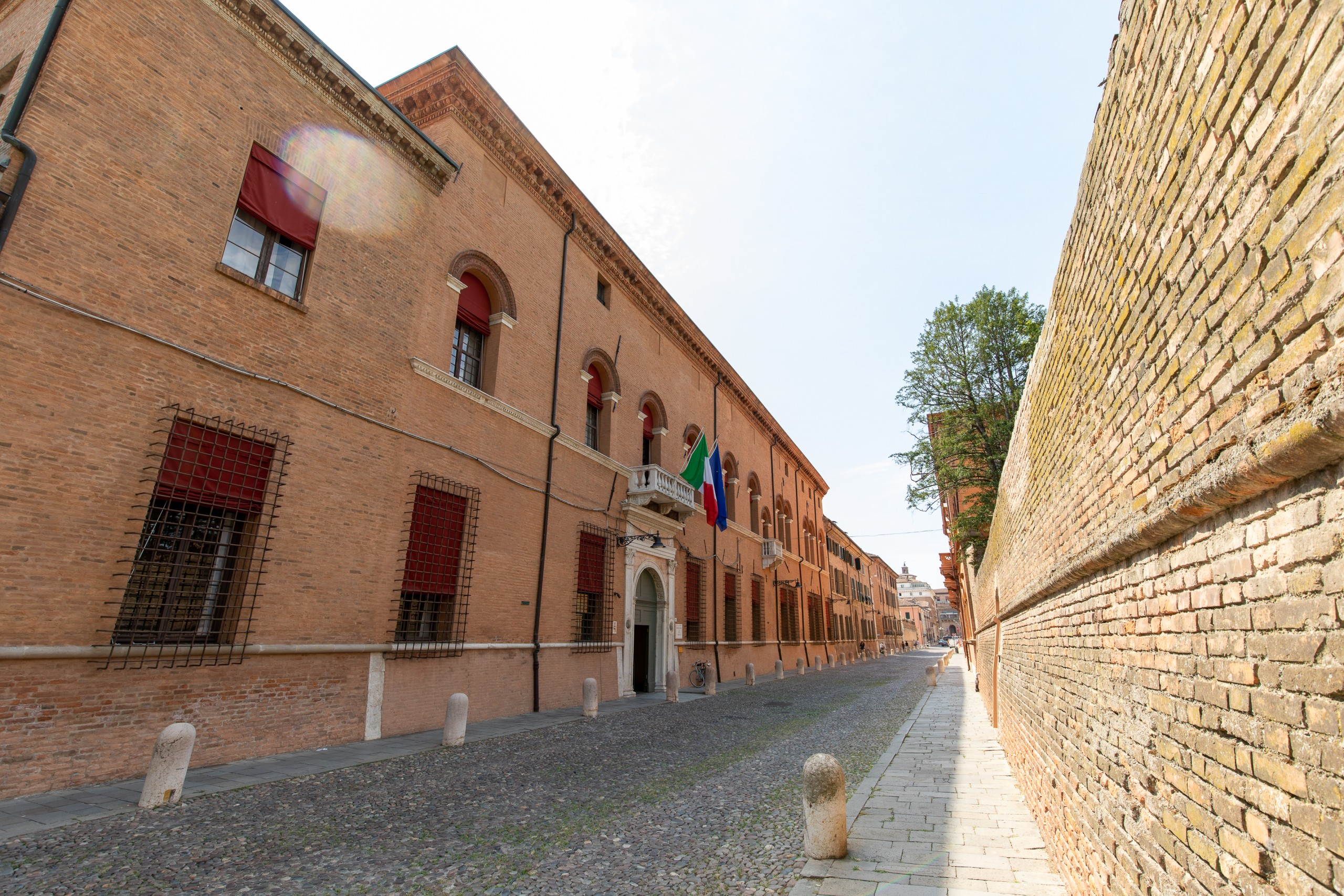
Giulio had grown up in the court of Ferrara and later lived in a palace on the Via degli Angeli in Ferrara, given to him by his father. The building had been designed by the Renaissance architect Biagio Rossetti, one of the most influential urban planners of his age, and remains standing today as the headquarters of the Prefecture of Ferrara. After Giulio’s downfall, the property was taken over by his old rival Ippolito.+
Discover Ferrara – A UNESCO World Heritage Site
A quarrel over a musician
The first major conflict between Giulio and Ippolito arose over a musician, Don Rainaldo of Sassuolo. Rainaldo was in the service of Giulio, but Ippolito, who had by then become a Cardinal, wanted him for his chapel. So, in 1504 he abducted Rainaldo and held him in the Fortress of Gesso.
When Giulio discovered where he was being held, he went with a group of armed men and recovered the musician. In a sign of defiance, Giulio replaced him with the warden of the fortress.
Ippolito complained about his actions to his brother, Alfonso, who had by then succeeded their father as Duke of Ferrara, and Giulio was exiled to Brescello — more than 100km (62 miles) away — as a result.
Lucrezia Borgia, Alfonso’s wife, and Isabella d’Este, his sister, eventually managed to persuade Alfonso to pardon Giulio.
A rivalry over Angela Borgia turns violent
The following year, Giulio and Ippolito discovered that they were both admirers of the same lady at the court, Angela Borgia, cousin of Lucrezia. However, Angela favoured Giulio and told Ippolito, who despite being a Cardinal was a bit of a ladies’ man, that Giulio’s eyes were worth more than Ippolito’s whole person.
Ippolito ordered his servants to kill Giulio and tear out his eyes and when they discovered Giulio alone, returning to Ferrara from a trip on 3 November 1505, they surrounded him, beat him brutally and stabbed his eyes.
Although he was not killed, he was badly scarred, lost the eyesight in one eye and was left with blurred vision in the other. Ippolito, meanwhile, moved swiftly to send his own account of events to the courts of Italy, ensuring he escaped punishment for the attack.
A doomed plot and a life behind bars
Alfonso then organised a formal truce between Giulio and Ippolito, but Giulio bore a grudge against his half-brother for the loss of his eyesight and his good looks. He was also angry with Alfonso for not punishing Ippolito.
Another of his half-brothers, Ferrante, aspired to replace Alfonso as Duke, and Giulio and other men hostile to Alfonso helped him organise a plot to eliminate Alfonso and Ippolito.
The conspirators waited at night in the street with poisoned daggers but didn’t come across Alfonso. Ippolito’s spies gathered evidence about the plot for him but, before he could relay it to Alfonso, Lucrezia and Isabella urged Giulio to flee to Mantua to be protected by Francesco Gonzaga.
The conspirators were tried in Giulio’s absence and, along with his half-brother Ferrante and three other men, Giulio was found guilty and condemned to death.
Freedom at 81
Alfonso threatened to take his army to recover Giulio and eventually Francesco had to hand him over. The other conspirators were executed, but the sentences for Giulio and Ferrante were reduced to life imprisonment.
Ferrante died in prison at the age of 63 after 34 years of incarceration, but Giulio was freed by Alfonso II d’Este, his great-nephew, in 1559, at the age of 81. He had spent 53 years in prison.
Giulio caused a stir when he was first seen out in the streets of Ferrara again because, despite his years in prison, he was said to have retained his charm and erect posture and was still dressed in the fashion of 50 years before. He lived on for two more years, dying in Ferrara on 24 March 1561.