Vilified as a femme fatale, celebrated as a patron of the arts, and ultimately remembered in Ferrara as la buona duchessa, the good duchess, Lucrezia Borgia remains one of the most complex and contested women of the Italian Renaissance.
Lucrezia Borgia came into the world on 18 April 1480, in Subiaco, a small town in the hills east of Rome. Her mother was Vannozza dei Cattanei, one of the long-term mistresses of Cardinal Rodrigo Borgia, a Spanish-born ecclesiastic of prodigious ambition who would, in 1492, ascend to the papacy as Pope Alexander VI. Her three brothers, Cesare, Giovanni and Gioffre, would each leave their own turbulent mark on the age. Lucrezia, however, would become its most enduring legend.
Born illegitimate and female into one of the most ruthlessly ambitious dynasties in Renaissance Italy, her fate was more or less sealed from the start. She would be married off, repeatedly and strategically, in service of her family’s political needs. That her reputation would be fashioned largely by her enemies is a conclusion most historians have now reached, even if the popular image of the poison-ring-wielding seductress has proved stubbornly durable.
A childhood of arrangements
Lucrezia’s education, unusually for the time, was humanist rather than convent-based. Raised in the household of her father’s cousin Adriana Orsini, she became fluent in Italian, Spanish, Catalan, French, Latin and Greek. This accomplishment reflected both the intellectual atmosphere of the papal court and her family’s expectations of her as a diplomatic asset.
Those expectations manifested early. Before she was eleven, two matrimonial arrangements had already been made and dissolved in her name as her father’s circumstances improved and better options presented themselves. After Rodrigo became Pope Alexander VI, a more substantial match was concluded. Lucrezia, aged twelve, was married by proxy to Giovanni Sforza, Lord of Pesaro, nephew of the Duke of Milan.
It would not last. When the Pope needed a new political alignment, Giovanni Sforza became inconvenient. Rumours circulated of an assassination order. Lucrezia, in one of the few moments in her life where she appears to have exercised genuine agency, managed to warn her husband, who fled to safety. The marriage was annulled in 1497 on the grounds of non-consummation, a humiliation Giovanni Sforza never forgave. His retaliation was to spread the incest allegations against Lucrezia and her father that would follow her name for centuries.
A violent end to the second marriage
Lucrezia’s second husband was Alfonso of Aragon, Duke of Bisceglie, by most accounts a gentle young man whom she appears to have genuinely loved. They had a son together. Then, in 1500, with the Pope and his son Cesare pivoting towards a French alliance that made the Aragon connection a liability, Alfonso was attacked on the steps of St Peter’s Basilica. He survived the stabbing. He did not survive Cesare’s men, who strangled him in his sickbed weeks later.
Whether Lucrezia was complicit, forewarned or simply powerless is unknown. She was twenty years old and had no political standing to protect anyone, least of all a husband her family had decided to discard.
A different life in Ferrara
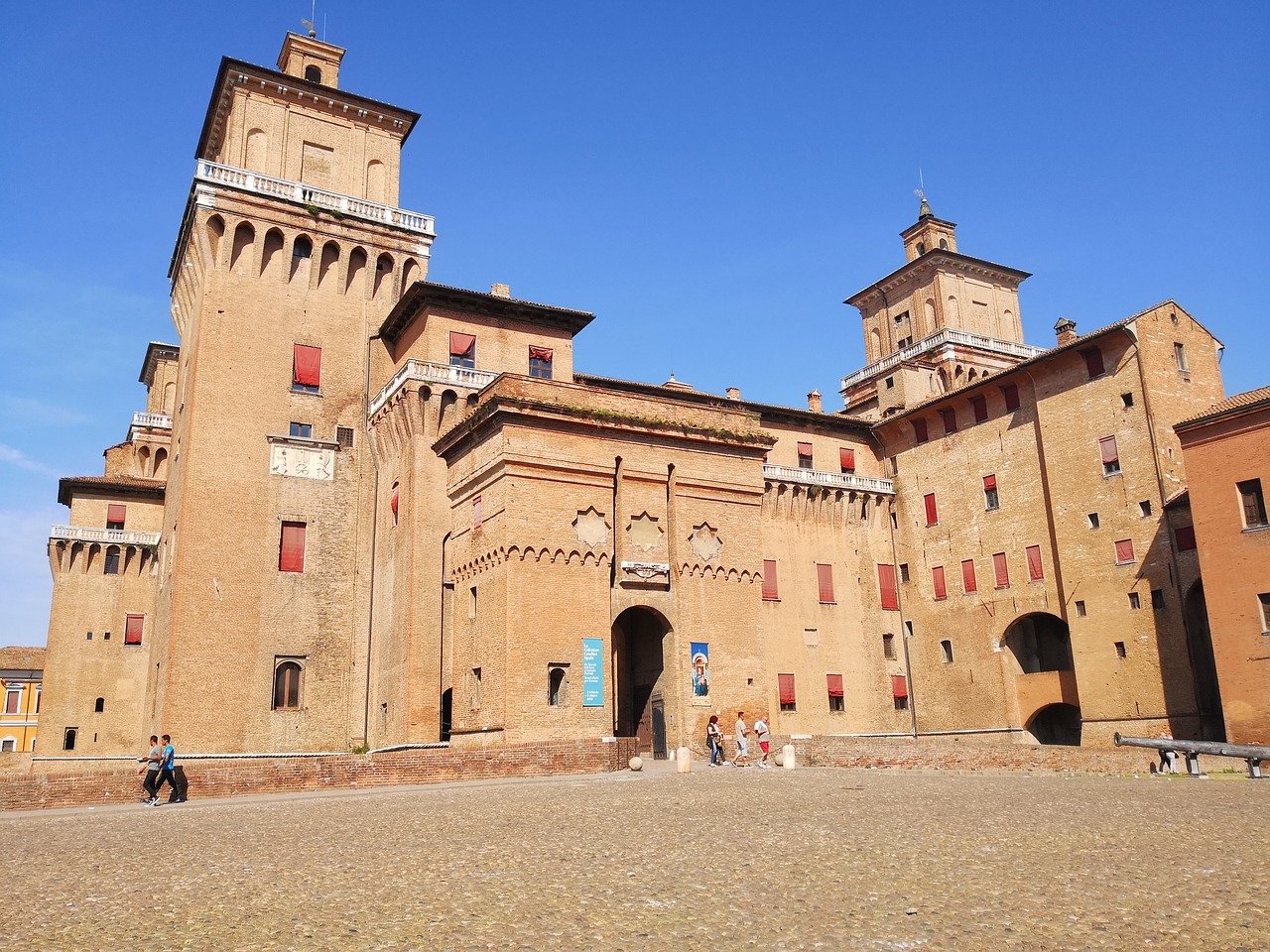
Her third marriage, to Alfonso I d’Este, Duke of Ferrara, proved lasting. Lucrezia arrived in Ferrara in February 1502 and, over the years that followed, built a life of genuine accomplishment there. She presided over a flourishing court, patronised poets and artists, and managed the ducal estates with capability during her husband’s frequent absences. She corresponded with the poet Pietro Bembo in a celebrated exchange of love letters now held in the Biblioteca Ambrosiana in Milan. Lord Byron, visiting in 1816, pronounced them the prettiest love letters in the world, before reportedly contriving to pocket a strand from a lock of Lucrezia’s blonde hair displayed alongside them.
The city knew her, by the end, not as the monster of Roman pamphlets but as la buona duchessa: the good duchess. She was a patron of scholars, a supporter of Franciscan charities, and, in her final years, a woman of increasingly private religious devotion.
The legend versus the life
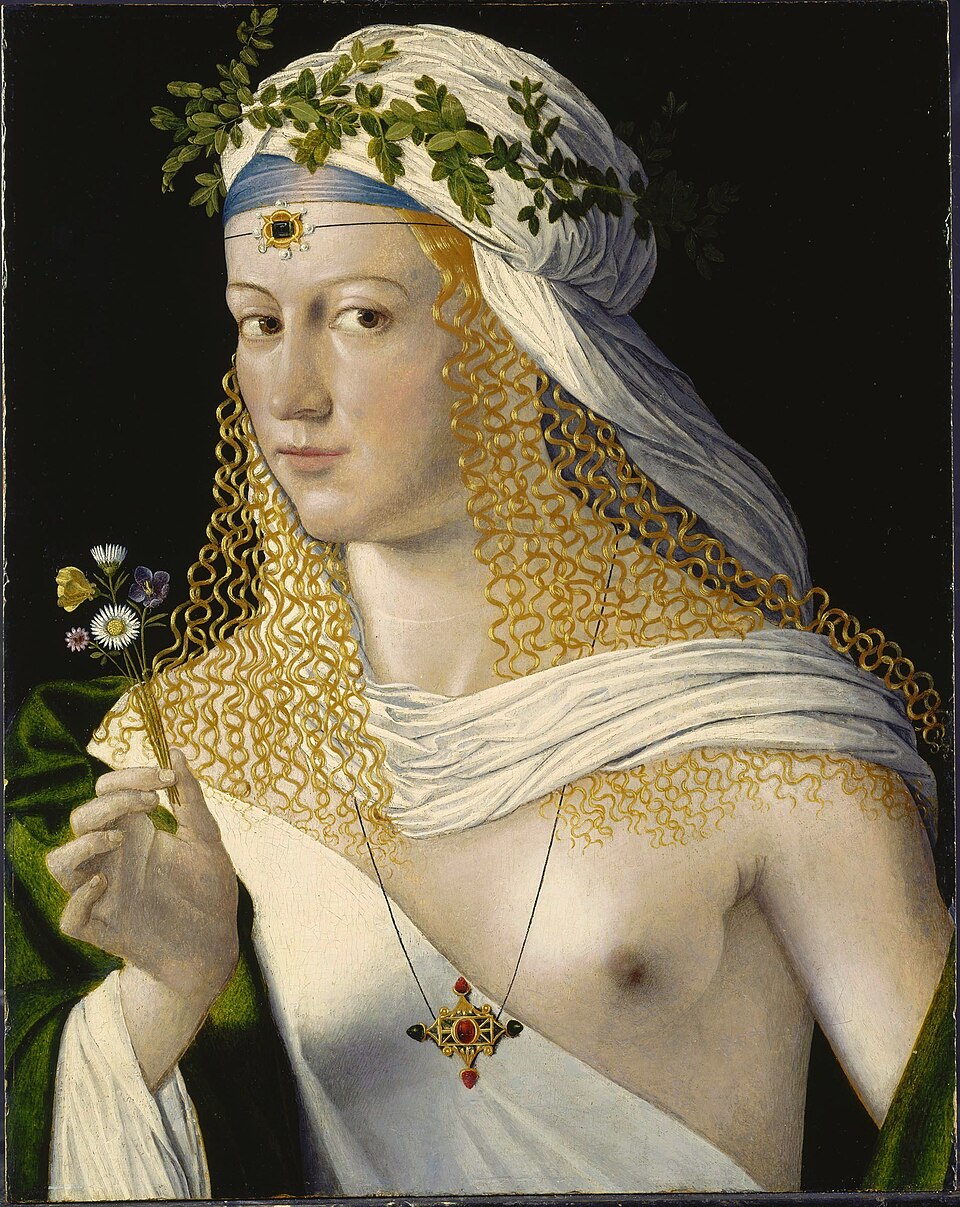
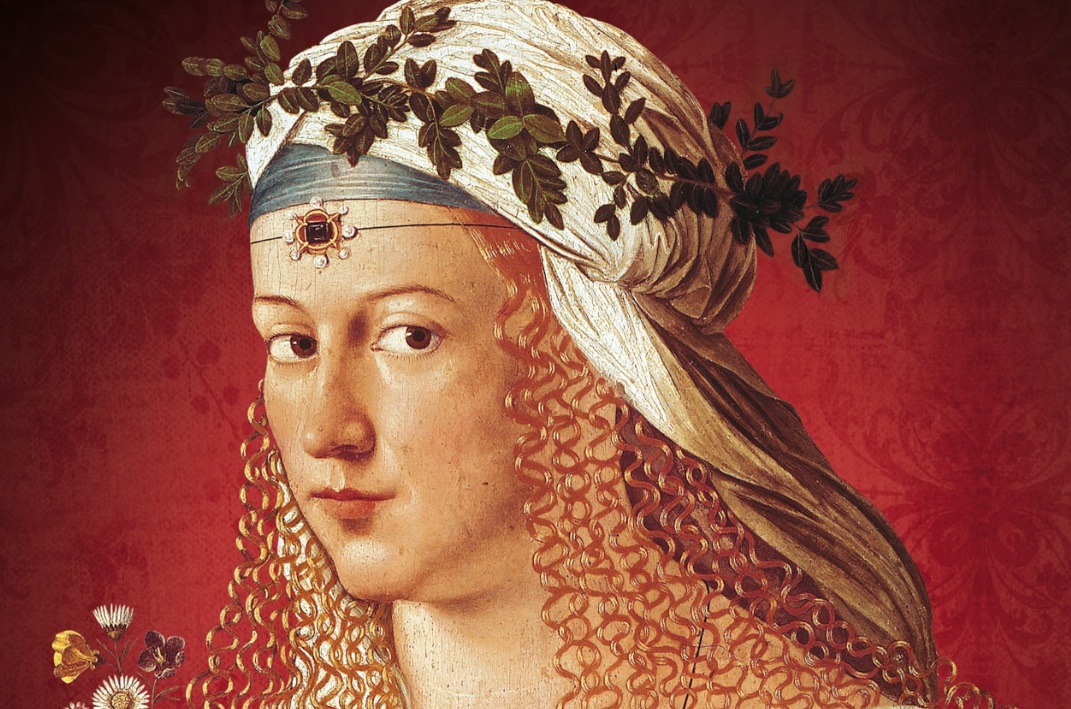
Lucrezia Borgia has been described as tall, with long, heavy blonde hair, hazel eyes, a fine complexion and a graceful figure. These qualities made her a subject for artists of her day, including Bartolomeo Veneto, whose 1520 portrait of a courtesan is widely accepted as depicting her. She has also been accused of incest, murder, and deploying a hollow poison ring against inconvenient men. None of these charges has ever been substantiated. Most historians now regard her less as an agent of the Borgia crimes than as their recurring instrument — used, traded, and occasionally protected by her father and brother, but rarely, if ever, truly in control of her own life.
She died in Ferrara on 24 June 1519, ten days after the birth of a stillborn daughter, at the age of thirty-nine. Her surviving children made distinguished matches. Many of Europe’s royal and aristocratic families today count Lucrezia Borgia among their ancestors, a far quieter, more lasting legacy than the one history first assigned her.