
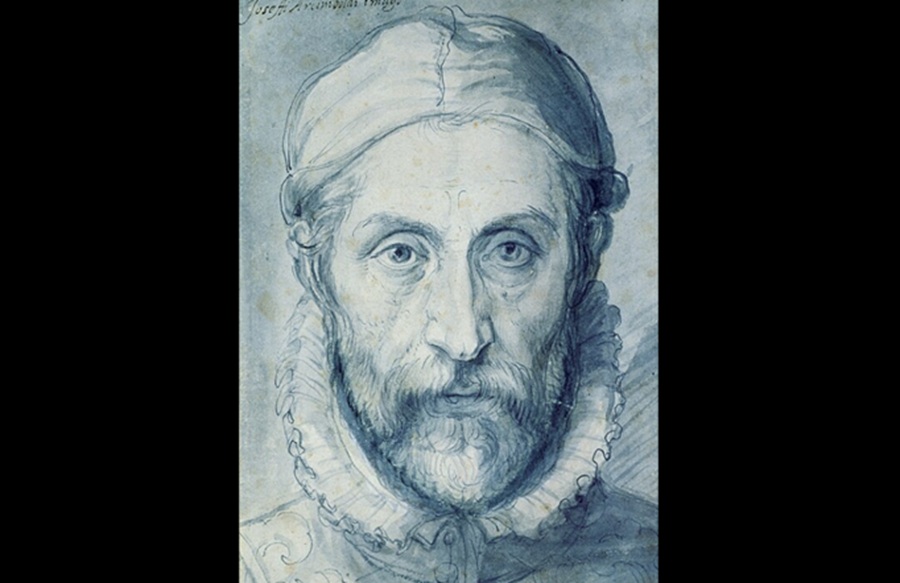
The artist Giuseppe Arcimboldo died on 11 July 1593 in Milan. He is celebrated for his imaginative portrait heads built entirely from objects such as fruit, vegetables, flowers and fish,
Unusual for his era, Arcimboldo’s work went on to win particular admiration in the 20th century from artists including Salvador Dalí and other Surrealist painters, who saw in his composite portraits an early ancestor of their own preoccupations.
From church frescoes to court painter
Arcimboldo’s father, Biagio, was also an artist. Giuseppe initially followed the family trade, designing stained glass and frescoes for churches. He painted entirely within the conventions of the period at first. His fresco of the Tree of Jesse can still be seen today in the Duomo of Monza.
That changed in 1562, when he moved to Prague to take up the position of court painter to the scholarly King Rudolph II. It was there that he began producing the human heads for which he is now best known. The figures are assembled from fruit, vegetables and other everyday objects, each of which has a particular symbolic meaning.
Illusion, allegory and private jokes
Alongside these portraits, Arcimboldo designed sets for the court theatre in Prague and developed a reputation for illusionist trickery. His paintings play with allegory, wordplay and in-jokes that delighted his contemporaries. However, these were largely lost on audiences in later centuries. His distinctive style is perhaps best captured in his portraits of Summer and Winter.
One of his best-known works, The Librarian, painted around 1566, took aim at wealthy collectors who acquired books to own rather than read.

Built from objects such as the curtains used to divide individual study spaces in a library and the animal tails used as dusters, the painting functions simultaneously as a portrait and a still life. Given the period’s fondness for puzzles, riddles and the strange, Arcimboldo catered directly to the tastes of his age.
A scattered legacy
An invading Swedish army seized Arcimboldo’s portrait of Rudolph II from the king’s castle in Prague in 1648. Along with other works, it remains in Sweden today. Some of his paintings have since been lost entirely, though surviving works in Italy can still be found in galleries in Cremona, Brescia and Florence.
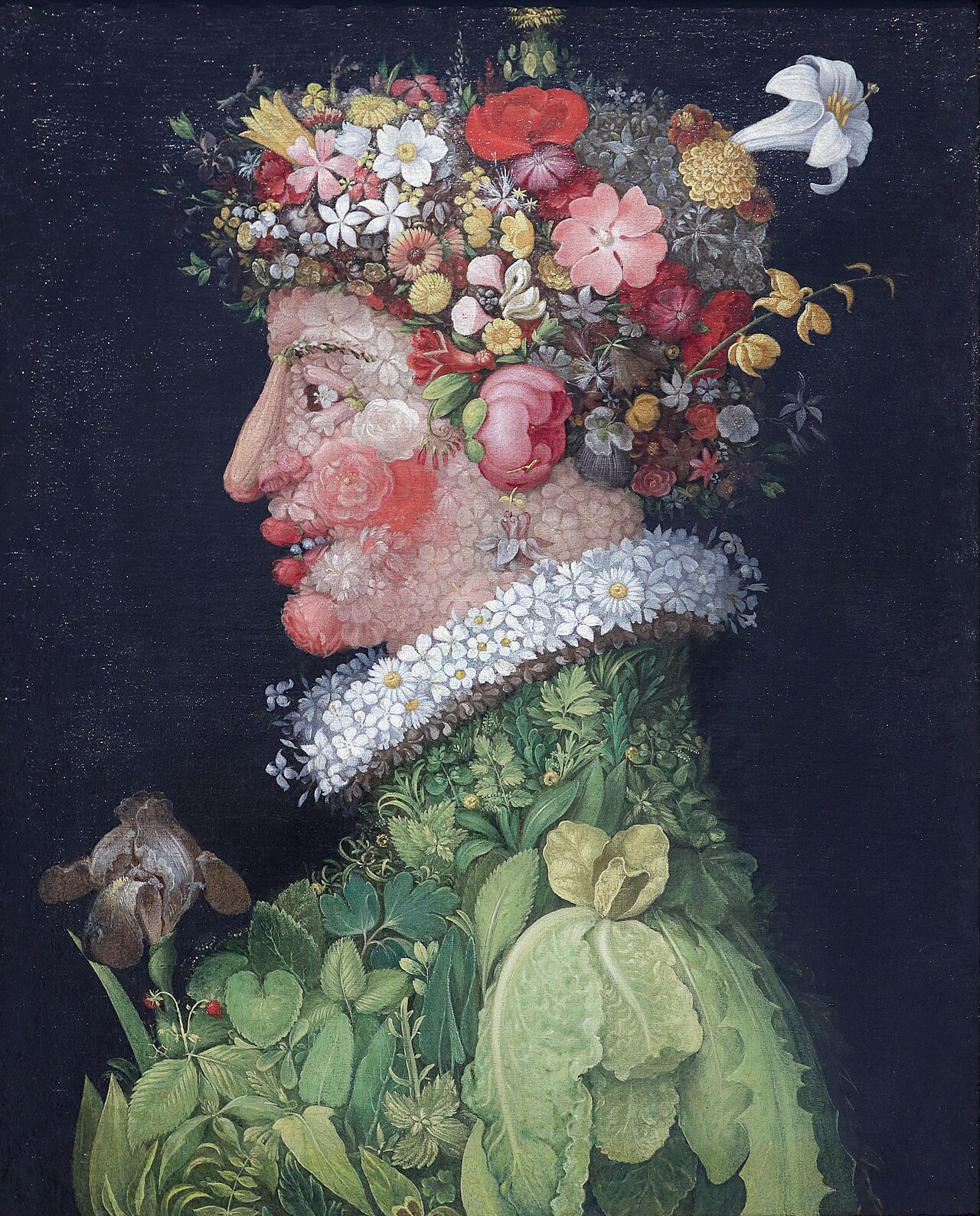
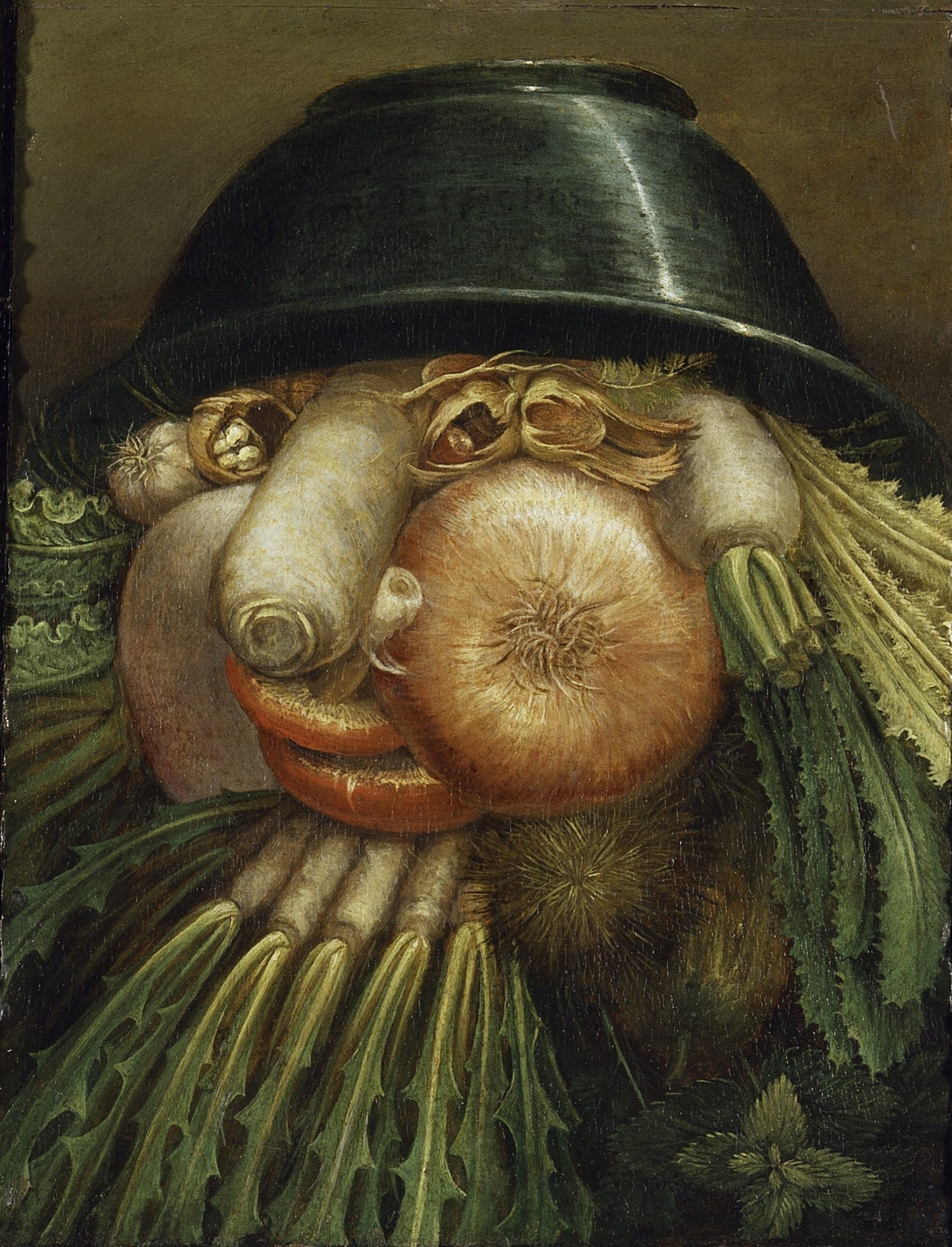
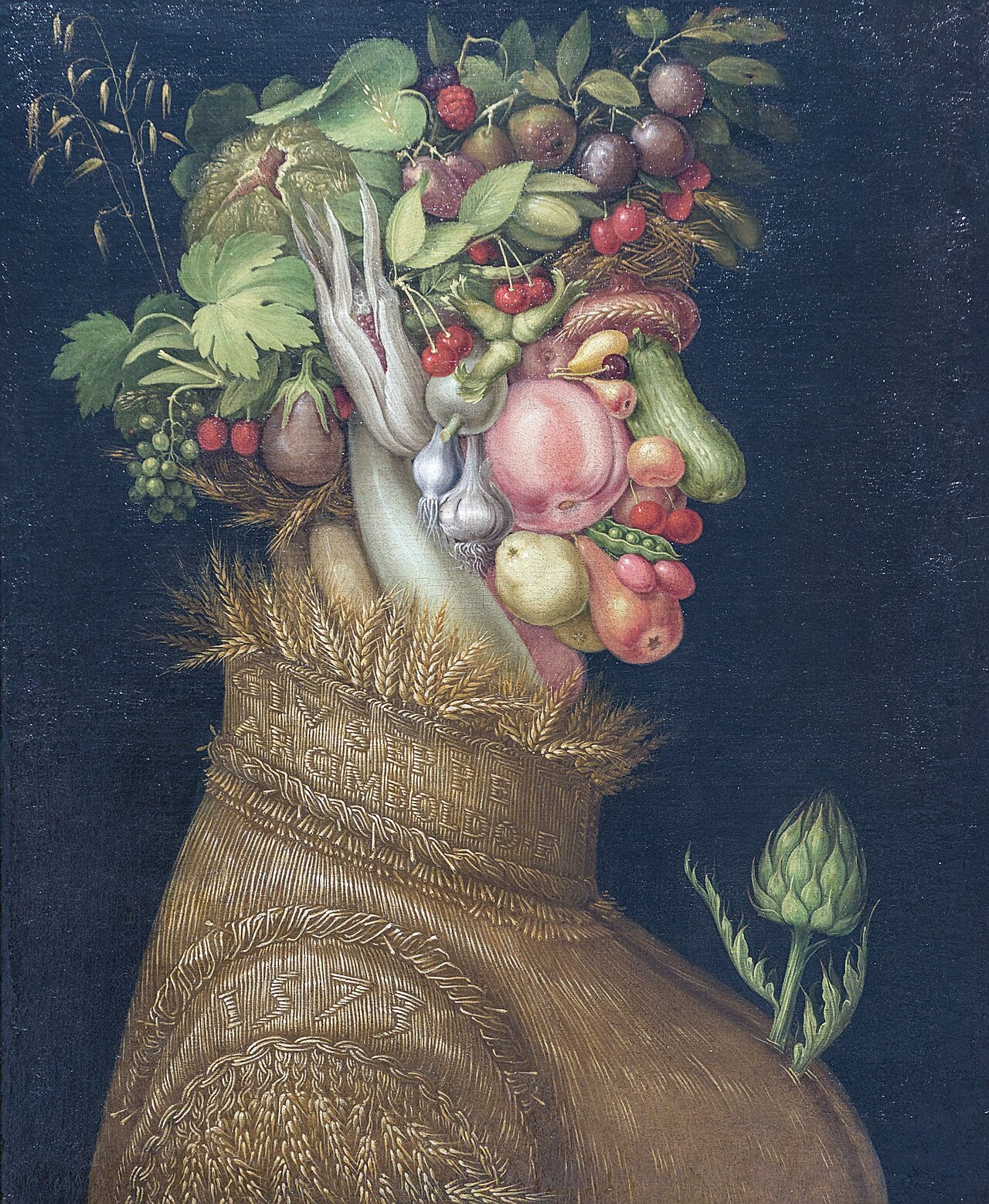
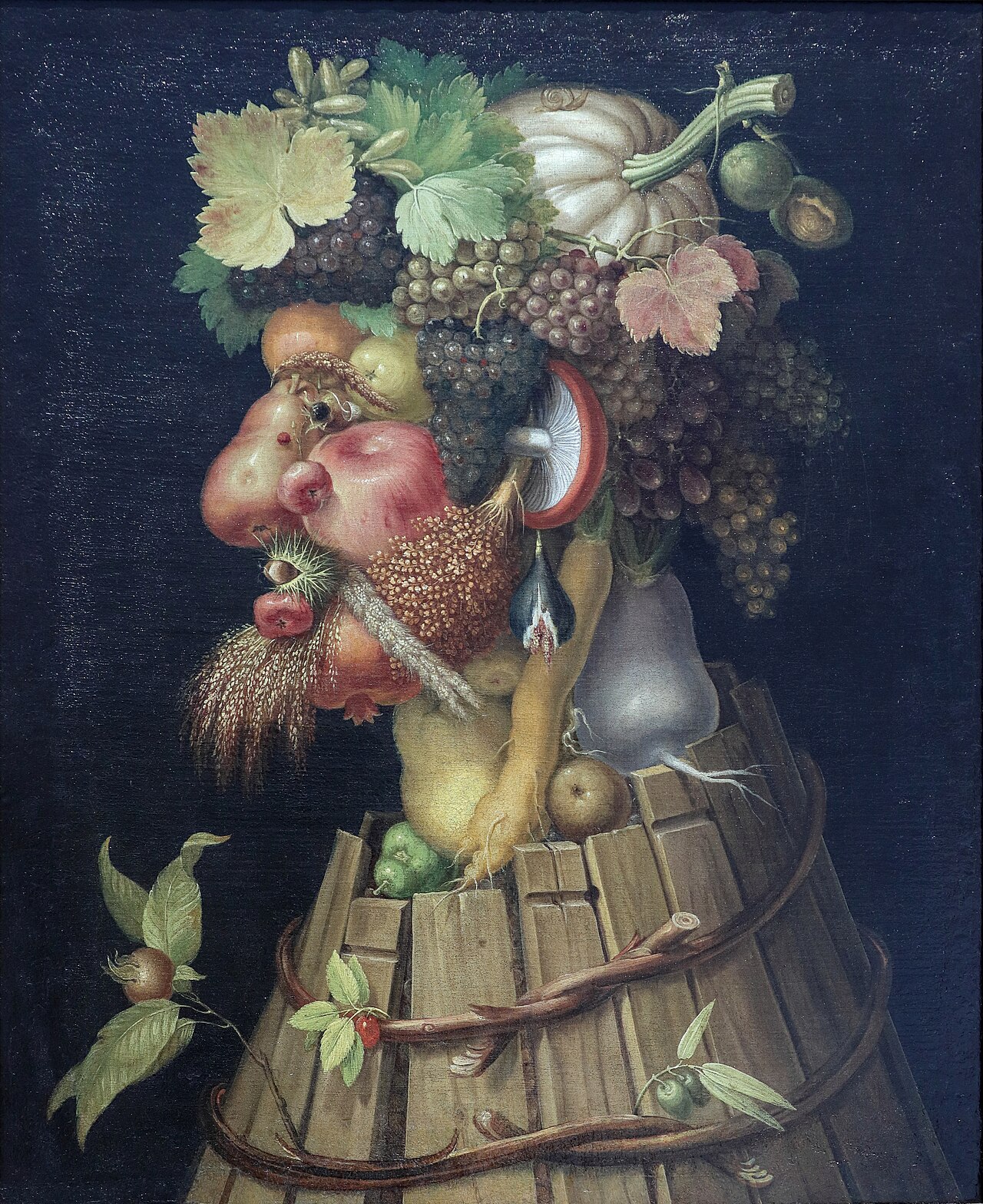
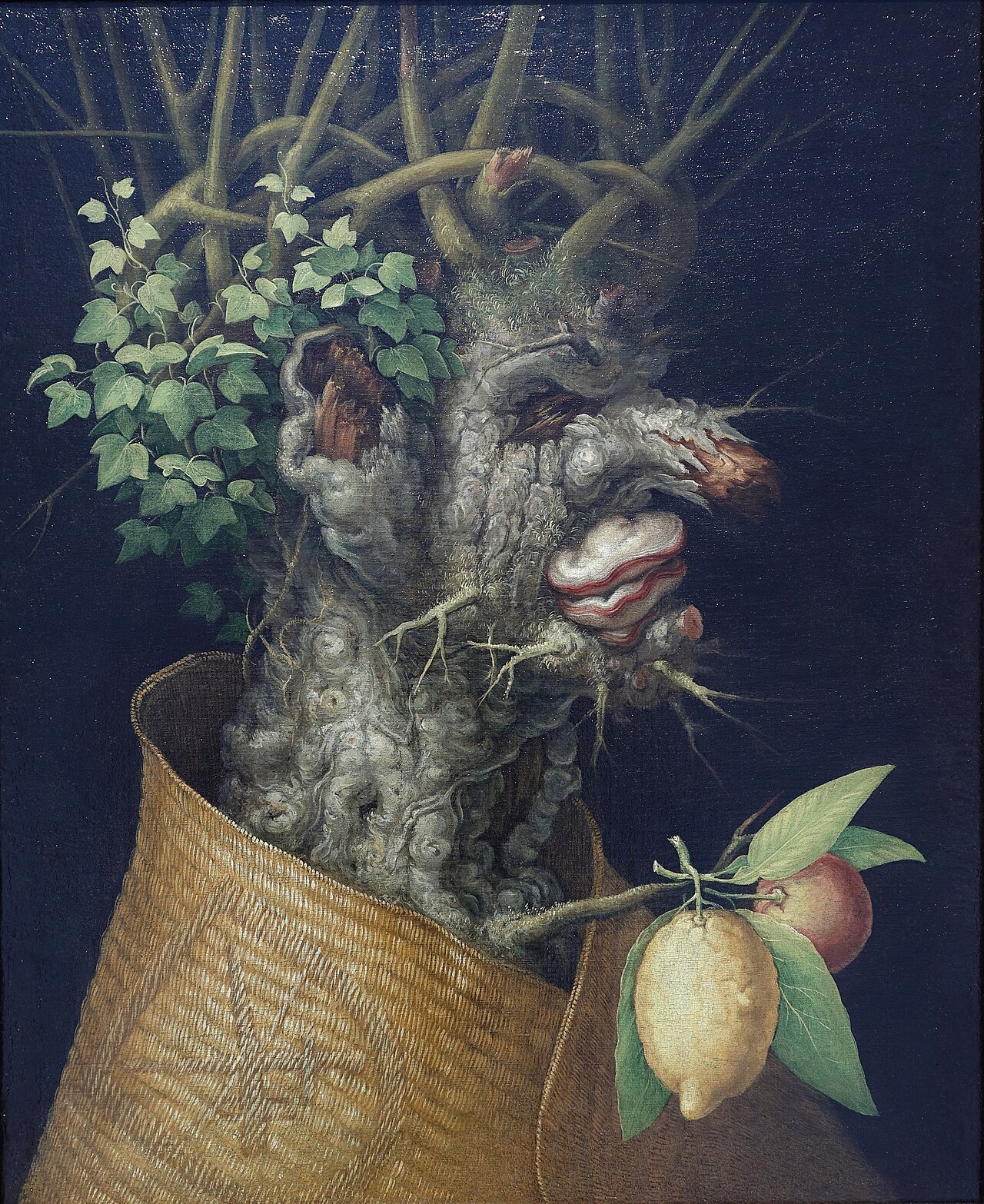

After retiring from the royal court and leaving Prague, Giuseppe Arcimboldo returned to live out his final years in his native Milan. It was there that he died in 1593. It wasn’t until 1885 that an art critic published the first monograph examining his role as a portrait painter. The arrival of Surrealism in the 20th century created a wider interest in his work, with numerous books and articles following. Arcimboldo-style figures assembled from fruit and other objects have since turned up repeatedly in books, films and video games, including an audiobook series that uses a Shakespeare portrait built from books, in a clear echo of The Librarian, as its cover image.
Travel tips
Milan, where Giuseppe Arcimboldo was born and died, is the capital of Lombardy. He worked alongside his father on the city’s Duomo as a young man, designing images for its stained glass windows, including one depicting Santa Caterina d’Alessandria. Construction of the Duomo began in 1386 but took almost six centuries to complete. It remains the largest church in Italy and the third largest in the world.
Arcimboldo’s 1580 painting Spring is in the Pinacoteca Tosio Martinengo in Brescia, Lombardy. The gallery, in Piazza Moretto in the town centre, holds work by numerous other regional artists spanning the 13th to the 18th centuries.


![Annibale Carracci (cropped) By Annibale Carracci - [2], Public Domain, https://commons.wikimedia.org/w/index.php?curid=35333992](https://italynews.online/wp-content/uploads/2025/11/Annibale_Carracci_Autoritratto_-300x300.jpg "On this day in history: Baroque artist Annibale Carracci born")
