The Italian Army has been deployed to help fight the wildfires that continue to burn across Abruzzo, with high temperatures, shifting winds and difficult terrain hampering efforts to bring the flames under control.
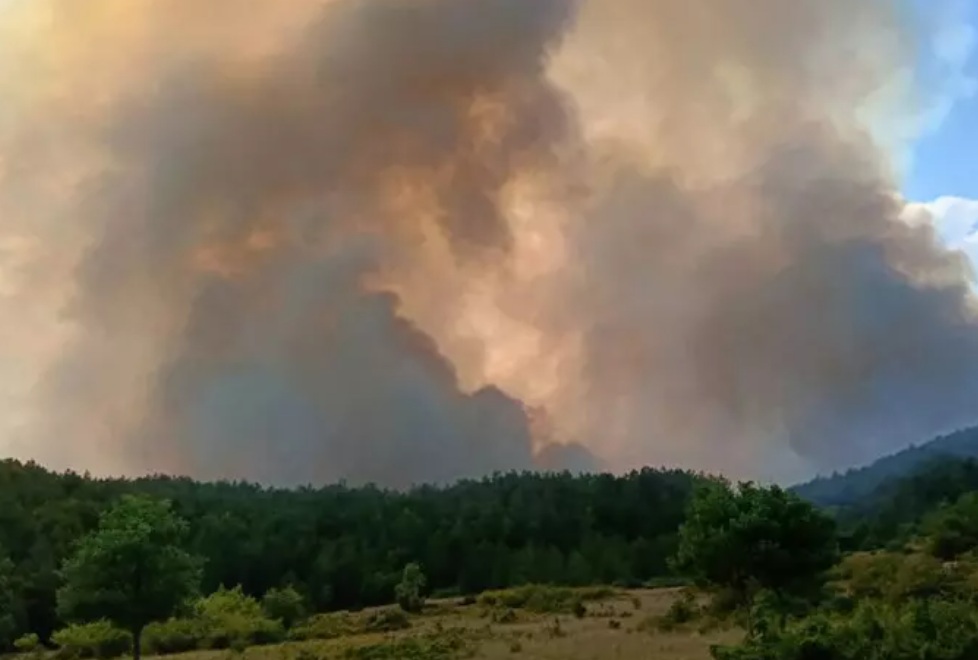
The most serious situation remains on Mount Morrone, where a major fire has resisted days of firefighting efforts. Several fronts are still active, but the most difficult area is between Roccacasale, Corfinio and Popoli Terme, where Army engineers have joined firefighters and other emergency teams.
The smoke from the fires is spreading well beyond the immediate area. Between Sunday night and Monday morning, the acrid smell from the Maiella area reached Pescara, more than 50 kilometres away.
The response is being coordinated from the Municipal Operations Centre in Popoli Terme, where authorities have developed a strategy aimed at containing the fire on Morrone and preventing it from spreading further.
Army bulldozer brought in from Rome
The rugged terrain around Mount Morrone is making the operation particularly difficult, with strong air currents in the Tremonti Gorge helping to drive the flames.
Army engineers are being brought in to widen tracks and roads and create firebreaks that can slow or stop the advance of the fire.
A New Holland D180 bulldozer – the most powerful machine available to the Italian Army – is being transported from Rome by truck under police escort. It will operate with support from the 9th Alpine Regiment, based in L’Aquila.
Abruzzo Governor Marco Marsilio stressed that there would be no administrative delays in deploying the machinery. “There’s no red tape; all bulldozers and machinery must operate immediately,” he said.
The heavy machinery is particularly important because some of the areas affected by the fires are inaccessible to conventional firefighting vehicles.
Aircraft stretched by multiple fires
The aerial firefighting operation is also under pressure. Four of the seven aircraft deployed to Abruzzo on the previous day were affected by technical problems, complicating efforts to tackle the fires from the air.
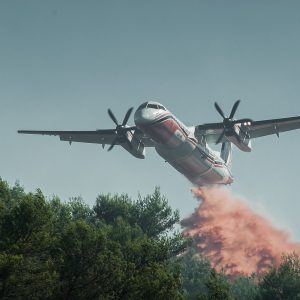
On Monday morning, four Canadair water bombers and an Erickson helicopter were operating alongside two regional helicopters. Following a meeting with Civil Protection chief Fabio Ciciliano, Marsilio announced that three additional Canadairs would be sent to the region.
The deployment was subsequently reorganised, with the aircraft concentrated primarily on Mount Morrone, where the fire remains the greatest threat.
Firefighting is also continuing in Bisegna, where flames reignited after being fanned by strong winds and high temperatures. Six families were evacuated from the area on Saturday evening, although they have since been allowed to return home.
Fires continue elsewhere in the region
The fire at Rocca di Cambio, which began on August 4, has flared up repeatedly around Monte Cagno. Light and localised rain has so far done little to halt the spread of the flames.
Other fires have been brought under control. Those at Roio del Sangro, Bucchianico, Corvara and Isola del Gran Sasso-Cerchiara are now considered extinguished.
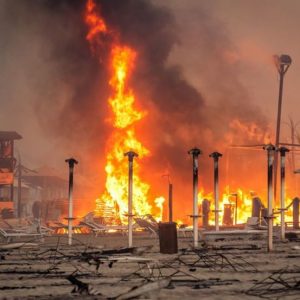
In Ortona, meanwhile, a fire broke out close to the Aragonese Castle during fireworks on Sunday night. Authorities are investigating the circumstances.
The fires in Abruzzo are part of a wider summer of wildfire emergencies in Italy, with prolonged heat and dry conditions creating highly favourable conditions for the rapid spread of flames.
Governor raises arson concerns
Marsilio has also raised the possibility that many of the fires are being deliberately started. He said that the vast majority of the fires are believed to be malicious and described the alleged arsonists as operating “almost scientifically”, suggesting that some fires may be deliberately started in locations and conditions designed to make them difficult to control.
The combination of high temperatures, dry vegetation and strong, shifting winds is continuing to make firefighting particularly difficult. Even where flames have been contained, crews remain on alert for flare-ups.
Meanwhile, firefighting operations have also resumed in Carnia, where a fire has been burning for 10 days. A second Canadair is being sent to the area as crews continue efforts to bring the long-running blaze under control.