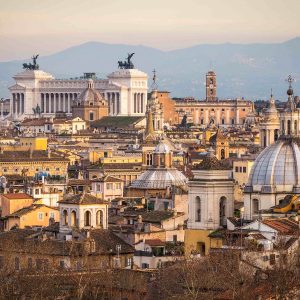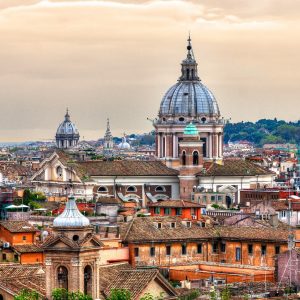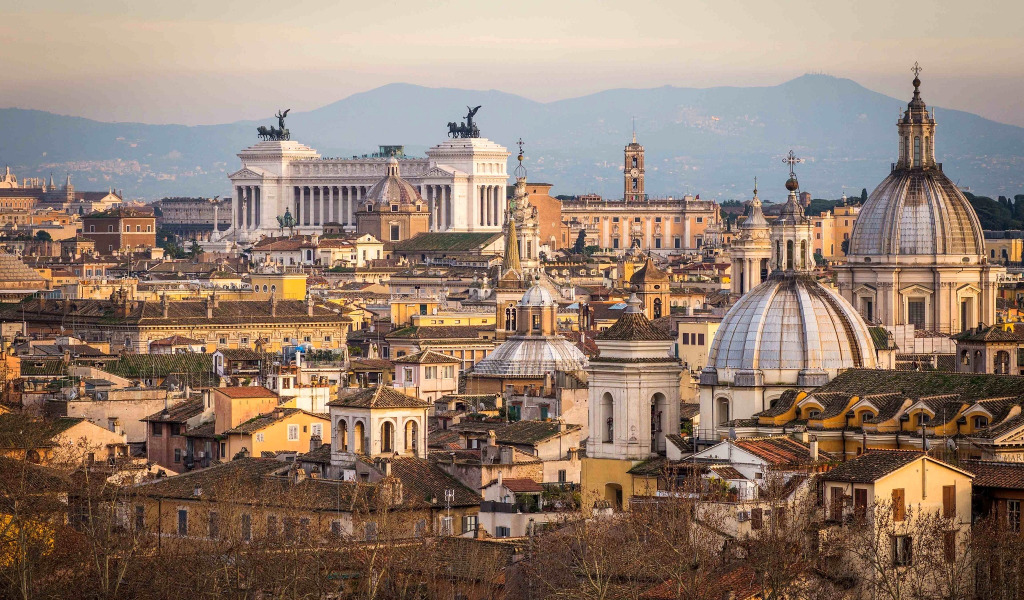
On 21 April 753 BC according to legend, tradition and the calculations of Rome’s own ancient scholars, a man named Romulus ploughed a furrow around the Palatine Hill and founded a city. Today, that city, Rome, turns 2,779 years old.
Known as Natale di Roma, Rome’s annual birthday celebration is based on the legendary founding of the city by Romulus in 753 BC. It is one of the oldest civic festivals in the world, observed for as long as the city has existed. This year, over four days from 18 to 21 April, around 1,300 participants from 16 European countries and a delegation from Taiwan have filled Rome’s historic sites with costumed reenactments, gladiatorial displays, ancient ritual and ceremony, under the theme “Rome, City of Law and Hospitality.”
But behind the pageantry lies one of history’s most extraordinary foundation stories.
Gods, wolves and a fratricide
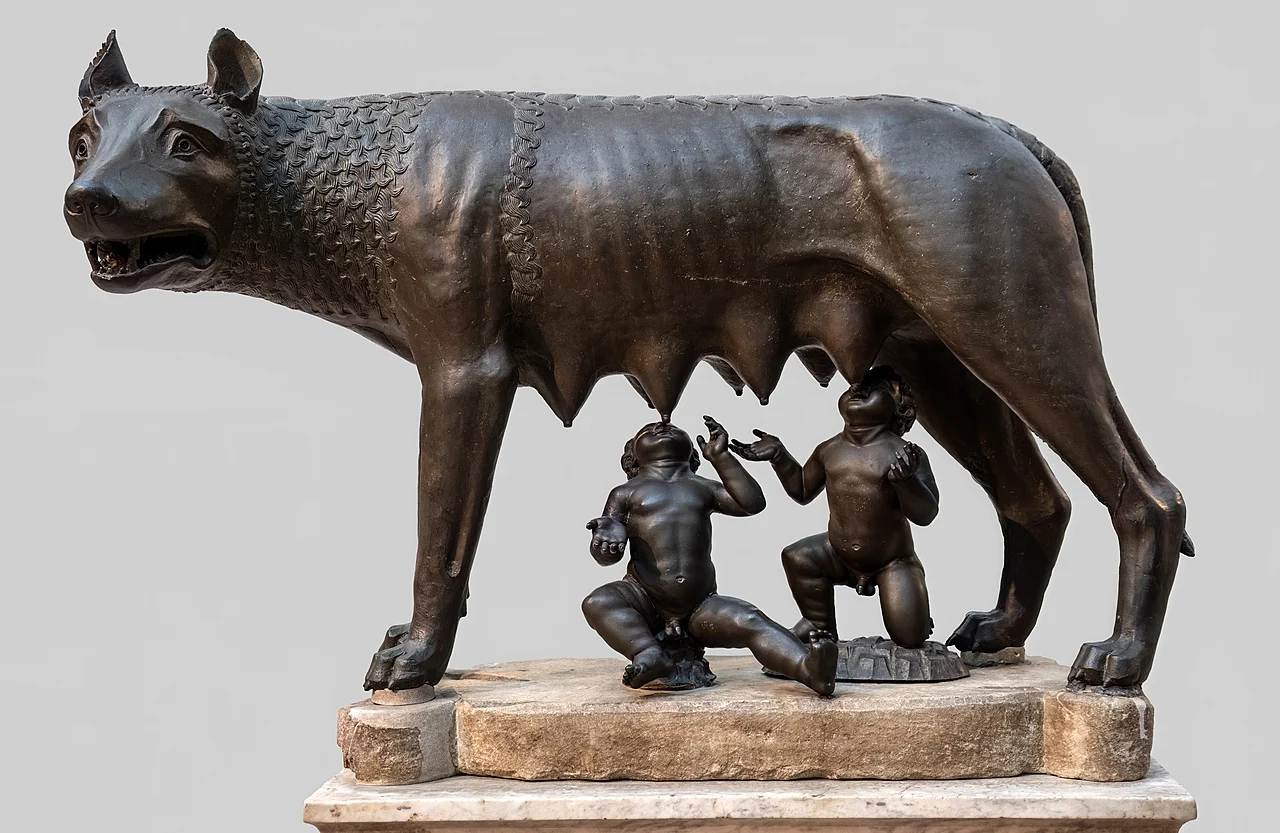
The myth begins with the god of war Mars, who fell for Rhea Silvia, a Vestal Virgin and Latin princess. Their union produced twin boys, Romulus and Remus, whose birth came with a prophecy that the offspring would overthrow their great-uncle, the usurper King Amulius. Amulius ordered the infants killed. Instead, sympathetic servants set them adrift on the Tiber in a basket.
The twins were found and suckled by a she-wolf in a cave at the foot of the Palatine Hill, now known as the Lupercal. It is this image, the Lupa Capitolina, the she-wolf nursing two small boys, that has represented Rome ever since, appearing on everything from the museums of the Capitoline to the badge of Roma football club. (Livy, ever the deflating scholar, noted that lupa was also Latin slang for a prostitute. He suggested the wolf may have been a colourful local woman named Larentia but the Romans have always preferred the wolf.)
The brothers grew, discovered their true identities, killed Amulius and restored their grandfather Numitor to his rightful throne. Permission to found a new city was granted. Then things went sideways. Romulus wanted to build on the Palatine Hill; Remus argued for the Aventine. They faced off in what is now the Circus Maximus, where Romulus, or one of his followers depending on which ancient source you prefer, killed Remus. The city was named after the survivor.
The furrow in the earth
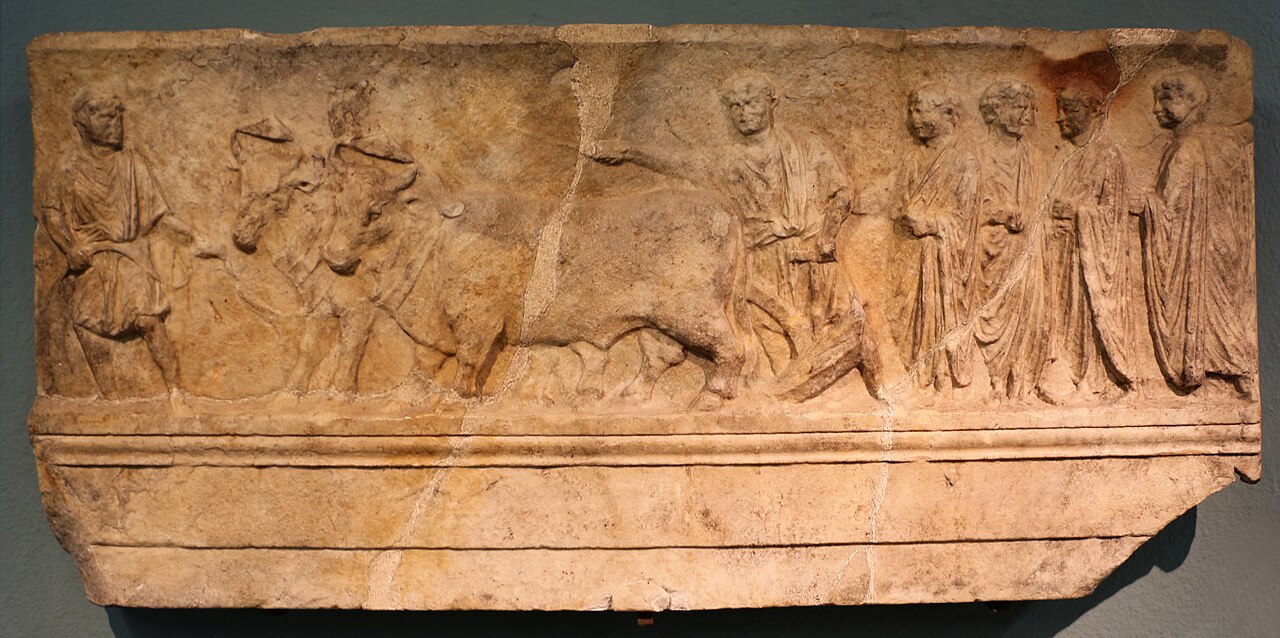
Romulus ploughed a sacred furrow around the Palatine Hill to mark the boundary of his new city, and became its first king. The ritual of the sulcus primigenius — the founding furrow — was not merely ceremonial. It was a declaration to gods and men alike: here begins something new, and something permanent.
The date itself was not random. April 21st was already the festival of Parilia, a rural celebration dedicated to Pales, the deity of shepherds and livestock. Since Rome was first imagined as a community of shepherds, the date became symbolically tied to its pastoral origins. By aligning the city’s birth with existing sacred tradition, Rome’s founders were doing something the Romans would do repeatedly throughout their history: absorbing what came before and making it their own.
Archaeological excavations date the earliest settlements on the Palatine to the same period of the legend. Huts and the perimeter of a wall already stood on the hill in those remote centuries. The narrative and the archaeology do not perfectly coincide, but they shake hands close enough to suggest the myth contains memory, a story that grew around a real beginning.
How the date was fixed
The precise date of 21 April 753 BC owes its authority mainly to one man: Marcus Terentius Varro, the Roman scholar whose calculation of the city’s age ultimately prevailed over competing systems. It was Emperor Claudius who first formally celebrated the anniversary of Rome in 47 AD, eight hundred years after the presumed date of foundation. From that point, the city’s age was counted using the Latin phrase Ab Urbe Condita, from the founding of the city. This system gave Rome its own calendar, its own sense of time, its own beginning of the world.
It is also worth noting, if you happen to be in Rome today at noon and the sun is shining: Emperor Hadrian had his engineers use precise mathematical calculations to astronomically align the Pantheon so that the ray of sunlight through the oculus falls exactly on the entrance doorway on April 21st. The ancient Romans believed the gods were thereby summoning the emperor to enter and be vested with power. Stand there at midday and decide for yourself whether the effect is coincidence or engineering genius. It is probably both.
From seven hills to world empire
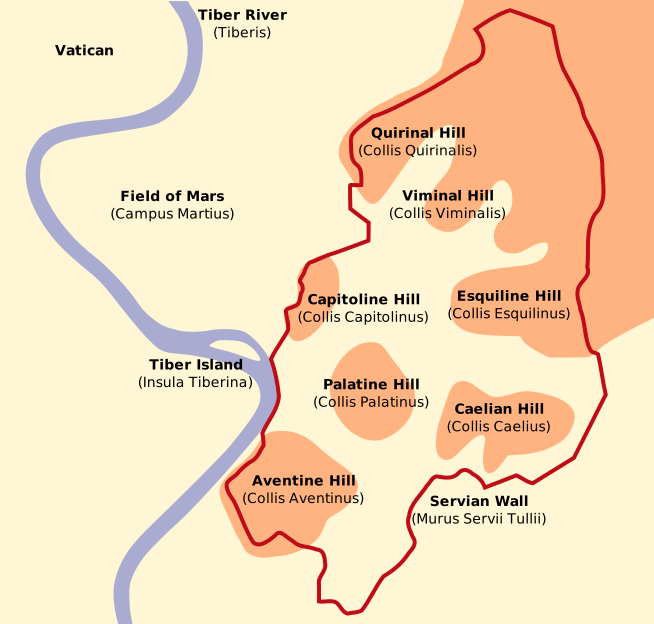
What Romulus founded as a collection of hilltop settlements on the banks of the Tiber would, over the centuries, become the most powerful state the ancient world had ever seen. From the seven kings of the Roman monarchy, to the Republic that overthrew them, to the Empire that swallowed the known world, the story of Rome is one of the most consequential in human history. Its law, its language, its architecture and its administrative structures still shape the world we live in today.
In our guide to the Roman Empire, we explore just what the empire was. Today, though, belongs to the beginning: a basket on the Tiber, a hungry wolf, a ploughed furrow on a hill, and a city that refused, for two and a half thousand years, to stop.
Buon compleanno, Roma.
ItalyNews.Online covers Italian history, culture, travel and current affairs for an international audience.