Thursday’s tremor is among the strongest recorded during the ongoing bradyseismic crisis at the Phlegrean Fields. Ground uplift has now reached 140 centimetres since 2005 and a new study warns of a critical transition within a decade.
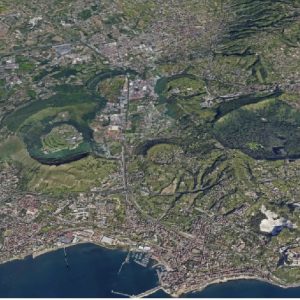
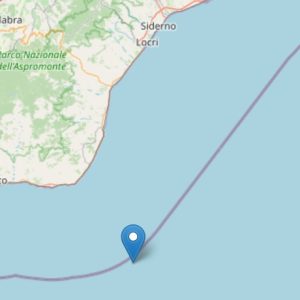
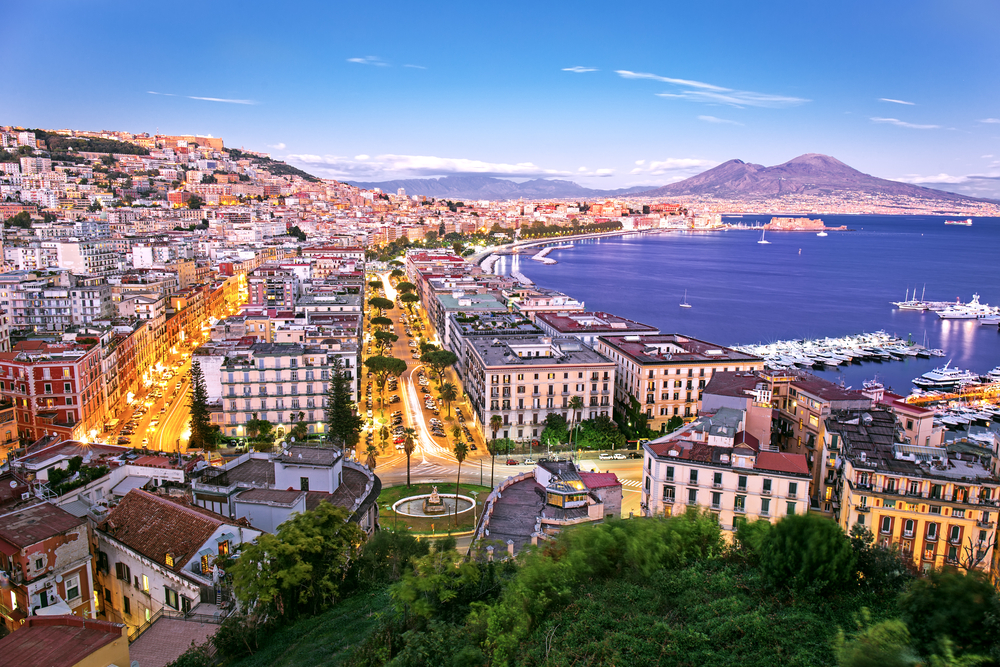
A 4.4-magnitude earthquake struck the Campi Flegrei caldera at 05:50 on Thursday morning, according to the National Institute of Geophysics and Volcanology (INGV), with its epicentre in the caldera and a depth of three kilometres. The tremor jolted residents from their sleep across a wide area, with strong reverberations reported in the Neapolitan districts of Posillipo, Vomero, Bagnoli and Fuorigrotta, as well as in the municipalities of Pozzuoli, Bacoli, Monte di Procida, Quarto and Giugliano to the west. It was felt clearly across the Gulf of Naples, including the islands of Ischia and Procida.

In terms of intensity and duration, the tremor was compared by local observers to the earthquake of 30 June 2025 — the strongest recorded in the area in 40 years, which had registered a magnitude of 4.6. Schools across the Campi Flegrei area have been closed as a precautionary measure while the Civil Protection Department carries out structural checks on public buildings.
A caldera under sustained stress
Thursday’s earthquake is the latest in a series of increasingly intense tremors driven by the phenomenon of bradyseism — the slow, sustained uplift of the ground caused by the movement of magmatic and hydrothermal fluids deep beneath the caldera. Since 2005, the ground at Pozzuoli, the town at the centre of the caldera, has risen by approximately 140 centimetres in total, with instruments in recent months recording an average uplift rate of around 10 millimetres per month. The cumulative effects are visible at street level: buildings in Pozzuoli have cracked, roads buckle, and the harbour requires periodic dredging because the seafloor keeps rising.
Scientific research published in the journal Nature Communications Earth and Environment by a team from the University of Pisa and the GFZ Helmholtz Centre for Geosciences in Potsdam found that seismicity at the caldera has increased exponentially alongside the ground uplift, with maximum magnitudes of 4.4 to 4.6 in 2024 and 2025 representing the largest events ever recorded in the area. The same study identified newly discovered long-period seismic signals indicating a fissure-like structure at a depth of around 3.5 kilometres.
A pre-publication paper from April 2026, titled Accelerating unrest at Campi Flegrei signals a critical transition within the next decade, has attracted significant attention in the scientific community, projecting that the system could reach a decisive threshold by around 2033. Italian volcanologists have been careful to note that a critical transition does not necessarily mean an eruption but that it does mean the system requires the closest possible monitoring. The caldera last erupted in 1538
500,000 people live inside the caldera
Approximately 500,000 people live within the boundaries of the Campi Flegrei caldera, one of the largest active calderas in Europe, making it one of the most complex volcanic risk scenarios in the world. In 2024, following a significant escalation in seismic activity, the Italian government allocated €500 million to reinforce buildings at risk and draw up updated evacuation plans for the area.
INGV continues to monitor the caldera around the clock.