From the FAO’s Roman headquarters to the Botanical Garden and the Senate chamber, Italy has marked World Bee Day 2026 with an ambitious series of events. Italy also has the most productive beekeeping sector in the European Union.
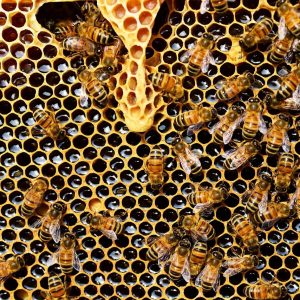
Italian beekeeping stands at the top of the European Union rankings, with more than 1.7 million bee colonies whose estimated value reaches €500 million. this according to the latest census from the Italian Beekeepers’ Federation (FAI). According to the National Honey Observatory, there are 78,017 active beekeepers managing 1,554,475 registered hives, with 2025 honey production estimated at just under 31,000 tonnes.
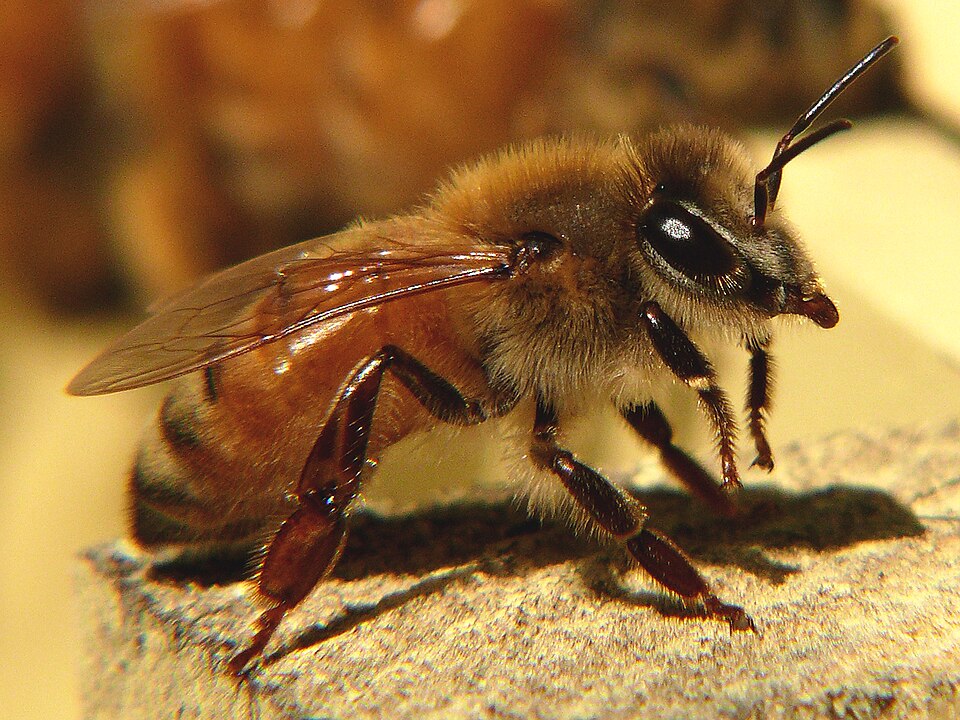
The economic significance of the sector goes well beyond honey. Raffaele Cirone, president of the FAI, stated that pollination generates up to €2 billion of value in Italian agrifood production and an estimated €150 billion in broader ecosystem services. Italy is home to more than 1,000 bee species, making it one of the most biodiverse countries in Europe for pollinators. Among them, the Apis mellifera ligustica — the Italian honeybee — is one of the most widely distributed subspecies in the world and a cornerstone of both domestic and international beekeeping.
2026 Theme – Bee Together for People and the Planet
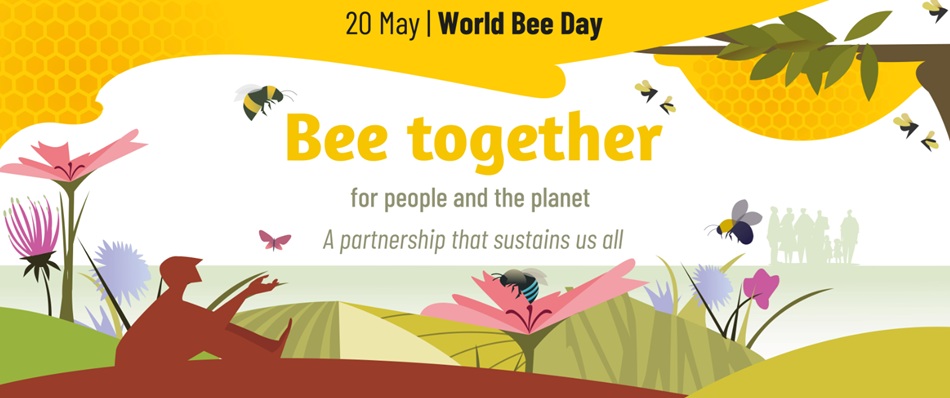
This year’s World Bee Day, celebrated on 20 May under the theme Bee Together for People and the Planet — A Partnership that Sustains Us All, has been anchored in Rome, where the Food and Agriculture Organisation of the United Nations is headquartered.
At midday on 20 May, FAO Director-General Qu Dongyu inaugurated a temporary exhibition on bees and sustainable beekeeping at the FAO Museum and Network (MuNe) at the organisation’s Rome headquarters. The exhibition features historical artefacts, traditional and modern hives, and examples of innovation in the sector.
Visitors to Rome this week can also explore the semi-permanent art installation API-LOGO by artist Cyril de Commarque, hosted at the Botanical Garden of Rome and created with technical support from the FAO and the University of La Sapienza. Conceived as a habitat for wild bees, the work is designed to draw attention to the fundamental role of pollinators and was unveiled on 18 May as an opening to the week of events.
A broader programme of events across the Rome region ran from 18 to 21 May, taking in the Botanical Garden, Luiss University, the Civic Museum of Zoology, the Martignanello Nature Reserve, and the Garden of the Five Senses in Licenza, with activities ranging from exhibitions and roundtables to family workshops and guided nature walks.
In the Senate’s Sala Caduti di Nassirya in Rome, the project L’Alveare Parlante — Storie d’apicoltura e geografie dei mieli (The Talking Hive: Stories of Beekeeping and Honey Geographies) was presented on World Bee Day. Conceived by journalist Valentina Calzavara under the auspices of the National Honey Observatory and Coldiretti Api, the project takes the form of a journey through Italy’s extraordinary diversity of honeys.
A day dedicated to beekeepers
This year’s Italian celebrations have been explicitly framed as a tribute to the men and women who keep the sector alive. “This year we dedicate the Day to beekeepers — male and female — because it is thanks to their work that our bee guarantees productivity and sustainability throughout the supply chain,” said FAI president Cirone.
The FAI also noted that the health of Italian beekeeping is partly the result of sustained institutional attention, from the Ministry of Agriculture downwards. Across the country, WWF Italy’s nature reserves are hosting citizen science activities, nature walks, and school engagement events to bring communities closer to the world of pollinators and the value of biodiversity.
Bees in Italian history
Winged power in Baroque Rome
Long before they became symbols of global conservation, bees were the ultimate emblem of political and spiritual authority in Baroque Italy. In 17th-century Rome, the powerful Barberini family adopted three bees as their coat of arms, scattering the image across the city to mark their immense wealth and patronage.
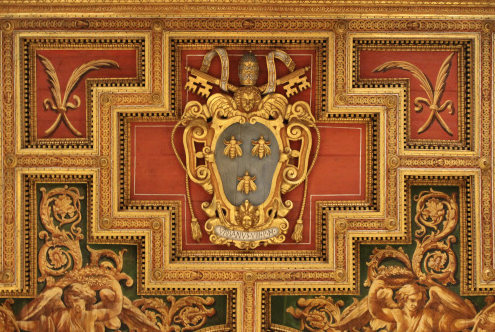
When Maffeo Barberini became Pope Urban VIII, he tasked the legendary sculptor Gian Lorenzo Bernini with “stamping” the family crest onto major architectural commissions. Today, sharp-eyed visitors can spot these historic insects carved into the walls of Palazzo Barberini, buzzing across the Fountain of the Bees near Piazza Barberini, and even detailed in a stained-glass window inside the Basilica of Santa Maria in Ara Coeli.
Most notably, Bernini cast the three bees onto the bronze base of the massive Baldachin canopy inside St. Peter’s Basilica—an act wrapped in controversy, as the bronze was famously melted down from the ancient portico of the Pantheon.
The Inexplicable swarm of Florence
Further north in Florence, bees took on a more civic meaning, representing the tireless industry of a well-governed society. At the base of the equestrian statue of Grand Duke Ferdinando I in Piazza Santissima Annunziata, a bronze plaque designed by Pietro Tacca features a swarm of bees arranged in a tight, concentric circle around a central queen.
Symbolising the Florentine state loyal to its ruler, the plaque carries a famous local riddle: it is said to be completely impossible to count the exact number of bees using your eyes alone. Because of the hypnotic, irregular layout, onlookers invariably lose track—a deliberate design trick meant to suggest that the true nature of power is inexplicable.
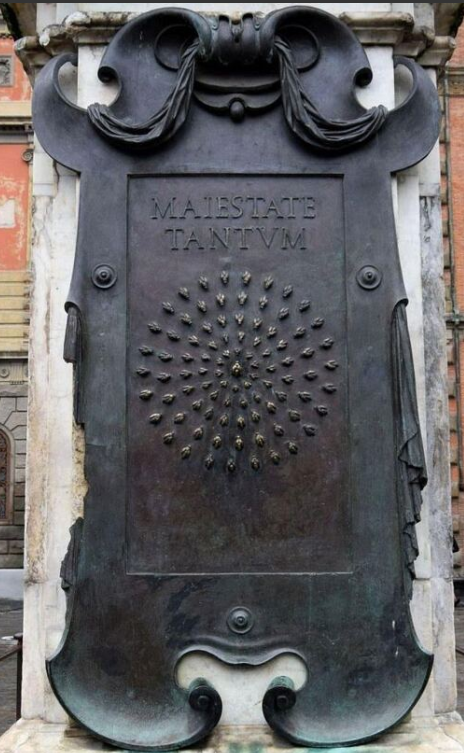
Local folklore adds that a successful count brings immense good fortune, prompting parents to use the bronze swarm as a playful attention-span test for their children. However, tradition warns against cheating: anyone who dares to point or touch the bees while counting might just find their good luck flying away.