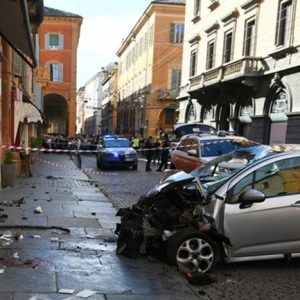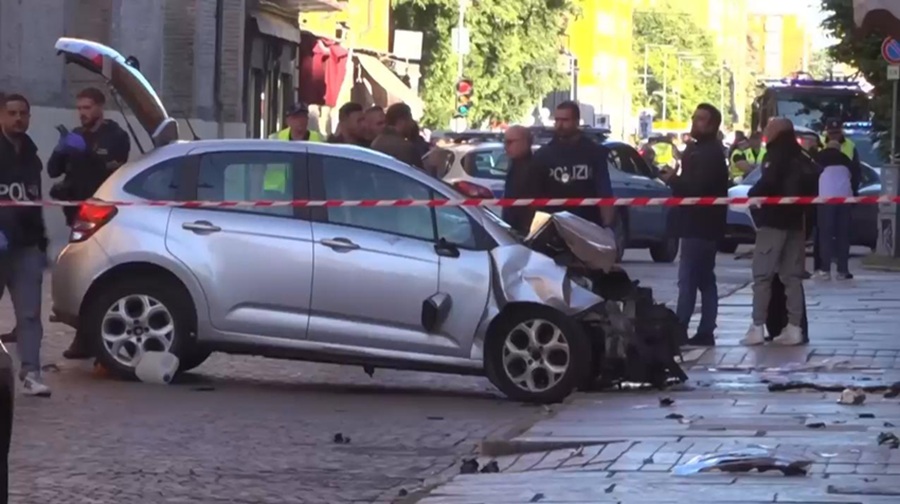
Prosecutors have declined to pursue terrorism or racial hatred as aggravating factors against Salim El Koudri. His lawyer is seeking a mental health evaluation and new details emerge about the 31-year-old’s state of mind before and during Saturday’s attack in Modena.
Salim El Koudri, the Italian citizen of Moroccan heritage who drove his car into pedestrians on Via Emilia in Modena on Saturday, appeared before a preliminary investigations judge at Modena prison on Tuesday for a validation hearing. Prosecutors did not request that terrorism or racial hatred be added as aggravating factors to the charges, according to El Koudri’s defence lawyer, Fabio Giannelli.
El Koudri currently faces charges of aggravated assault — and, according to earlier Italian media reports, massacre and aggravated injury — for an attack that left eight people injured, four of them seriously. Among the most critically hurt is a woman who required the amputation of both legs.
El Koudri did not respond to the judge during the hearing, though he did voluntarily provide investigators with the password to his mobile phone. “He seemed more lucid than yesterday,” Giannelli said. “He asked me for cigarettes. I told him his parents would be coming, but he replied: ‘Let’s wait, I want to be ready.'”
Psychiatric assessment requested
Giannelli said he will formally request a psychiatric evaluation for his client, describing him as having been in a state of acute mental confusion at the time of the attack. He revealed that El Koudri told him he had been convinced he was going to die on the day of the attack. This detail may prove central to any future assessment of his mental state and criminal responsibility.
Earlier in the week, Giannelli had described his client as appearing to be in a state of “absolute confusion,” lacking awareness of the events and seeming to relive them “as if for the first time.”
El Koudri had been suffering from schizoid mental disorders since 2022. He had been receiving treatment at a psychiatric facility in Castelfranco Emilia until 2024, after which his contact with mental health services appears to have ended. Investigators have confirmed there is no evidence of radicalisation or links to jihadist groups from the initial analysis of his seized devices.