A major fresco cycle concealed for centuries has been uncovered during restoration work at Casa Leopardi in Recanati.
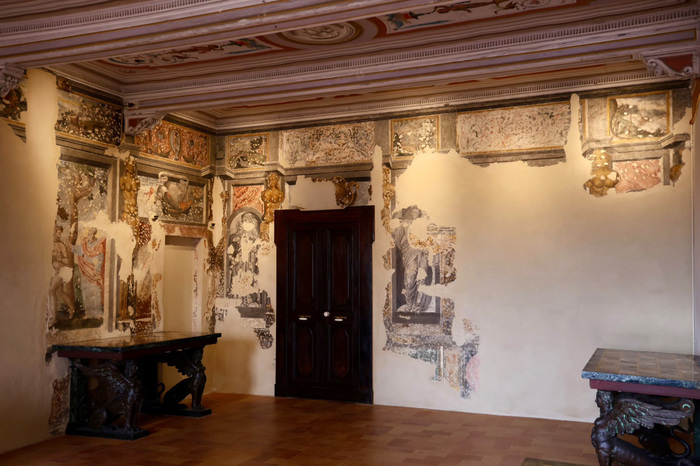
A fresco cycle dating to the late 16th and early 17th centuries has been found in the library of Casa Leopardi, the Marche hilltown palazzo where Giacomo Leopardi grew up, the Leopardi House announced on Thursday. The paintings came to light during consolidation and restoration work on the library in Recanati, near Macerata.
“This discovery further enriches the historical and artistic heritage of Casa Leopardi and provides us with a precious testimony to the history of the palazzo,” said Countess Olimpia Leopardi, the poet’s descendant and head of the House. “It’s exciting to think that Giacomo might have also observed these paintings before they were hidden by subsequent transformations.”
The library and the poet
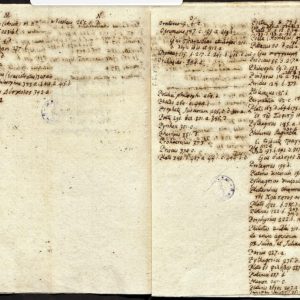
The library at Casa Leopardi is one of the most remarkable private collections in Italy. Largely amassed by Giacomo’s father, Count Monaldo Leopardi, it has recently been made available online via the Marche Sud digital catalogue. It was among these shelves that the young Giacomo immersed himself so completely in Latin, Greek, and other ancient languages that scholars believe his strenuous, voracious reading habits contributed materially to the precarious health that dogged him throughout his short life.
The frescoes predate Leopardi’s lifetime by roughly two centuries, meaning they would have been a fixture of the palazzo during the years the poet pored over ancient texts in what was, by any measure, one of the finest private libraries in Italy.
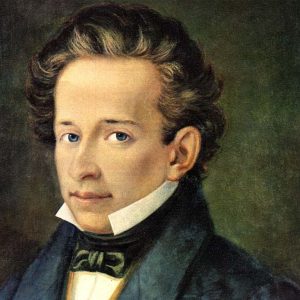
Giacomo Leopardi (29 June 1798 – 14 June 1837) was a poet, philosopher, essayist, and philologist, considered the greatest Italian poet of the 19th century and one of the most significant figures in world literature, as well as a central voice of literary Romanticism. His Canti and the prose collection Zibaldone remain touchstones of European thought, marked by a radical, unsentimental engagement with human suffering, beauty, and the indifference of nature.