A landmark agreement signed in Washington between Italy and NASA guarantees an Italian astronaut a place on a future lunar mission. It also hands Italy the job of building humanity’s first permanent home on the Moon.
Italy is going to the Moon. Not metaphorically, not in partnership with a passing mention in a larger agreement but with its own astronaut setting foot on the lunar surface and its own engineers building the habitat that will house them when they get there.
The Italian Space Agency (ASI) confirmed on Tuesday that a new bilateral agreement signed in Washington between Italy’s Minister of Business and Made in Italy, Adolfo Urso, and NASA Administrator Jared Isaacman, formally guarantees that an Italian astronaut will participate in a future lunar mission under the Artemis programme. At the heart of the deal is Italy’s Multi-Purpose Habitation module, known as the MPH, which has now been formally integrated into the Artemis architecture as the programme’s first dedicated surface habitat.
“A long-standing space cooperation, now even deeper, between NASA and ASI will lead to the creation of a base camp on the Moon and an Italian astronaut walking on the lunar surface,” ASI president Teodoro Valente wrote on X after the signing.
A home on the moon built in Turin
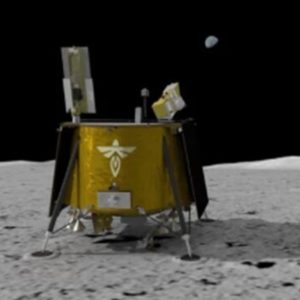
The MPH is not simply a symbolic contribution. Planned for launch from NASA’s Kennedy Space Center in 2033, the MPH module will be the first ever dedicated habitation asset on the lunar surface.
The module breaks new ground by combining the functions of both a mobile rover and a permanent habitat. This dual-purpose design will allow the structure to relocate across the lunar surface while providing long-term accommodation for astronaut crews. It is engineered for an operational lifetime of at least 10 years, during which it will support crew habitation, scientific research, and surface operations, both with astronauts present and during autonomous periods.
Thales Alenia Space Italia, a joint venture between Thales and Leonardo, leads the industrial consortium that includes ALTEC (co-owned by Thales Alenia Space and ASI) along with other entities in the national aerospace sector.
Minister Urso was direct about where this will be built. “This bilateral cooperation will allow us to bring an Italian astronaut to the Moon soon, in a habitation module that will be built in Italy, in Turin,” he declared. He pointed to the city’s established aerospace cluster as the industrial engine of the project. The goal, he said, is to see it all realised within the next seven to ten years.
A historic lineage
Urso drew a deliberate line from Italy’s deep space heritage to the present, invoking the memory of Rocco Petrone, the Italian-American director of the Apollo programme, at a ceremony held to mark the centenary of his birth.
The connection is apt. Italy’s space journey began in 1964, when it became the third country in the world, after the United States and the Soviet Union, to launch its own satellite, San Marco 1. That early lead was built not on raw scale but on precision engineering and strategic alliance, the same qualities that now place Italy at the centre of humanity’s return to the Moon.
Italy’s aerospace sector today generates more than €7 billion annually and employs over 40,000 professionals, with more than 10% of revenue reinvested into research and development. At the 2025 ESA Ministerial Council, Italy committed €3.5 billion for the 2026–2028 period, a 13% increase on its previous pledge.
Who will walk on the moon?
The agreement does not name the astronaut who will make the lunar journey. But Italy’s space community is not short of candidates, and the country’s most celebrated astronaut will be watching closely.
Samantha Cristoforetti, Italy’s first woman in space, the first European woman to command the International Space Station, and one of the most experienced astronauts in the ESA corps, has long been linked to lunar ambitions. She has already served as ESA’s crew representative on the Gateway project, working specifically on crew systems and habitability for the lunar module. She is widely considered one of the leading candidates to become the first European woman to reach the Moon.
The agreement also opens the door to the direct participation of Italian astronauts in future missions, in addition to the opportunities already provided for under NASA-ESA cooperation.
A new era of lunar exploration
The timing of the announcement is significant. Artemis II is scheduled to launch on 1 April 2026 from Kennedy Space Center, carrying four astronauts on a ten-day free-return trajectory around the Moon. The first crewed lunar landing under Artemis IV is planned for early 2028.
Italy’s MPH module is designed for the phase that comes after the flags-and-footprints era is over, when the Moon becomes a place humans stay, work, and live. “We will return to the Moon, and this time to stay,” Urso said. “We will do so thanks to Italian technology and with an Italian astronaut on one of the next missions of the Artemis programme.”
The future home of astronauts on the Moon, it turns out, will be made in Italy.