A Neapolitan love song, a bridal tricolour, and five million Italians watching at home. Italy had plenty to celebrate at a 70th-anniversary Eurovision final shadowed by boycotts and political controversy.
Italy finished fifth at the Eurovision Song Contest 2026, held on Saturday night at the Wiener Stadthalle in Vienna, as Sal Da Vinci’s Per sempre sì accumulated 281 points from juries and the public televote. It was a solid and creditable outcome for the 22nd act of the evening, who kept Italy firmly in the contest’s upper tier despite stiff competition and a politically charged atmosphere that dominated much of the week’s coverage.
Bulgaria claimed victory with 516 points — the highest winning total in the contest’s history — through Dara’s infectious dance anthem Bangaranga, which translates as “Chaos.” Israel’s Noam Bettan finished second on 343 points, Romania third on 296, and Australia fourth on 287.
The margin of victory was staggering: Bulgaria finished 173 points ahead of Israel, the largest winning margin in Eurovision history. It was Bulgaria’s first ever Eurovision victory, and the country had only returned to the contest this year after sitting out three consecutive editions between 2023 and 2025.
A great show by Italy
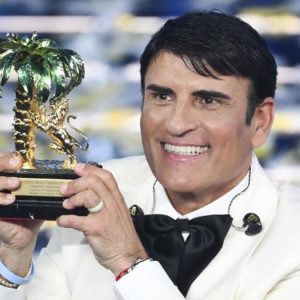
In 2009, Sal Da Vinci placed third at Sanremo with Non Riesco A Farti Innamorare, a competition he returned to and won 17 years later in 2026. The Neapolitan singer, long a household name in Italy, arrived in Vienna as the country’s Sanremo champion and delivered a performance that blended romance and pageantry.
Italy received 12 points from the professional juries in Albania and Azerbaijan, and 12 points from the public in Albania and Malta. Italy’s own televote awarded its maximum 12 points to Belgium’s Essyla for Dancing on the Ice.
Over five million viewers watched the final on Rai 1, representing an audience share of 36% — up 277,000 on the previous year’s figures and 2.1 percentage points higher in share terms.
A Eurovision defined by controversy
With five countries boycotting over Israel’s participation — Ireland, the Netherlands, Norway, Slovenia and Spain — this year’s Eurovision faced its deepest identity crisis in years, despite the “United by Music” slogan.
Spanish Prime Minister Pedro Sánchez doubled down on the boycott ahead of the final, posting a video in which he said Spain would not attend because “silence is not an option” and insisting the country was “on the right side of history.”
Israel’s second-place finish is certain to fuel further debate about the contest’s future shape and the limits of its founding apolitical ethos.
Unsurprising result for the United Kingdom
There was a miserable night for the UK entry, with Look Mum No Computer’s Eins, Zwei, Drei finishing last with a single point, awarded by the Ukrainian jury. To be honest, political voting aside, it was what it deserved, as a dire entry.