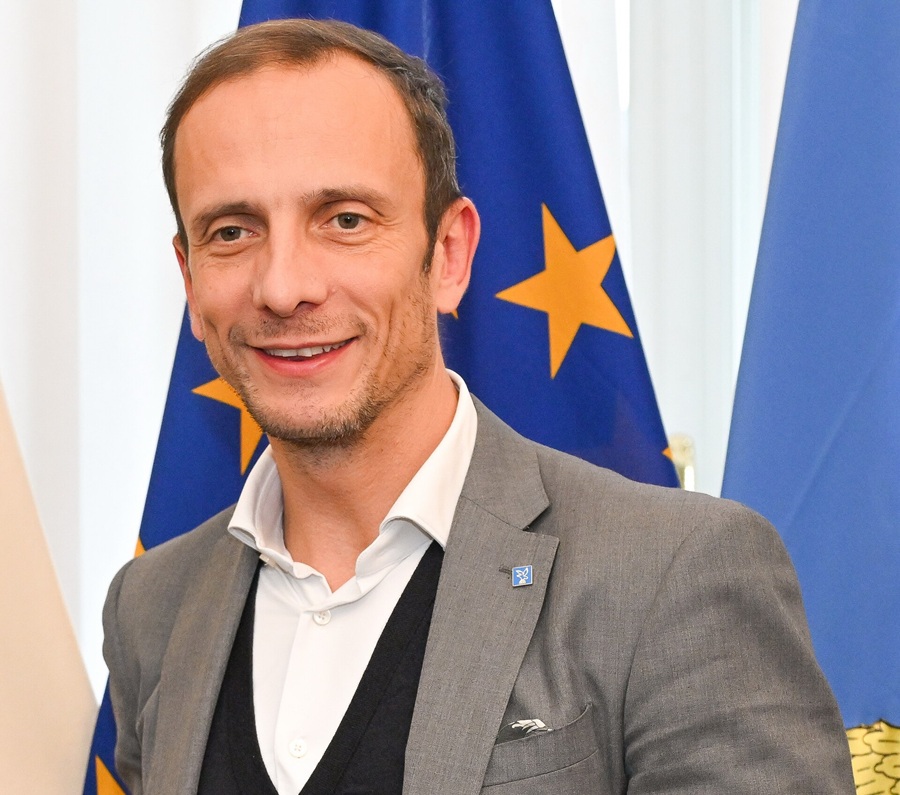
Friuli Venezia Giulia’s Massimiliano Fedriga has retained his position as Italy’s most popular regional governor with an approval rating of 65%, according to a new SWG poll for ANSA. The survey reveals a striking gap between the country’s best and worst-performing regional leaders.
Massimiliano Fedriga, the League governor of the northeastern region of Friuli Venezia Giulia, leads Italy’s regional presidents in public approval for the second consecutive year. He registered 65%, up one percentage point on his 2025 figure. The result confirms Fedriga’s status as one of the most consistently well-regarded politicians in Italy, with an approval level that puts him in a different category from most of his national counterparts.
Also read: Italy’s regions
He is followed in second place by a fellow League member, Alberto Stefani, governor of Veneto, with 58%. The result gives the League, the party led by Deputy Prime Minister Matteo Salvini, the top two positions in the survey.
Third place goes to Roberto Occhiuto, the centre-right governor of Calabria, with 53%. Occhiuto has steadily built a reputation as one of the more dynamic administrators in southern Italy, having taken on a region long associated with institutional dysfunction and organised crime.
Centre-Left in mid-table
The survey places two centre-left governors in the middle of the rankings. Puglia’s Antonio Decaro, who took over the region’s presidency following a long and successful stint as mayor of Bari, registers 51%. Campania’s Roberto Fico, a former president of the Chamber of Deputies and 5-Star Movement figure who has since moved closer to the centre-left, scores 47%.
Schifani at the bottom
The governor with the lowest approval rating in the survey is Sicily’s Renato Schifani, the centre-right regional president, who registers just 25%.
The result, a significant 40 percentage points below Fedriga’s, represents a considerable political liability for a region that, like Calabria, has historically faced deep structural challenges in governance, public services and economic development. Schifani’s rating will probably not come as a surprise as several of his councillors have been under investigation for corruption.
The party/political affiliation-breakdown
Right or Centre-right coalition
- Friuli Venezia Giulia — Massimiliano Fedriga (League)
- Veneto — Alberto Stefani (League) — elected November 2025
- Lombardy — Attilio Fontana (League)
- Piedmont — Alberto Cirio (Forza Italia)
- Liguria — Marco Bucci (centre-right, FdI-led coalition) — elected late 2024
- Marche — Francesco Acquaroli (Fratelli d’Italia) — re-elected 2025
- Abruzzo — Marco Marsilio (Fratelli d’Italia)
- Calabria — Roberto Occhiuto (Forza Italia) — re-elected 2025
- Sicily — Renato Schifani (Forza Italia)
- Basilicata — Vito Bardi (centre-right)
- Molise — Francesco Roberti (Fratelli d’Italia)
- Lazio — Francesco Rocca (independent, backed by centre-right coalition)
Centre-left coalition
- Tuscany — Eugenio Giani (PD) — re-elected 2025
- Emilia-Romagna — Michele de Pascale (PD) — elected late 2024
- Sardinia — Alessandra Todde (M5S/centre-left) — elected 2024
- Umbria — Stefania Proietti (centre-left) — won 2024
- Puglia — Antonio Decaro (PD) — won November 2025
- Campania — Roberto Fico (M5S/centre-left coalition) — won November 2025
Other regions
- Trentino-Alto Adige/South Tyrol — governed by regional/provincial parties (SVP dominant in Bolzano; centre-right in Trento)
- Valle d’Aosta — governed by local autonomist parties, broadly centre-left aligned
Fedriga’s sustained popularity is particularly notable. Friuli Venezia Giulia is a relatively small and prosperous region in the far northeast, but his ability to maintain approval above 60% across consecutive years points to a style of governance — pragmatic, regionally focused and detached from the louder conflicts of national politics.