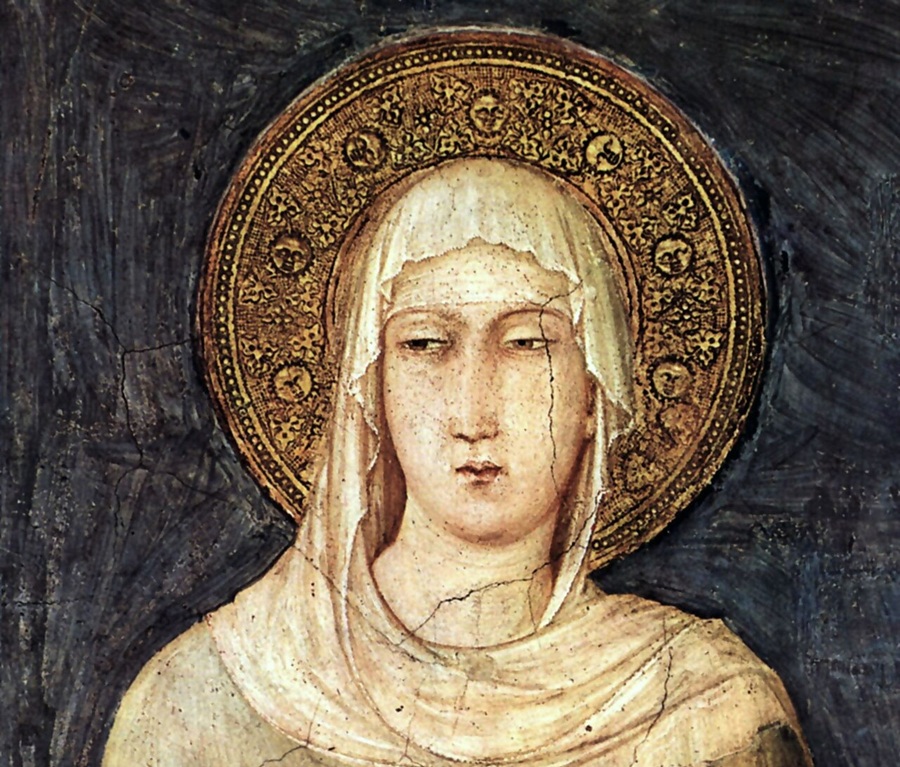
St Clare was born on 16 July 1194 in Assisi, into a noble family whose sheltered future she abandoned at eighteen for a life of poverty. She founded one of the great religious orders of medieval Europe.
St Clare was born 11July 1194 in Assisi as Chiara Offreduccio, the daughter of a Count. Even as a young girl she was known within her household as thoughtful, prayerful and unusually devout for someone raised amid such privilege and comfort.
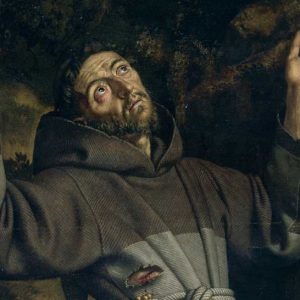
At the age of 18, Clare heard Francis of Assisi preach and was profoundly moved by his message. She sought him out privately over the following months to ask for his guidance in living her life according to the Gospel, resisting all the while the marriage her family had planned for her.
On the night of Palm Sunday in 1212, Clare slipped out of her father’s house under cover of darkness and made her way to the chapel of Porziuncula to meet Francis. There, in a deliberate act of renunciation, her hair was cut off and her rich gown exchanged for a plain robe and veil.
Family pressure and a growing community
Clare initially joined a convent of Benedictine nuns for her own safety. When her father tracked her down and attempted to force her to return home, she clung to the altar and refused to leave, her resolve ultimately proving unshakeable. Francis later moved her to another monastery, where she was joined before long by her sister Agnes. Their mother followed, along with other women drawn to the same calling of serving Jesus in poverty. The community became known as the Poor Ladies of San Damiano, named for the austere lifestyle they led at the church of San Damiano, just outside Assisi.
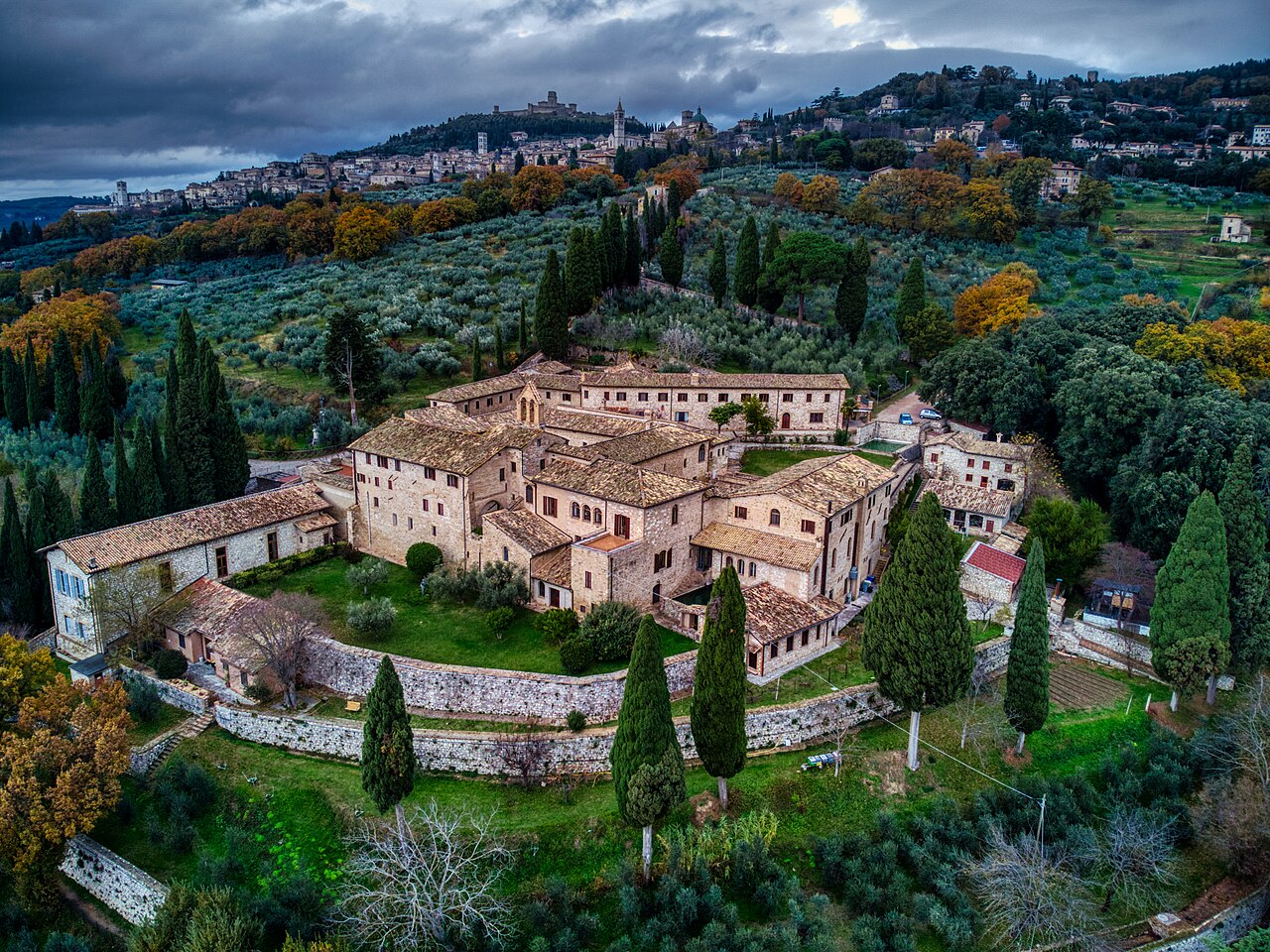
Clare would go on to lead the community as abbess for more than forty years. She cared for Francis in his old age and, after his death in 1226, continued to guide her Order of Poor Women in the Franciscan tradition. They were later known as the Order of St Clare, or simply the Poor Clares.
A fight for the “privilege of poverty”
Clare’s defining battle was not against invading armies but against the Church’s own instinct to soften her order’s way of life. Where other religious communities accepted property and income, Clare insisted her sisters own nothing at all, even communally. Successive popes pressed her to accept some form of financial security for her convent; she refused each time.
Pope Gregory IX, who had known Clare personally before his election, was among those who tried and failed to persuade her otherwise. Her persistence eventually secured what became known as the Privilege of Poverty, a papal sanction allowing her order to live without possessions. It was the first such privilege ever granted.
Facing down an army twice
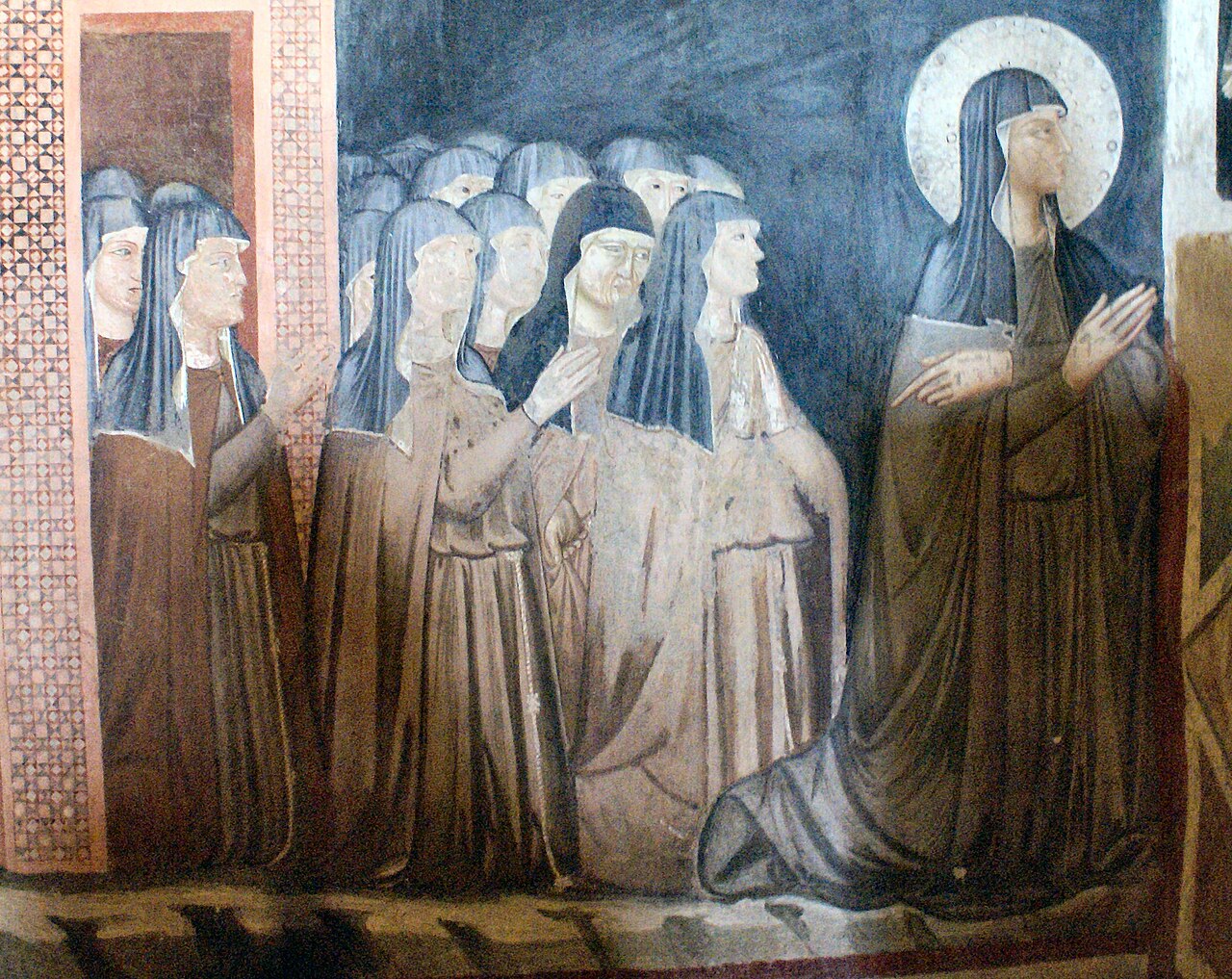
The Poor Ladies’ convent came under direct threat during the conflict between Pope Gregory IX and the Holy Roman Emperor Frederick II, when Saracen mercenaries allied to the emperor twice threatened Assisi in the early 1240s. On the first occasion, soldiers stormed the walls of San Damiano itself. Although gravely ill at the time, Clare had herself carried to a window overlooking the attackers, carrying the Blessed Sacrament, which she placed where the soldiers could see it. She then knelt and prayed for her sisters to be spared.
According to tradition, a sudden fear gripped the attacking force and they withdrew without harming anyone. When a larger imperial force threatened the town of Assisi itself shortly afterwards, Clare’s prayers were again credited with turning the army away.
A vision that made her patron saint of television
One of the best-known stories associated with Clare dates from close to the end of her life. On Christmas Eve 1252, too unwell to leave her bed and join her sisters at Mass in the Basilica of St Francis some distance away, Clare is said to have seen and heard the entire service as though projected onto the wall of her cell.
The story endured for centuries, and in 1958 Pope Pius XII cited it in declaring Clare the patron saint of television. It is a rather strange and modern honour for a woman who had spent her life renouncing the world’s comforts. She is also venerated as patron saint of eye disorders and embroiderers.
A rule of her own making
Just two days before Clare’s death in 1253, Pope Innocent IV formally approved the Rule of Life she had written for her sisters, making it the governing rule of her Order. It is believed to be the first set of monastic guidelines known to have been composed by a woman, a remarkable achievement in the rigidly male-dominated Church of the thirteenth century.
Clare died in Assisi on 11th August 1253, at the age of 59. Her remains were placed in the Chapel of San Giorgio while a new church dedicated to her was built. Just two years later, in 1255, she was declared a saint by Pope Alexander IV, one of the swiftest canonisations of the medieval period.
The Basilica of St Clare was completed in 1260, and her remains were transferred there to lie beneath the high altar. Six centuries later, in 1850, her remains were rediscovered and subsequently moved to a newly constructed shrine in the basilica’s crypt, where they remain today. Alongside them her is the famous San Damiano Cross before which Francis is said to have received his own call to faith.
St Clare’s feast day is celebrated every year on 11th August.