Deep in the Apennines of Molise, one of Italy’s most obscure regions, is Pietrabbondante, a 2,000-year-old Samnite theatre and temple complex largely undisturbed by tourists. It offers a rare, intact glimpse of a civilisation Rome fought hard to subdue.
Most visitors to Italy never make it to Molise. Fewer still find their way to Pietrabbondante, a hill town of barely a few hundred people perched at over 1,000 metres in the province of Isernia. Pietrabbondante sits at 1,027 metres in the Mainarde mountains, some 30km from Agnone and 40km from Isernia. And yet just outside the village lies one of the most extraordinary archaeological sites in the country — one with none of the queues, ticket touts or gift shops that come with Pompeii or Paestum.
A sacred centre for a people Rome tried to forget
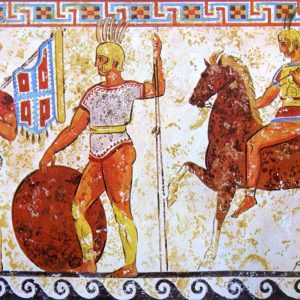
The site gives access to the most important Samnite archaeological complex in Italy. It is the sacred heart of what was once known as Bovianum Vetus, the main sanctuary of the Samnite nation, the Italic people who inhabited the central and southern Apennines. The Samnites fought Rome across three brutal wars between the fourth and early third centuries BC, and although they were eventually absorbed into the Roman world, their culture and language endured as a distinct identity for generations afterwards.
The sanctuary was built between the second and first centuries BC as a federal centre for the Pentri, one of the main Samnite tribes, and it was here that the Samnite senate met and the goddess Victory was venerated. A remarkable bronze votive plaque discovered near the temple confirms as much: it carries a dedication to the goddess Victory, revealing the warrior cult at the heart of Samnite religious life, with war trophies consecrated here as offerings.
A theatre carved into the mountainside
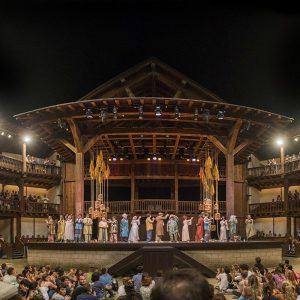
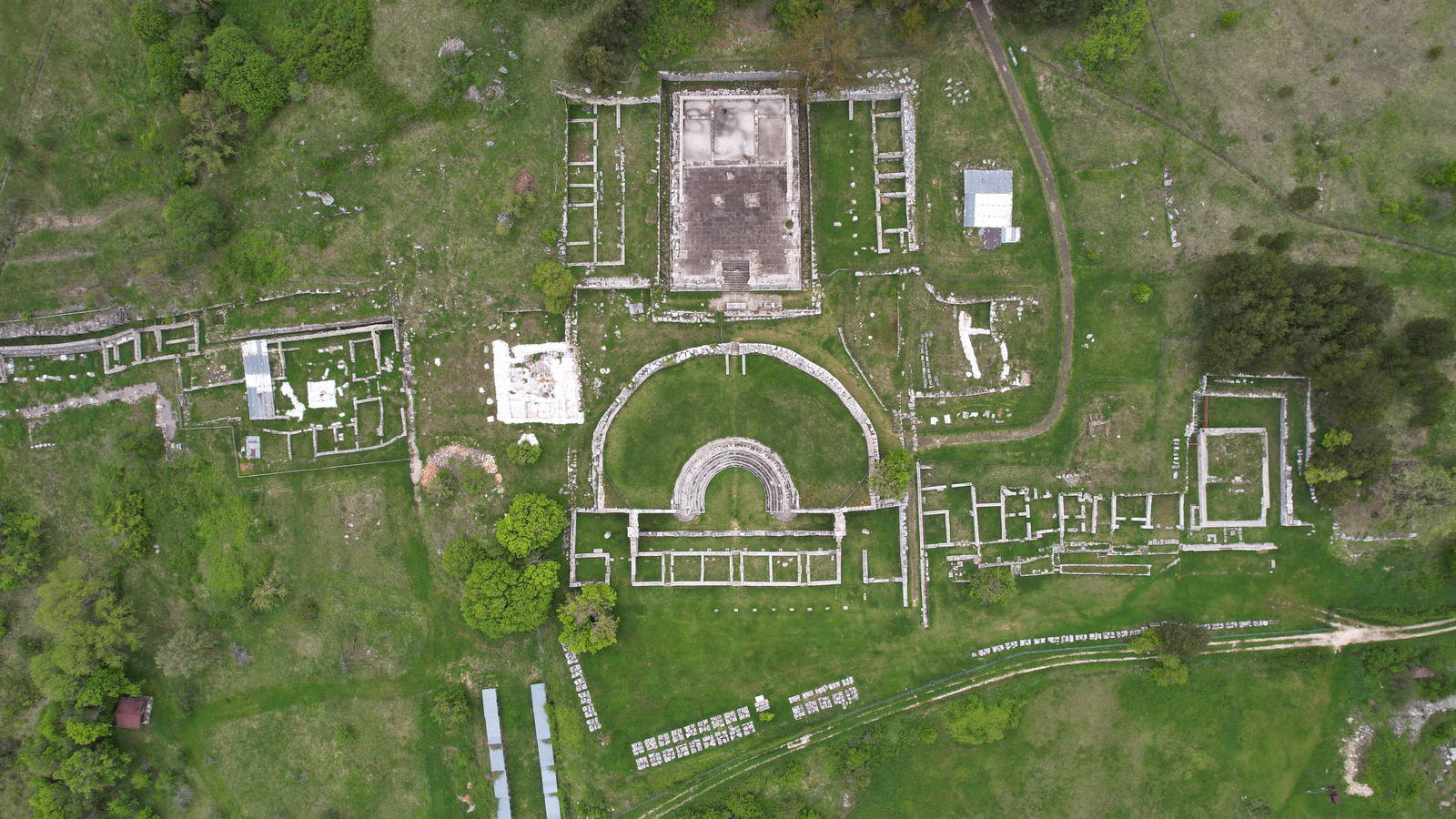
The centrepiece of the site is a theatre-temple complex that ranks among the finest surviving examples of pre-Roman Italic architecture anywhere in the country. The theatre, built in the 2nd century BC, is divided into six semicircular sectors and could once accommodate around 2,500 spectators. Its acoustics remain so good that it still hosts summer performances during the annual Samnite Theatre Festival.
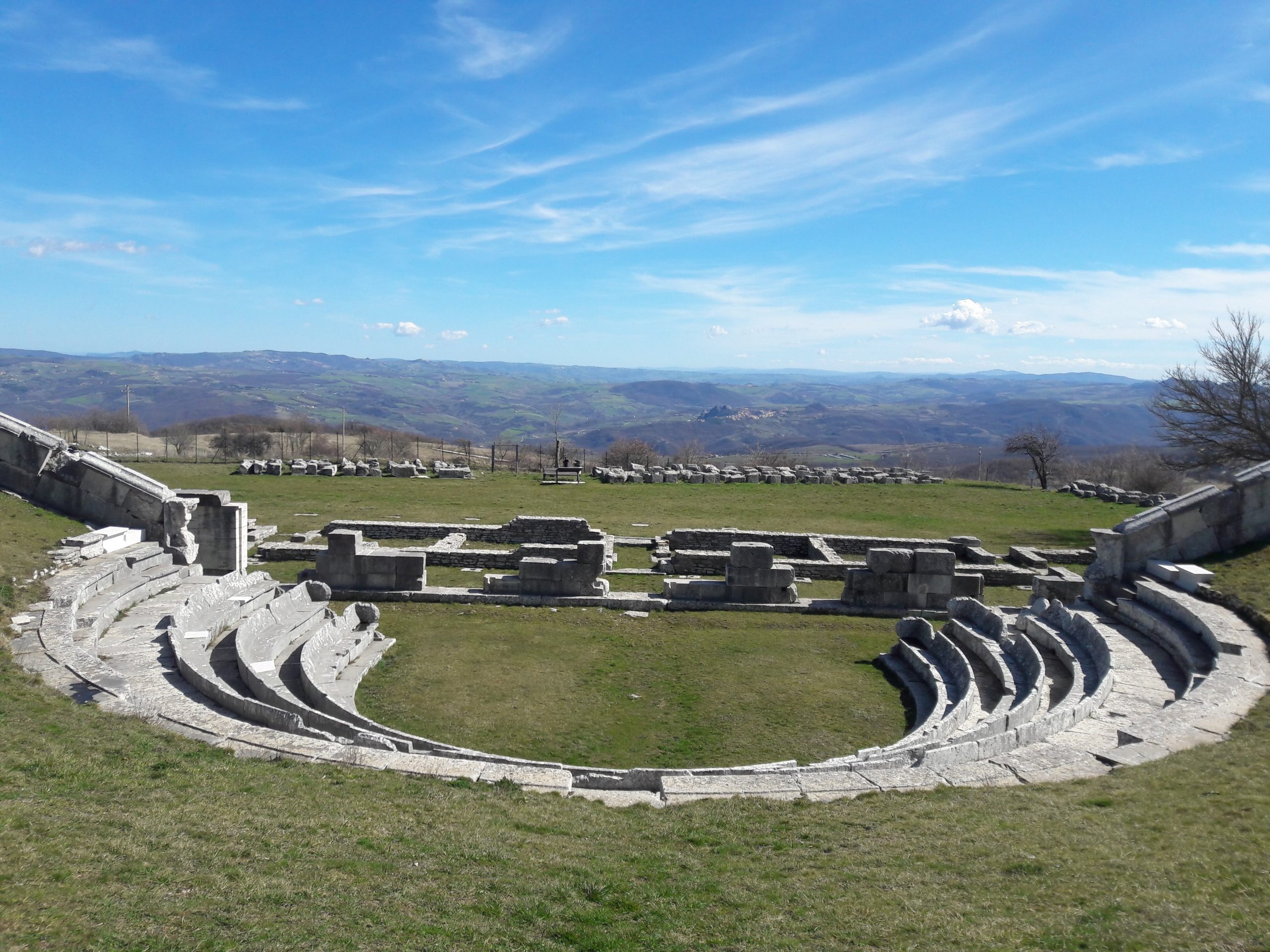
Look closely at the seating and the craftsmanship reveals itself: the stone seats were carved with armrests shaped like griffin paws, arranged across three tiers. Behind the theatre stands what’s known simply as the Great Temple, believed to have been dedicated to one of the principal deities of the Samnite pantheon. With three separate cellas, it is the largest surviving Samnite building of its kind.
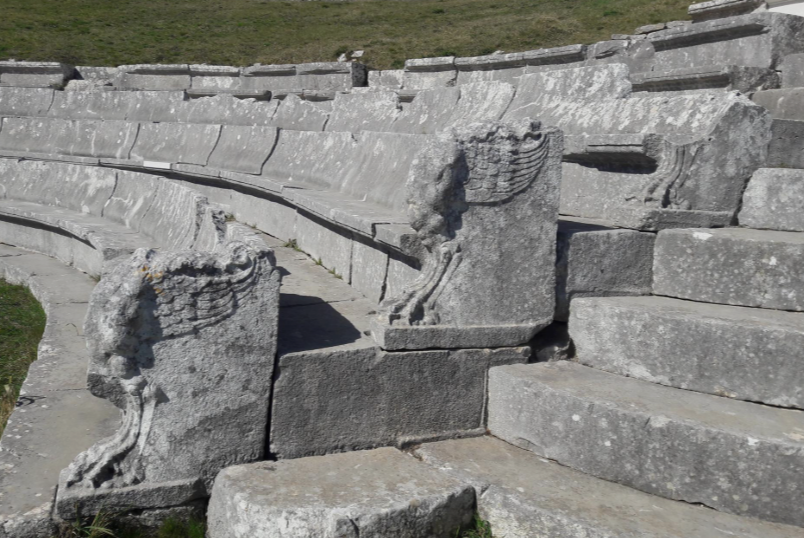
The entire complex was built without a drop of mortar. Its terraces and foundations are constructed from massive limestone blocks fitted together using an ancient cyclopean masonry technique that relies purely on gravity, allowing the structures to blend into the mountain slope rather than dominate it.
Traces of everyday life among the ruins
What makes Pietrabbondante especially rewarding is the human detail still visible in the stone. Original inscriptions carved in the Oscan alphabet — written right to left — survive on the podium blocks, recording the names of local citizens and magistrates who financed the sanctuary’s construction, evidence of civic pride that long predates Roman assimilation.
In front of the temple, two massive stone altars still sit on an open platform. According to Federica Fasano, a scholar specialising in the site, priests carried out animal sacrifices here, with channels deliberately cut into the rock to allow blood to drain into the earth as an offering to the gods. The same rituals were also used for divination, with priests reading omens in the entrails of sacrificed animals.
Slow excavation
Unlike the great Roman sites further south, Pietrabbondante has never been fully unearthed in a single campaign. Sporadic excavations began in the 1800s and continue today, with each new discovery adding to our understanding of a sanctuary that stands among the last of its kind. Serious systematic work only got underway in earnest in the mid-twentieth century, and archaeologists are still piecing together the site’s full history.
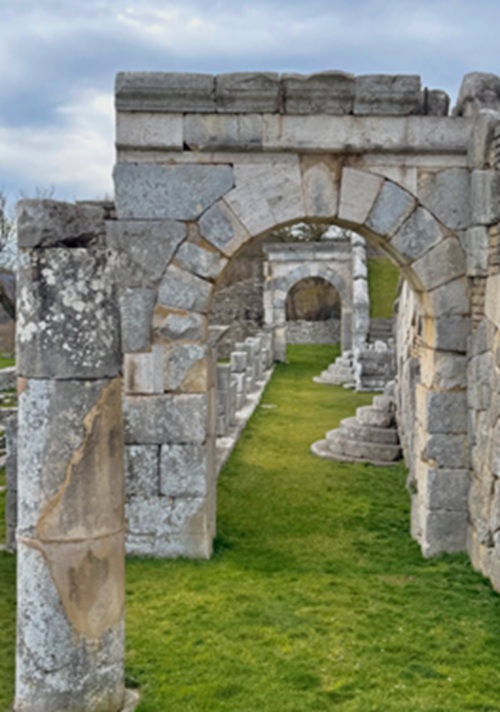
That history came to an abrupt end not with Roman conquest itself, but with the aftermath of the Social War. The theatre appears not to have undergone any significant renovation after its construction in the late second century BC, and was abandoned following the Social War of 91–88 BC. Centuries later, as Christianity spread across the peninsula, the site’s pagan life came to a formal close. In the fifth century AD, following the Edict of Theodosius, the sanctuary was sealed with a ritual ceremony marking the end of paganism in Molise.
Getting there
Pietrabbondante is not a place you stumble upon by accident. There’s no railway station nearby and no coach tours pulling in by the hour — a hire car from Isernia or Campobasso is by far the easiest route, winding up through the Apennines.
On a quiet weekday, you may well have almost entirely to yourself. For anyone tired of fighting crowds at Italy’s headline sites, that alone might be reason enough to make the journey.