Archaeologists working in southern Italy have uncovered a 2,400-year-old burial ground containing dozens of tombs from the ancient Samnite civilisation including child burials.
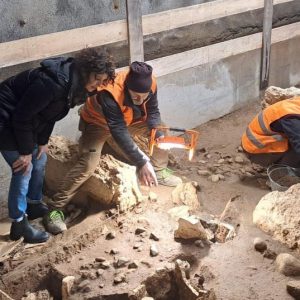
The discovery was made at a necropolis in Pontecagnano Faiano near Salerno during preventive excavations linked to redevelopment work on the site of a former tobacco factory.
Researchers uncovered 34 tombs dating from the fourth to third centuries BC, a period when the region was inhabited by the Samnites, an ancient Italic people who occupied large parts of southern Italy before the Roman conquest. The graves appear to have been arranged in family groups and typically consist of simple pits covered with roof-like arrangements of tiles.
About half of the burials belonged to children aged between two and ten years old. Among them, archaeologists found two particularly unusual graves in which young children had been buried wearing large bronze belts usually associated with adult male warriors.
Such belts were normally part of the military equipment of Samnite fighters. They are commonly found in adult male graves alongside weapons such as spears or swords. Their presence in children’s tombs has therefore raised questions about their symbolic meaning.
Archaeologists suggest the objects may have represented a form of social identity, possibly indicating the children’s family status or their expected role within the community if they had reached adulthood.
Who were the Samnites?
The Samnites were a group of Italic tribes who lived mainly in the mountainous regions of southern and central Italy from roughly the sixth century BC until their eventual defeat by Rome in the early first century BC.
They spoke the Oscan language and were known for their strongly martial culture. Samnite society produced skilled warriors who frequently fought against neighbouring peoples and later against the expanding Roman Republic during a series of conflicts known as the Samnite Wars.
Their burial traditions often reflected this warrior culture. Men were commonly buried with weapons or military equipment, while women were typically interred with jewellery and decorative objects.
A site with a long history
The archaeological area at Pontecagnano has been studied for decades and is one of the most important sites for understanding the ancient cultures of Campania. Excavations since the 1960s have uncovered thousands of tombs spanning several periods, including Villanovan, Etruscan and Samnite occupations.
The settlement itself dates back to at least the ninth century BC and remained inhabited until the Roman period, making it a key location for studying cultural changes in southern Italy before Roman rule.
Researchers say the newly discovered burials provide valuable evidence about family structures and funerary customs among the Samnites. Meanwhile, the unusual Samnite child burials may offer new insights into how status, identity and symbolism were expressed in ancient Italic societies.