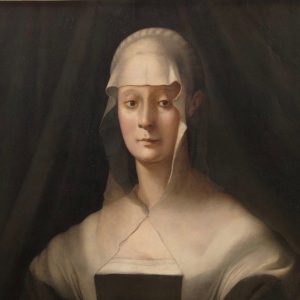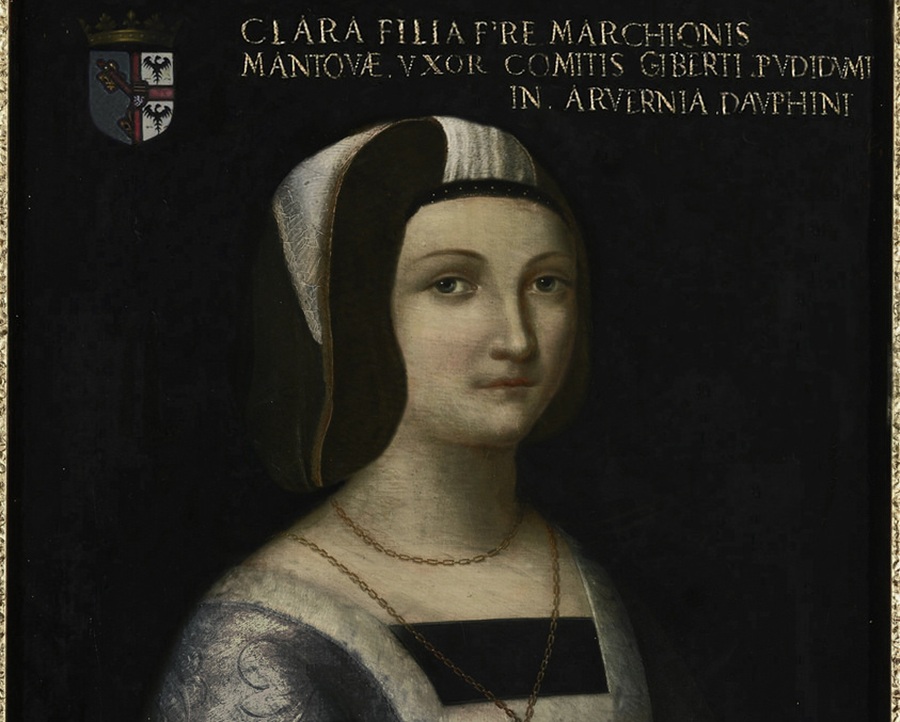
Born on 1st July 1464, Clara Gonzaga, the eldest daughter of Federico I Gonzaga lived only 38 years but left a dynastic legacy that stretched from the Bourbon kings of France to King Charles III of Britain and Northern Ireland.
Clara (Chiara) Gonzaga, the eldest daughter of Federico I Gonzaga and Margaret of Bavaria, was born on this day in 1464 in Mantua.
Though she died before her 39th birthday, her descendants would go on to include some of the most significant figures in European history, among them King Louis XIV of France, Queen Marie Antoinette, Franz Josef I of Austria — the longest reigning Emperor of Austria and King of Hungary — and, through the Houses of Hanover, Saxe-Coburg-Gotha and Windsor, King Charles III of Britain and Northern Ireland.
Marriage and family
Clara had five siblings, including Francesco II Gonzaga, who married Isabella d’Este. She was married at the age of 17 to Gilbert of Bourbon Montpensier. Four years later he succeeded his father as Count of Montpensier and Dauphin of Auvergne, subsequently becoming Viceroy of Naples and Duke of Sessa.
The couple had six children, but when Clara was just 32, Gilbert died of a fever while in Pozzuoli, near Naples, leaving her a widow. One of their children would go on to become Charles III, Duke of Bourbon, who led the imperial army sent by Emperor Charles V against Pope Clement VII in what became the Sack of Rome in 1527.
Diplomat, mediator and literary afterlife
Three years after Gilbert’s death, Clara acted as a mediator on behalf of her brother Francesco. He was attempting to form an alliance with King Louis XII of France in order to protect Mantua, which was being threatened by both Cesare Borgia and the Doge of Venice.
Clara died in 1503 and was buried at the Chapelle Saint Louis in the Church of Aigueperse in Auvergne.
Clara also features as a character in The Heptameron, a collection of 72 short stories written in French by Marguerite of Angoulême, sister of King Francis I of France, who had been inspired by Giovanni Boccaccio‘s The Decameron.
— INO