The prime minister has played down the prospect of a deal or alliance with the fast-rising Futuro Nazionale, even as polls suggest the party’s support could prove decisive in next year’s general election.
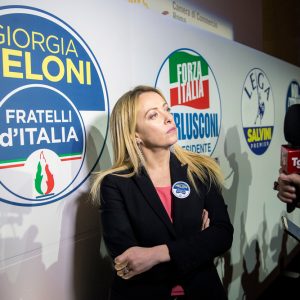
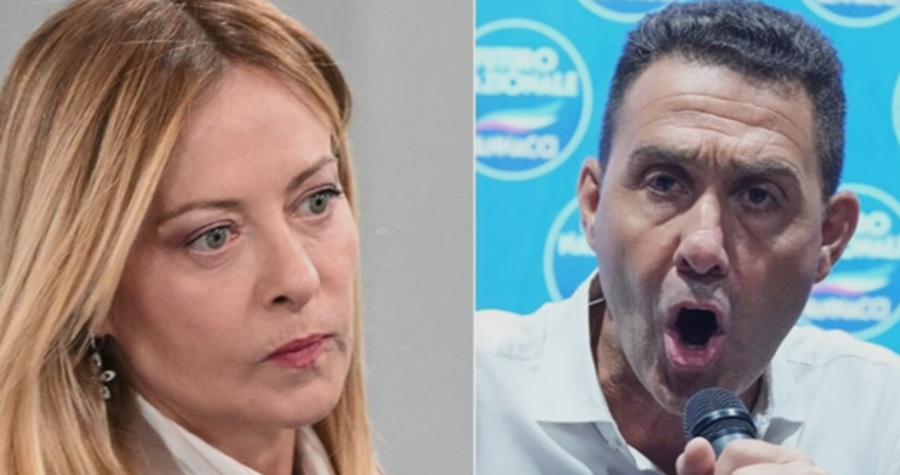
Speaking at a press conference following the G7 summit in Evian, Prime Minister Giorgia Meloni responded coolly on Wednesday to the question of a potential alliance with Roberto Vannacci’s newly launched Futuro Nazionale (FN) party.
“It seems to me that Futuro Nazionale has closed off an alliance with the centre-right,” Meloni said. She added that she was not focusing on the issue. “To win the elections, you have to govern well. The rest is just alchemy. I’m focusing on doing my job as best I can.”
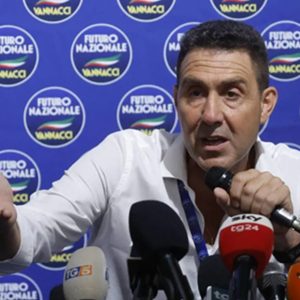
The remarks come days after Vannacci formally launched his party at a founding congress in Rome, held in a packed auditorium steps from the Vatican, where the former general cast himself as an outsider challenging Meloni from the right.
The Vannacci Factor
Vannacci entered politics with Matteo Salvini’s anti-migration League, winning more than 530,000 preference votes in European Parliament elections. He then left the League in February to launch Futuro Nazionale, a move Salvini called a “betrayal.”
Since then, Vannacci has consolidated support rapidly. The party claims over 100,000 members and has attracted eight deputies, including defectors from the League and centrist Forza Italia, underscoring tensions within Meloni’s coalition.
Vannacci rejects the “far-right” label, preferring to call his movement the “real right,” and has accused Meloni of failing to translate shared priorities into policy. His platform rests on hard-line positions on migration and security — including calls for the remigration of foreigners he considers insufficiently integrated — opposition to the EU Green Deal, and criticism of Western sanctions on Russia.
Electoral Arithmetic
The political stakes are significant. Polls place Futuro Nazionale at between 4% and nearly 5%, a potentially decisive margin given how closely matched Italy’s main centre-right and centre-left blocs currently are.
Political analyst Lorenzo Pregliasco of YouTrend describes the development as “something new — an opposition from the right to the current government,” with a force outside the majority challenging it on migration, security and culture-war issues.
Massimiliano Panarari, politics professor at the University of Modena and Reggio Emilia, put it plainly: “Meloni’s strategy was to have no one to her right. Now she does.”
Ambiguity on both sides
Despite the current denials, analysts widely expect the two parties to find a working arrangement after the election, should the numbers demand it. Meloni has so far avoided direct confrontation with Vannacci — a strategy seen as both calculation and a bet that his momentum may fade.
“The issue is what to do with this loose cannon of Vannacci, which could drag the right back toward the far right,” Panarari said. “I’m not sure it would benefit Meloni to shift further right before general elections. Her approach will likely be marked by ambiguity and ambivalence, as long as possible.”
Italy’s next general election is scheduled for autumn 2027.