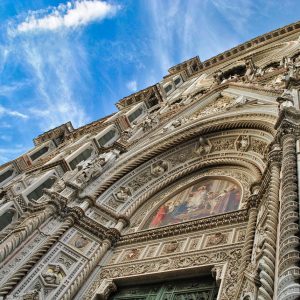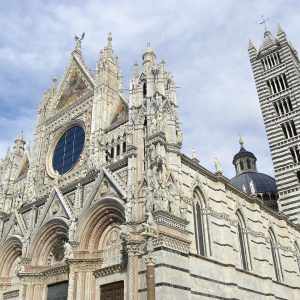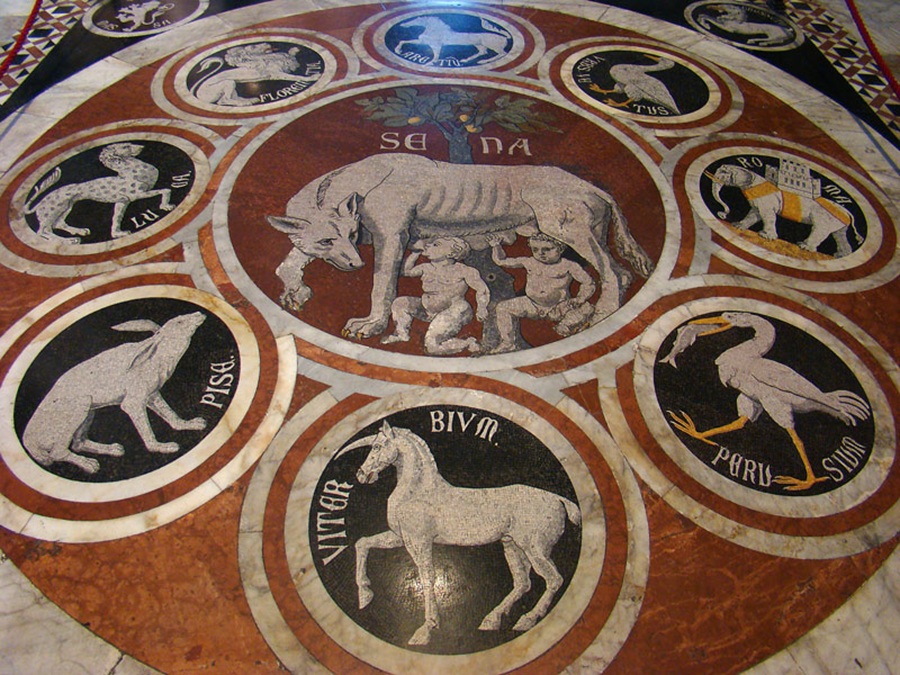
One of Italy’s most celebrated hidden treasures is once again on display at the Siena cathedral. The extraordinary inlaid marble mosaic floor is uncovered for visitors for a limited period each year.
Each summer, the Duomo di Siena draws visitors not only for the Gothic splendour of its striped facade and soaring interior, but for one of the most remarkable floors in the world. For the majority of the year, the cathedral’s astonishing marble mosaic pavement is concealed beneath protective masonite sheeting. Its seasonal unveiling has become one of Tuscany’s most anticipated cultural events.
In 2026, the floor can be seen across two periods: from 27 June to 31 July, and again from 18 August to 15 November. Visitors are encouraged to book tickets online in advance through the Opera Duomo Siena website.
A floor five centuries in the making
The floor is the product of a programme implemented between the 14th and the 19th centuries. The preparatory cartoons for the 56 inlay panels were supplied by leading artists, almost all of them Sienese. There was one notable exception, the Umbrian painter Bernardino di Betto, known as Pinturicchio, who designed the inlay depicting the Mount of Wisdom in 1505.
The panels were created using two distinct technical approaches. The earlier method, known as graffito, involves incising designs into white marble and filling the lines with black stucco. Later craftsmen adopted the more complex marble mosaic inlay technique, in which fitted pieces of coloured marble are assembled to produce increasingly sophisticated compositions. The Mannerist painter Domenico Beccafumi so perfected the marble mosaic inlay technique that he managed to achieve a chiaroscuro effect with it — a feat of extraordinary skill in such an unyielding medium.
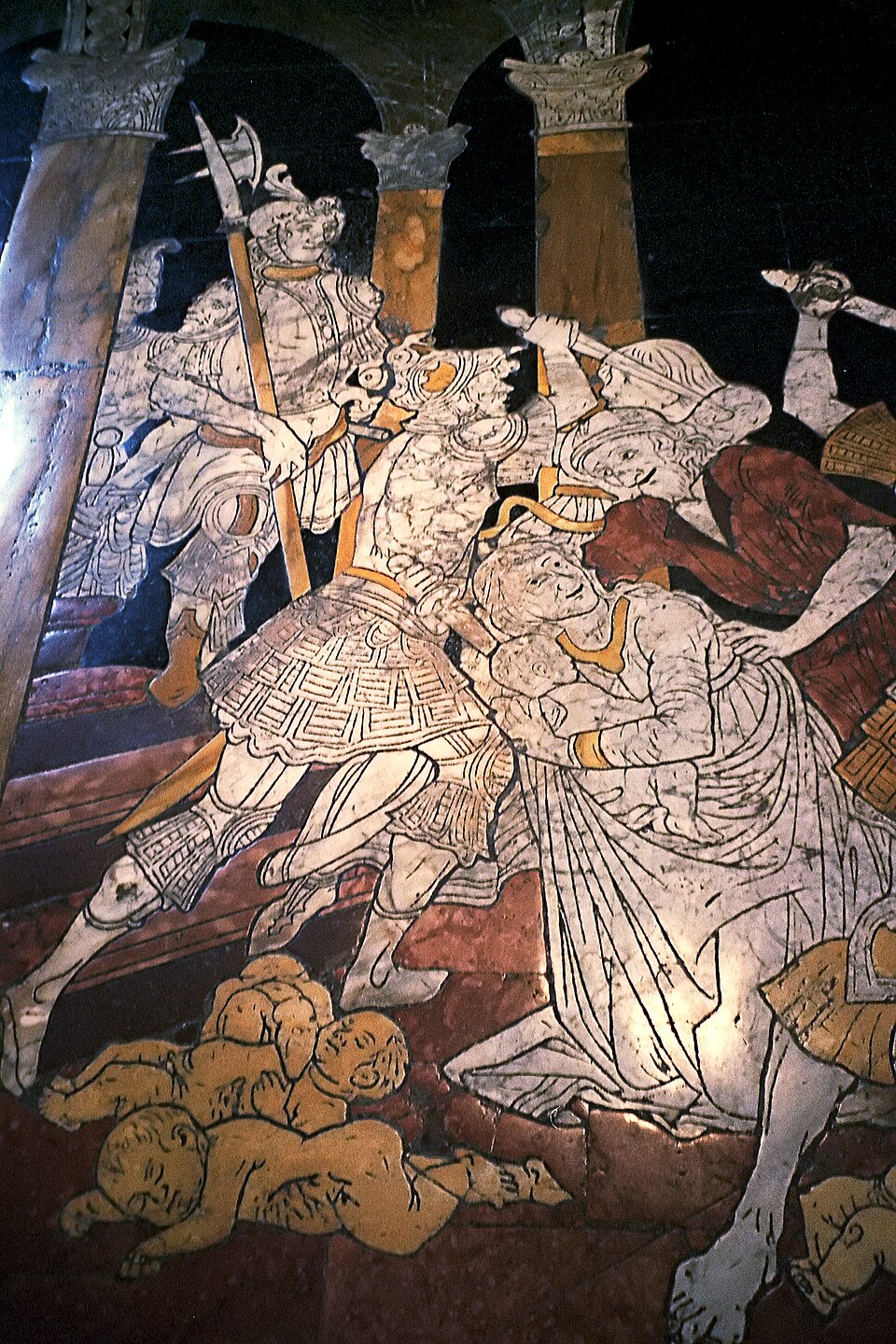
Taken together, the 56 panels form a sweeping iconographic programme encompassing allegories, virtues, and scenes from the Old Testament, often referred to as a Book of Marble. The sixteenth-century artist and art historian Giorgio Vasari left no doubt as to his estimation of the work, describing it as the most beautiful, largest and most magnificent floor ever made.
A fuller experience in Siena
During the unveiling period, visitors also have the opportunity to walk around the chancel and apse, where wooden inlays by Fra Giovanni da Verona are preserved. Executed with a technique similar to that of the marble commesso, these works use woods of different colours to depict urban views, landscapes, still lifes, and liturgical objects rendered with remarkable perspective skill.
The complete OpaSiPass itinerary allows visitors, in addition to a visit to the floor in the cathedral, to see the Museo dell’Opera, where mosaics with the symbols of Siena’s allied cities and Antonio Federighi’s original inlays of the Seven Ages of Man can be admired.
Full details, including ticket information and booking, are available at operaduomo.siena.it.
ItalyNews.Online is your independent English-language source for Italian culture, heritage, and current affairs.