
Turin and chocolate share a relationship that dates back centuries and remains central to the city’s identity. The connection began in 1560, when the Savoy court moved its capital from Chambéry to Turin.
To mark the occasion, Duke Emanuele Filiberto of Savoy served the city a ceremonial cup of hot chocolate, a gesture that would prove symbolic of Turin’s future as Italy’s chocolate capital.
From that point, chocolate became embedded in the cultural and economic life of the city. Turin’s master chocolatiers played a decisive role in shaping Italy’s chocolate-making tradition, combining technical experimentation with a strong taste for innovation. By the early 17th century, artisans were already testing new methods to blend cacao with vanilla, water and sugar into a workable paste. These experiments eventually allowed chocolate to be solidified, giving rise to bars and small confections that laid the foundations for modern chocolate production.
This technical progress led to the creation of an extraordinary variety of cioccolatini. Turin became known for bon bons, pralines, truffles and cremini, each reflecting a balance between craftsmanship and experimentation. The city also produced one of its most distinctive drinks in the 1700s: the bicerin, a layered glass of hot coffee, chocolate and milk cream that remains a fixture of Turin’s café tradition.
Also read: Best experiences in Turin – 2026
Creation of gianduiotto
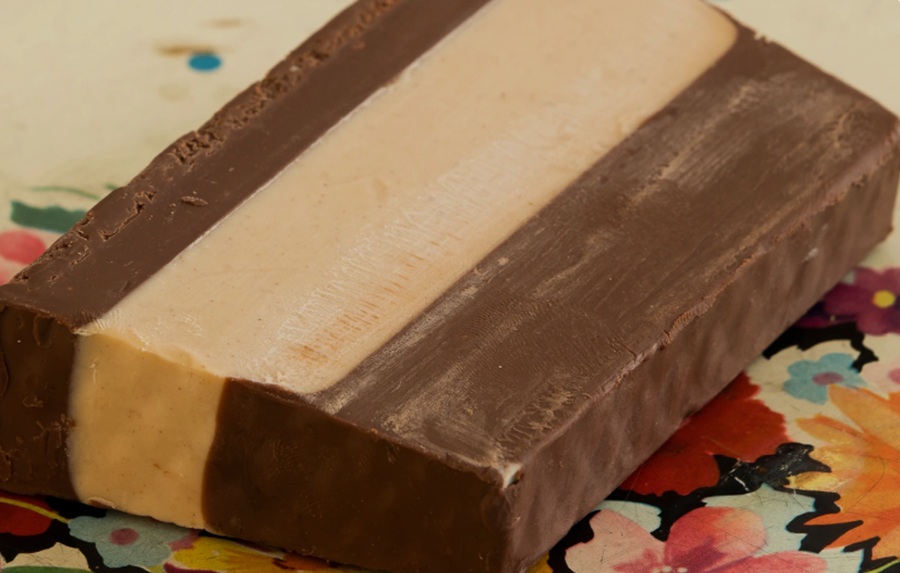
The most famous chapter in Turin’s chocolate history arrived in the 19th century with the creation of the gianduiotto. In 1865, chocolatier Michele Prochet combined cacao with hazelnuts from Piedmont’s Langhe area, using the prized Tonda Gentile variety. The result was a smooth, aromatic chocolate that also became the world’s first individually wrapped confection. Gianduiotti were first sold during Carnevale, taking their name from Gianduja, the city’s traditional mask, and quickly became a symbol of Turin.
Chocolate production soon helped define Turin’s industrial and artisanal landscape. Historic companies such as Peyrano, Baratti & Milano, Streglio, Feletti, Caffarel and Stratta built their reputations on chocolate, reinforcing the city’s national and international standing. Giordano remains unique among them as the only producer still hand-cutting its chocolate with a knife, preserving a method that has largely disappeared elsewhere.
Artisan chocolate continues to play a central role in Turin today. The Peyrano family stands at the forefront of the sector, carrying on a tradition that began with Antonio Peyrano, once the certified chocolatier to Turin’s elite. The family’s historic shop on Corso Moncalieri remains a reference point, known for its gianduiotti and wide range of chocolate specialities. Together, these producers ensure that chocolate remains not just part of Turin’s past, but an active and evolving craft.


