ROME — Two centuries after Mary Shelley published her radical, visionary novel about the end of humanity, The Last Man, Rome’s Keats-Shelley House is honouring the milestone with a new exhibition. Titled A World on the Verge, the exhibition explores the haunting contemporary relevance of a work that essentially founded the modern apocalyptic fiction genre.
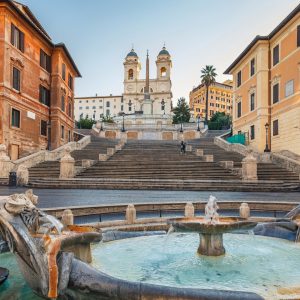
Running until 21 November, the exhibition is the first to be hosted in a brand-new dedicated gallery space within the museum, located at the foot of the iconic Spanish Steps.
The Exhibition: Artifacts and Modern Interpretations
Guest-curated by Elisabetta Marino, Professor of English Literature at the University of Rome Tor Vergata, A World on the Verge bridges 19th-century history with contemporary reflection.
Visitors can view rare, intimate artifacts from Mary Shelley’s life, including:
- Autograph letters and rare first editions.
- Period paintings and personal objects, including her travel writing-desk (or “slope”).
- Modern visual art created by students from St George’s British International School of Rome, offering a dialogue between Romantic-era anxieties and today’s youth.
According to a statement from the Keats-Shelley House, the exhibition “invites visitors to rediscover one of the most radical and forward-looking works of 19th-century European literature, reaffirming Mary Shelley not only as the author of Frankenstein, but also as one of the most profound and relevant voices of modernity.”
Behind the Book: Mary Shelley’s Forgotten Masterpiece
While Frankenstein (1818) remains a household name, The Last Man — published in three volumes in January 1826 — was arguably more ambitious. It was critically savaged at the time and largely ignored until a literary revival in the 1960s.

A prophecy of the late 21st century
Set in a bleak, republican future during the late 2090s, the novel follows the life of Lionel Verney, an impoverished nobleman’s son who climbs into political prominence only to watch the slow, agonising collapse of global civilisation. The destructive force is not a monster, but a global, unstoppable pandemic of a deadly plague.
As the disease sweeps across continents, human institutions, wars, and social inequalities dissolve into irrelevance, eventually leaving Verney as the literal “last man” alive. He wanders alone through the silent, decaying ruins of Europe.
An elegy of personal grief
The book is deeply autobiographical and functions as a Roman à clef — a novel where real people appear under fictional guises. Shelley wrote it in the profound isolation that followed the sudden, consecutive deaths of her children, her husband Percy Bysshe Shelley (who drowned in 1822), and their close friend Lord Byron (who died in Greece in 1824).
The main characters directly mirror her lost circle:
- Adrian, Earl of Windsor: An idealised, utopian philosopher who leads a band of survivors before drowning in a sudden storm, heavily based on Percy Bysshe Shelley.
- Lord Raymond: A charismatic, hot-blooded, and highly ambitious military leader who dies fighting in Greece, modeled entirely on Lord Byron.
Through The Last Man, Shelley did not just write a sci-fi epidemic story; she processed her immense grief, creating a metaphor for how it felt to see her entire brilliant, revolutionary generation wiped away, leaving her behind as the sole survivor of her world.
Visitor Information
- Location: Keats-Shelley House, Piazza di Spagna, Rome
- Dates: 21 May – 21 November
- Hours: Monday to Saturday, 10:00–13:00 and 14:00–18:00
- Details: For tickets and further information, visit the official Keats-Shelley House website.