
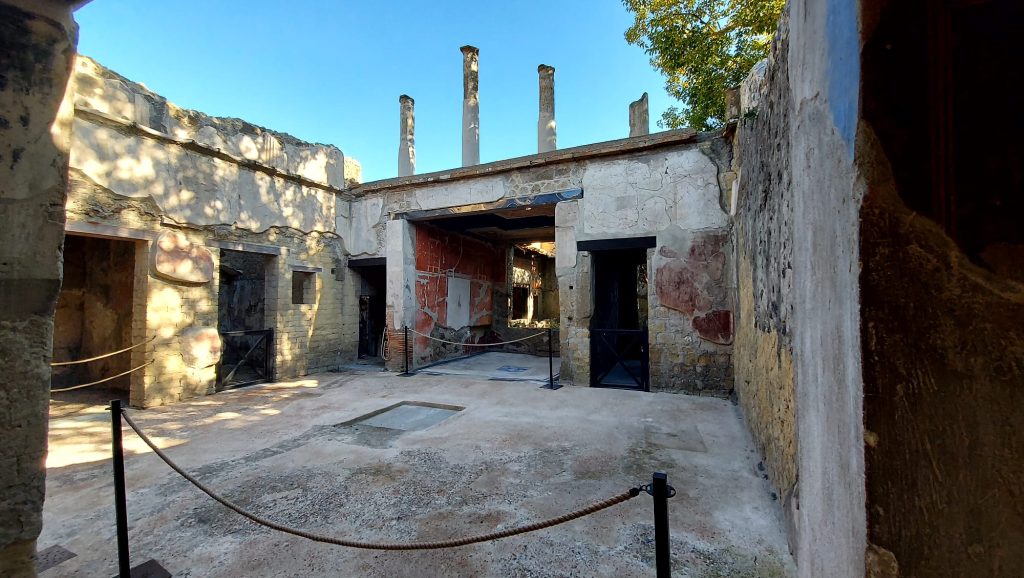
One of the most fascinating domus at Herculaneum, the Roman town buried and preserved by the Vesuvius eruption along with Pompeii in 79 AD, has reopened after a 30-year restoration. The House of the Carbonized Furniture is open again thanks to a restoration project carried out in a public-private partnership with the Packard Humanities Institute (PHI), through the Packard Institute for Cultural Heritage, which has been active on the site for 25 years.
The domus, built during the Republican era, owes its name to the discovery, between 1932 and 1933, during excavations directed by Amedeo Maiuri, of a small table and a high-backed bed. They were carbonised by the eruption of 79 AD but preserved, complete with traces of fabric and the original rope netting.
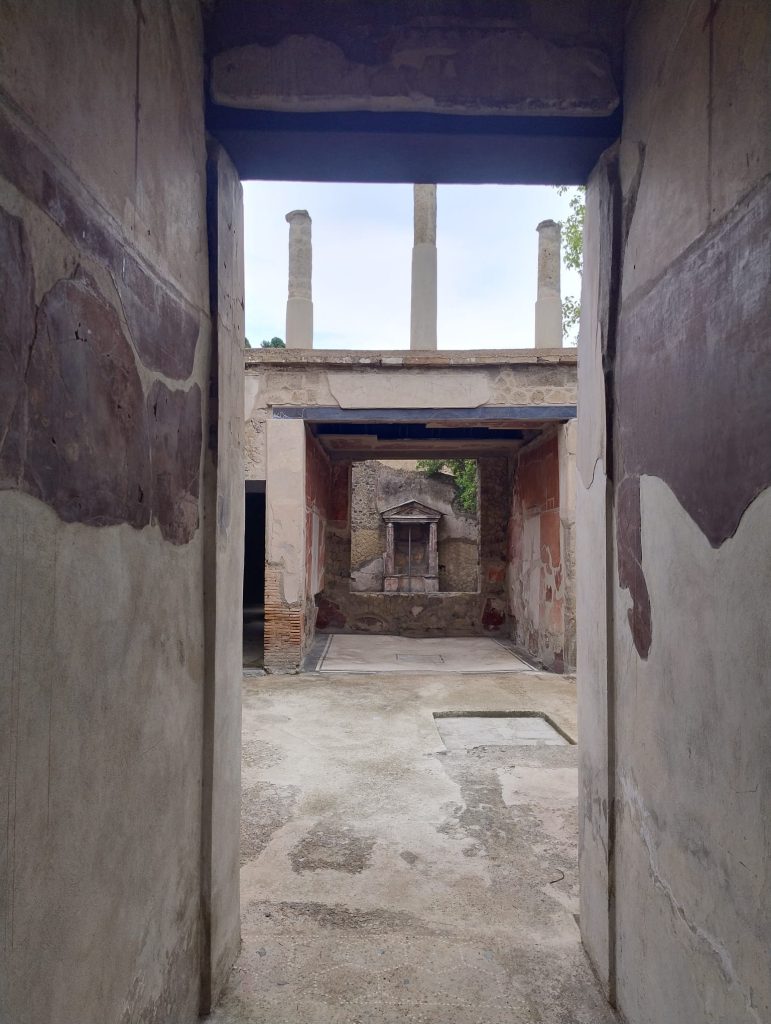
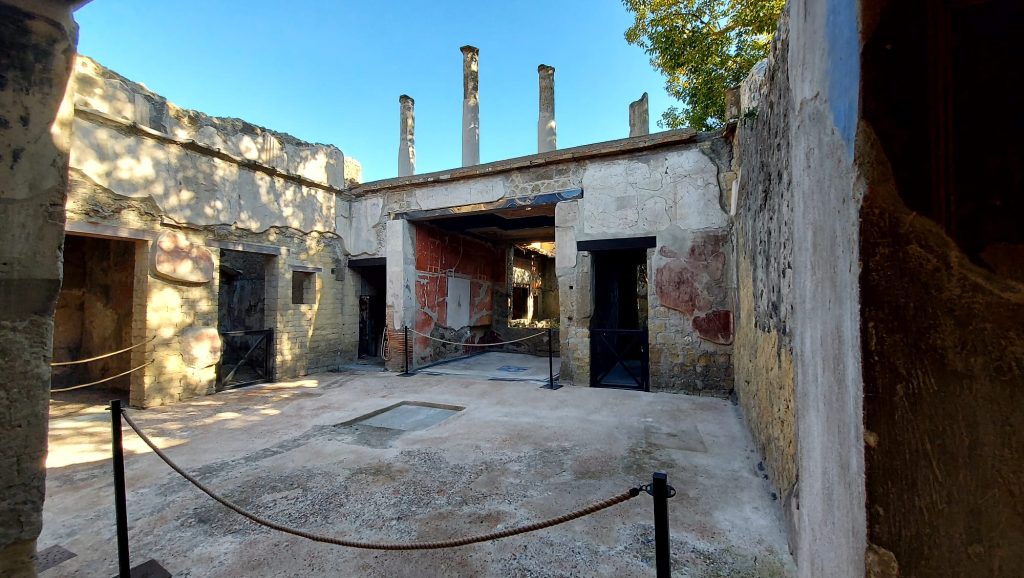
The rooms are arranged around the atrium and the garden, with a small temple-shaped lararium, a loggia on the upper floor, and walls decorated in the Fourth Style. Among the most treasured spaces are the triclinium, with its mosaic and marble emblem, and the oecus Cyzicenus, where the furnishings that gave the house its name were found.
“A human history made up of everyday gestures”
Federica Colaiacomo, director of the Herculaneum Archaeological Park, said bringing the House of Carbonised Furniture back to light and returning it to the city, after nearly thirty years of closure, was an achievement that deeply concerned the team. She described it as the restoration of a human history made up of everyday gestures that the eruption froze in time.
On the technical side, architect Rossella Di Lauro said the most recent work involved reconstructing some wooden floors, replacing damaged architraves, and restoring the atrium columns, made possible thanks to accurate three-dimensional surveys. The old iron architraves have been replaced with new wooden structures, designed to make it easier to monitor and maintain the site’s precious wooden artefacts in future.
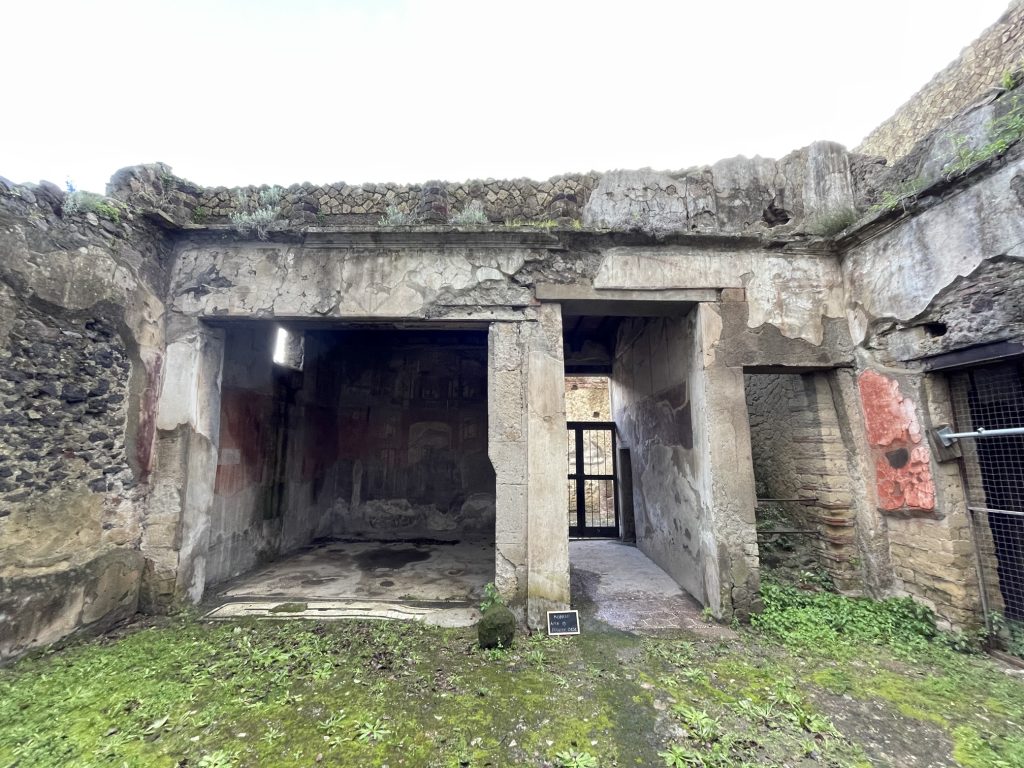
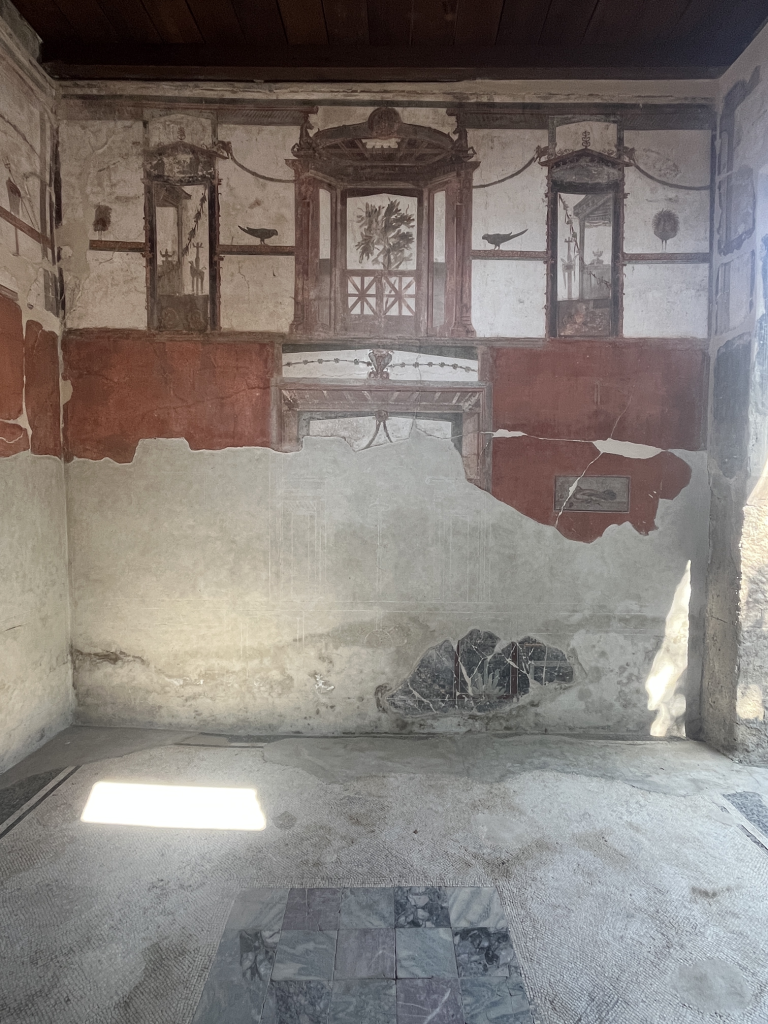
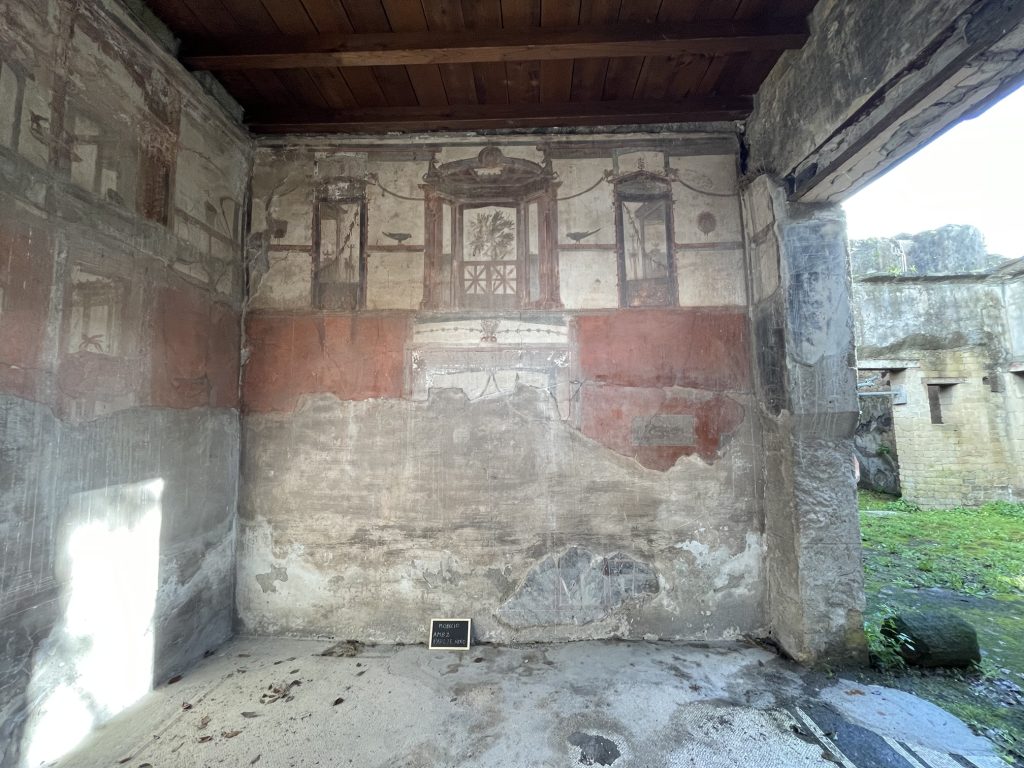
The project forms part of a wider scheme, “Conservative Restoration of the Structures and Decorated Surfaces of the Most Important Domus of Herculaneum,” which covers the reopening of six domus at the site. It follows the House of the Tuscan Colonnade and the House of the Wooden Shrine, which reopened in March 2025, with further reopenings expected this autumn.
Visiting Herculaneum: what to expect
For readers planning a trip, Herculaneum (Ercolano) sits about 10km southeast of Naples and is reached in around 20 minutes on the Circumvesuviana train from Naples Garibaldi, followed by a short walk downhill from Ercolano Scavi station to the entrance. Despite being smaller than Pompeii, it rewards a slower pace: most visitors need two to three hours to take in the main streets, the best-preserved houses, the baths and the ancient shoreline without rushing.
The site is open daily from 8:30am, with hours extending to 7:30pm in the summer season (16 March–14 October, last entry 6pm) and closing earlier, at 5pm, over winter (15 October–15 March, last entry 3:30pm). It’s closed on 1 January and 25 December. Entry is free on the first Sunday of the month, as well as on 25 April, 2 June and 4 November, though these dates draw noticeably bigger crowds.
Highlights beyond the newly reopened domus include the Suburban Baths, with their intact marble floors and heating systems; the House of the Deer, an elegant seaside villa with sculpture and garden; the College of the Augustales, with well-preserved frescoes; and the Boat Houses along the ancient shoreline, where the remains of hundreds of people who fled toward the sea were discovered. Because Herculaneum was buried under a dense flow of volcanic material rather than the layers of ash that covered Pompeii, its upper storeys, wooden fittings and organic material survived to a degree found almost nowhere else in the Roman world.
Practical notes
Large bags aren’t permitted inside, though free storage is available at the entrance. The terrain is uneven in places, with limited accessibility for those with reduced mobility. The site pairs well with a trip up Vesuvius itself, reachable by bus from outside Ercolano station, or with the Naples Archaeological Museum, which holds many of the finest finds removed from both Herculaneum and Pompeii.


