Experts are exploring the use of artificial intelligence (AI) to help reassemble a priceless fresco by the early Renaissance artist Cimabue that was shattered nearly 30 years ago by powerful earthquakes in central Italy.
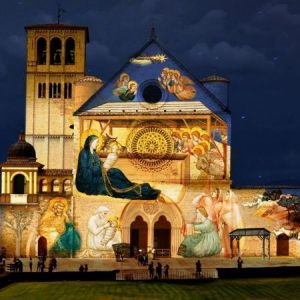
The fresco once formed part of a ceiling cycle in the Basilica of St Francis. It depicted Saint Matthew and belonged to a group representing the four Evangelists. Three sections were largely restored. However, the earthquake reduced the Saint Matthew fresco to around 120,000 pieces.
Traditional restoration methods proved too slow and complex. Conservators stored the fragments but have not been able to reassemble them.
A new project now brings together art historians, engineers and computer scientists. The team includes the Galleria Nazionale dell’Umbria, Perugia University and Italy’s culture ministry. They aim to test whether AI can match fragments digitally.
Researchers will feed the system high-resolution scans of the fragments. They will also use detailed photographs taken before the earthquake. The AI will analyse colour, texture and shape to suggest possible matches.
The study will last at least six months. Experts say they must assess whether existing AI tools can handle such complexity. The project may require new, specialised software.
Restorers at the basilica would carry out any physical reconstruction. They would follow standard conservation rules and verify each proposed match.
The Basilica of St Francis is a Unesco World Heritage Site. The 1997 earthquakes caused severe damage to many medieval frescoes. The Cimabue works remain among the most challenging to restore.