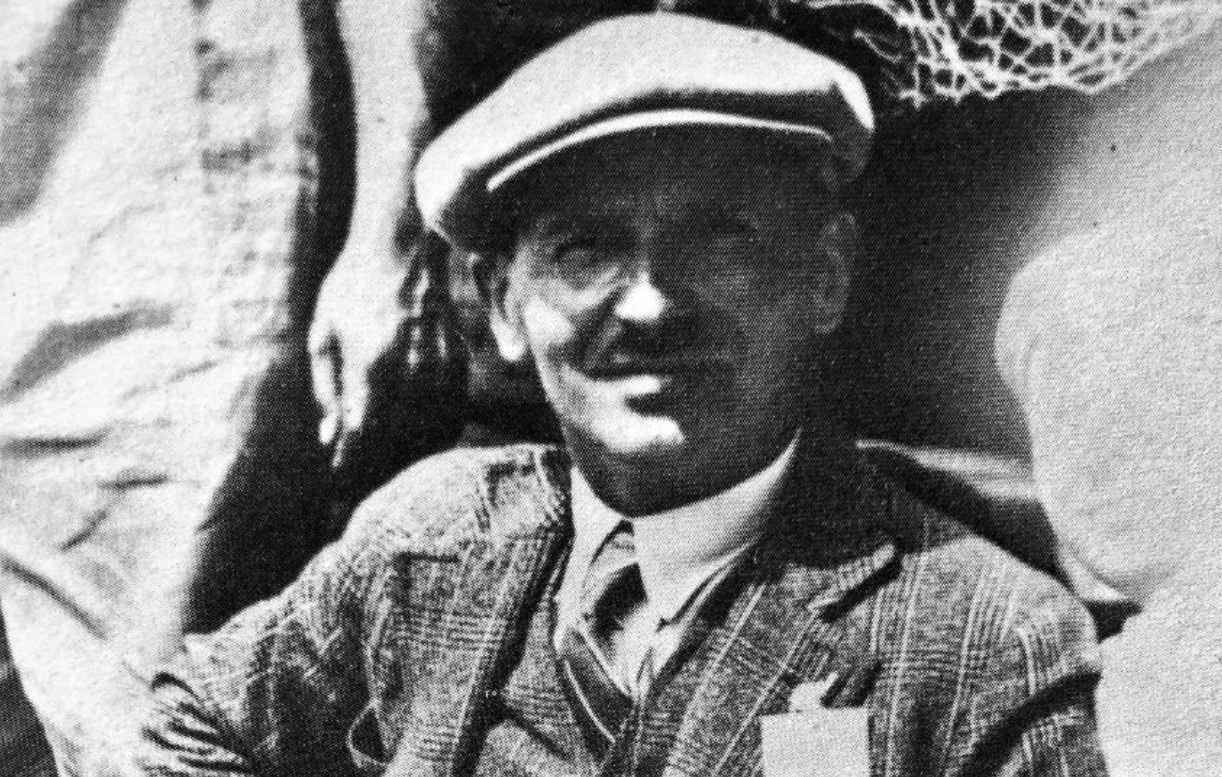
Born on 22 April 1891, in a small Piedmontese town, Vittorio Jano went on to become one of the most consequential figures in the history of motor racing. He was a quiet, methodical genius whose engines powered world champions across four decades and three of Italy’s most famous automotive brands.
Jano was born Viktor János in San Giorgio Canavese, a small town in Piedmont roughly 35 kilometres north of Turin, to Hungarian immigrant parents. His father worked as a mechanical engineer at one of the city’s arsenals, and Vittorio followed him into the trade.
After training at the Instituto Professionale Operaio in Turin, he took his first job as a draughtsman at a local motor works before joining Fiat in 1911. By 1921 he was leading a design team there, a remarkable rise for a man still in his twenties.
The move that changed Italian racing
The pivotal moment came in 1923, when Vittorio Jano was persuaded to leave Fiat for Alfa Romeo. This was partly through the recommendation of a young racing driver named Enzo Ferrari, who had seen enough of Jano’s work to know what he was capable of. Alfa Romeo, the Milan-based manufacturer keen to build its name through motor sport, nearly doubled his Fiat salary of 1,800 lire per year to 3,500 lire. It was, as history would judge, money spectacularly well spent.
Jano’s first Alfa Romeo creation, the P2, won on its competition debut in 1924 with Antonio Ascari at the wheel, and the following year gave the company the inaugural Grand Prix world championship — the first such title ever awarded. The P2 was technically extraordinary for its time: it was the first Grand Prix engine to produce more than four brake horsepower per square inch of piston area.
![Vittorio Jano posing in front of entry #1 and WINNER at Monza for the Italian GP on 19 October 1924 Por Fotógrafo desconocido - [2], Dominio público, https://commons.wikimedia.org/w/index.php?curid=82294982](https://italynews.online/wp-content/uploads/2026/04/1924-10-19_Monza_Alfa_P2_Jano.jpg)
The P3: a new idea of what a racing car could be
His next masterpiece, the Alfa Romeo P3, went further still. It was the first genuine single-seat racing car in Grand Prix history (the monoposto). It too made a winning debut, at the 1932 Italian Grand Prix, driven by the great Tazio Nuvolari. The P3 was a pioneering design, light in weight, allowing the driver to sit much lower in the cockpit through the use of twin driveshafts to drive the rear wheels. The car went on to score 46 race wins between 1932 and 1935.
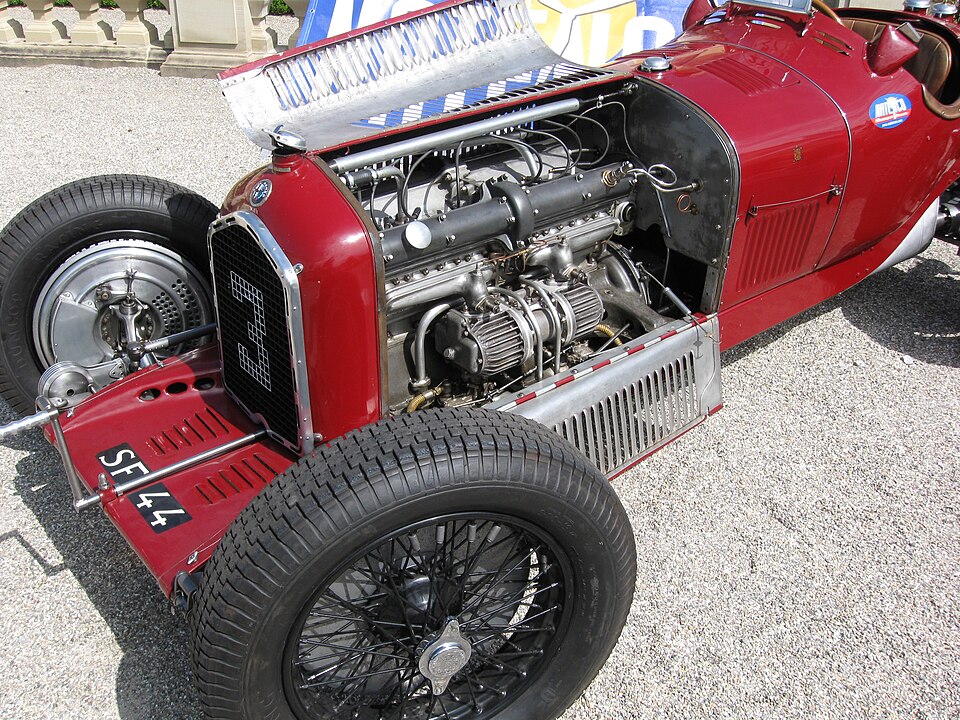
By this point, Alfa Romeo’s racing operations had effectively been handed over to Enzo Ferrari’s Scuderia Ferrari, which took complete control when the parent company ran into financial difficulties in 1933.
Lancia and the D50
Jano left Alfa Romeo in 1937 and joined Lancia in Turin as chief development engineer. At Lancia he designed the acclaimed Aurelia road car before turning his attention back to Grand Prix racing with the D50. The latter was another pioneering design among the first racing cars to use the engine as a partially stressed member, with fuel tanks positioned either side of the cockpit to improve weight distribution and handling.
The D50 made its debut in the final round of the 1954 season and immediately signalled its potential, qualifying a full second faster than Fangio’s all-conquering Mercedes. But tragedy intervened before the car could fulfil it. In 1955, Lancia’s lead driver Alberto Ascari — who had won two Formula One world championships and was the son of Antonio Ascari, the man who had driven Jano’s P2 to victory thirty years earlier — was killed during a private test at Monza. He was 36 years old; his father had died at the same age, at the wheel of Jano’s P2, during the French Grand Prix of 1925. Lancia withdrew from racing.
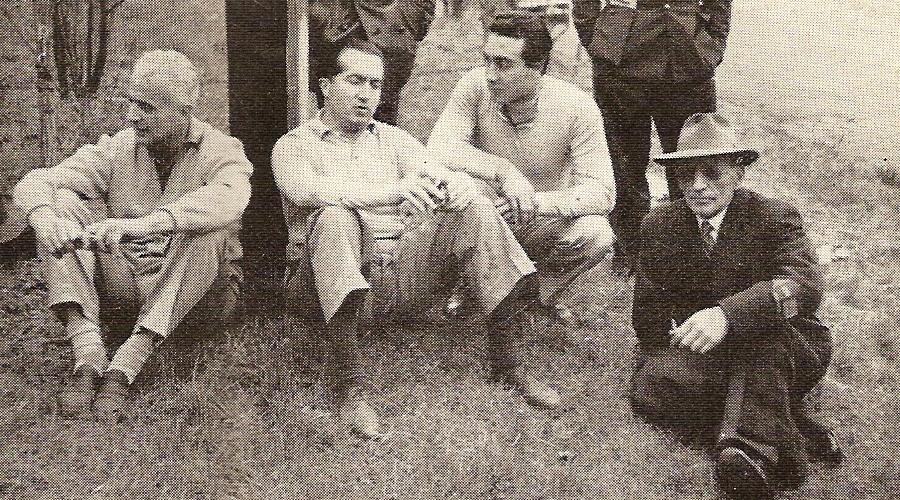
Ferrari took over the D50 programme and inherited Jano along with it. In 1956, Ferrari won five of the eight races that season, with Juan Manuel Fangio taking the driver’s title. It was Fangio’s fourth world championship.
Ferrari and the Dino legacy
At Maranello, Jano struck up a working relationship with Enzo Ferrari’s son, Alfredo (Dino) on a new V6 engine intended for Formula Two competition. Dino died in 1956 from muscular dystrophy, aged just 24, before the engine ever raced. The engine was named in his memory, and Jano continued its development. The V6 Dino became the basis for Ferrari’s Formula Two and Tasman Series efforts and later laid the groundwork for the company’s first mid-engined road car. The V8 version that followed became the backbone of Ferrari’s road car range for decades, from the 308 GTB of the 1970s through to the 360 Modena, which was discontinued in 2004.
Vittorio Jano died on 13 March 1965, a month short of his 74th birthday. Diagnosed with cancer, he took his own life in Turin. He had outlasted most of the champions his engines had made and left behind a body of work that still shapes the cars bearing the Ferrari badge today.
Also read: Dante Giacosa – father of the cinquecento