9 April 1454 — On this day, five rival Italian powers signed the Treaty of Lodi, on the banks of the river Adda, that gave the peninsula four decades of relative peace.
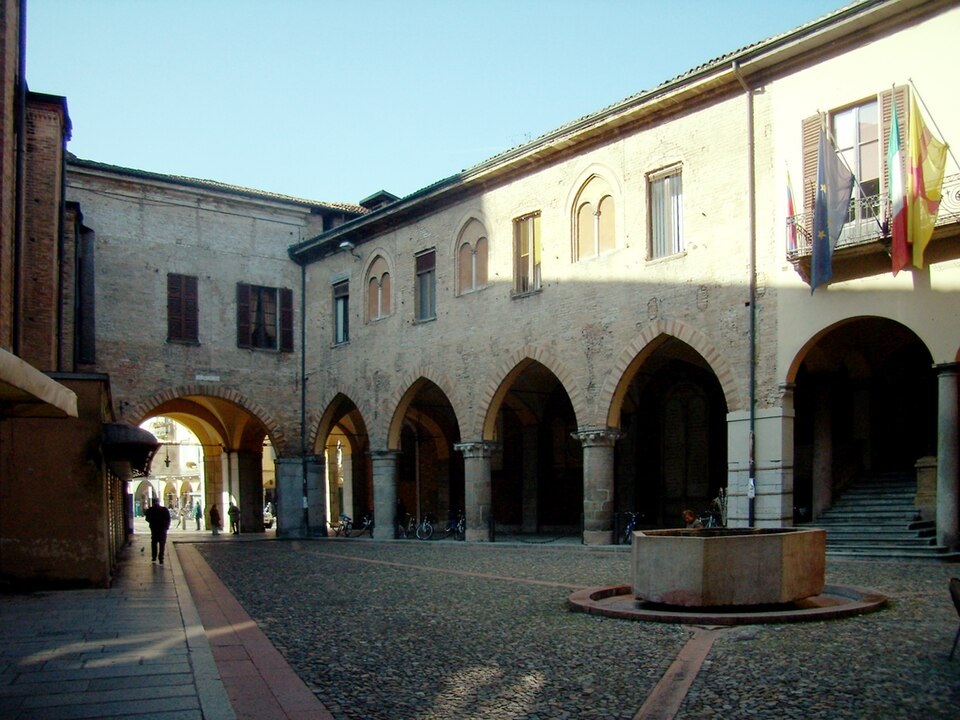
The city of Lodi sits in Lombardy, south of Milan, on the right bank of the River Adda, the very river whose course the treaty would enshrine as the boundary between Milan and Venice. It is a quiet, elegant city, not much visited today, with a beautiful central square that the Touring Club of Italy counts among the finest in the country.
On the morning of 9 April 1454, at the Convent of San Domenico in Via Tito Fanfulla two men who had spent years trying to destroy each other sat down and made peace.
The Treaty of Lodi, also known as the Peace of Lodi, was a peace agreement that brought to an end the Wars in Lombardy between the Venetian Republic and the Duchy of Milan. Its historical significance lies in what followed: the treaty guaranteed the Italian peninsula forty years of stable peace, consequently favouring the artistic and literary flowering of the Renaissance.
A Peninsula at war with itself
To understand what the treaty achieved, one must first understand what it ended. For much of the first half of the fifteenth century, northern Italy battled the Wars in Lombardy. These were a grinding, ruinously expensive cycle of conflicts between the expansionist duchy of Milan and the Republic of Venice, which had been steadily extending its territorial reach on the mainland at Milan’s expense.
Venice, faced with a growing threat to its commercial empire from the Ottoman Turks, was eager for peace in Italy. The fall of Constantinople in 1453 had brought the Ottoman frontier to the edge of the Venetian world. This had the benefit of concentrating Venetian minds on the need for stability closer to home.
On the Milanese side, the situation was no less pressing. After the death of Duke Filippo Maria Visconti in 1447, the Ambrosian Republic had been proclaimed in Milan, which entrusted its defence to the condottiere Francesco Sforza. After three years, Sforza had proclaimed himself Duke of Milan. A former mercenary general who had risen to rule one of Italy’s great powers by force and political acumen, Sforza needed recognition, legitimacy, and peace to consolidate his position. He was eager to end the costly war.
With the assistance of a secret intermediary, the Augustinian friar Simonetto da Camerino, Sforza and Venetian Doge Francesco Foscari settled their differences and signed the Peace of Lodi on 9 April 1454.
What was agreed
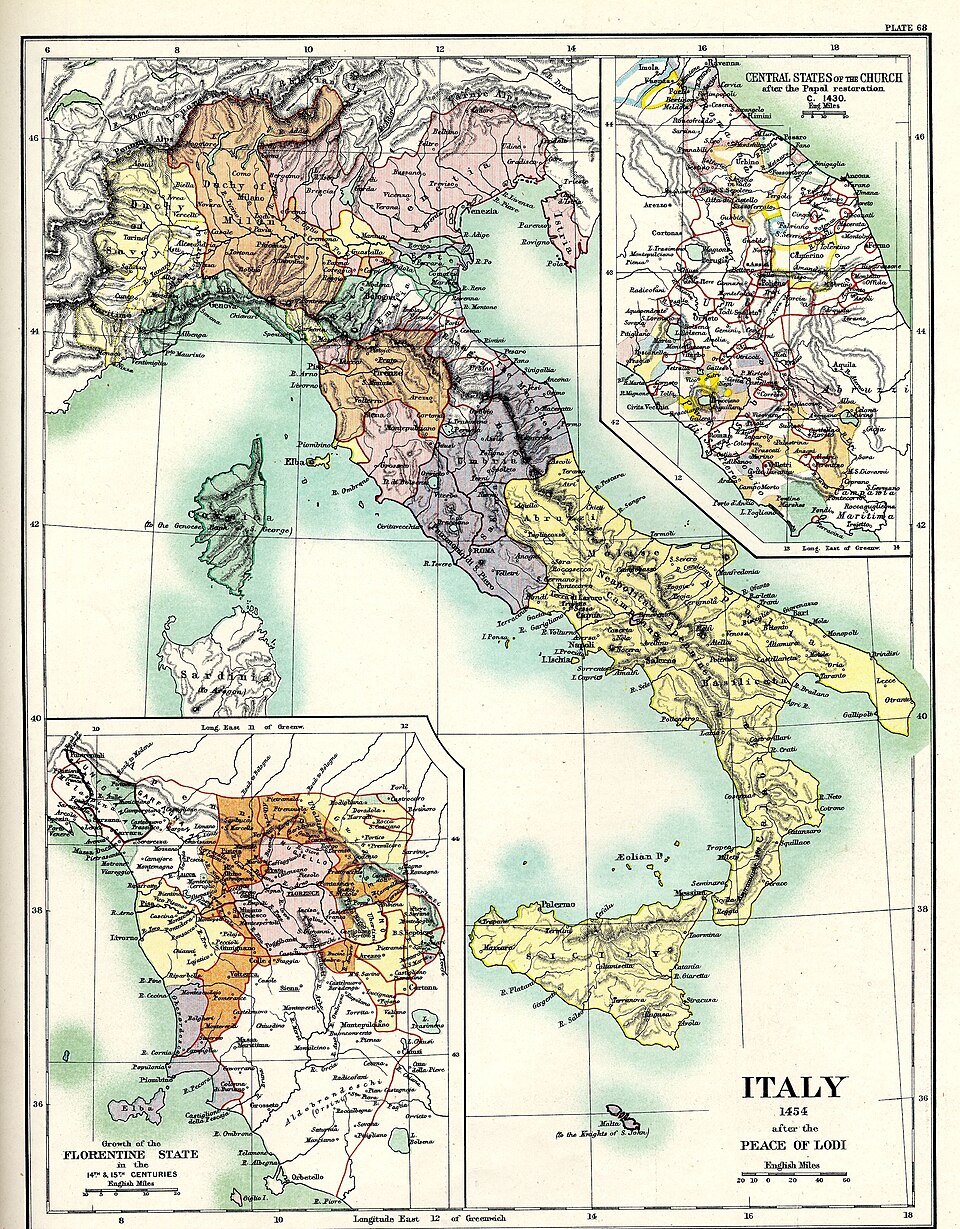
Plate 68 from Reginald Lane Poole’s Historical Atlas of Modern Europe.
The terms of the treaty were pragmatic rather than visionary. By the terms of the peace, Sforza was recognised as ruler of Milan. Venice also regained its considerable holdings in northern Italy, including Brescia and Bergamo. The treaty established the succession of Francesco Sforza to the Duchy of Milan, set the frontier between the two states along the River Adda, and provided for the placement of border markers along the entire demarcation line.
Milan’s allies — Florence, Mantua and Genoa — and Venice’s allies — Naples, Savoy and Montferrat — had little choice but to fall into line. The exhaustion of war had spread across the peninsula.
What transformed the bilateral ceasefire into something historically momentous was what came next. Cosimo de’ Medici brought Florence into the new alliance on 30 August. Naples joined the following January. Pope Nicholas V sanctioned the treaty a month later, and on 2 March 1455 the five principal Italian powers bound themselves in a defensive league for a quarter of a century. This was the Lega Italica — the Italic League — the formal architecture of the peace.
In conjunction with the treaty, the states of the league promised to defend one another in the event of attack and to support a contingent of soldiers to provide military aid. Crucially, all signatories accepted existing territorial boundaries, and each vowed to consult the others before altering the status quo.
The Architecture of Balance
What the Peace of Lodi established was something genuinely new in European political ideaology. A functioning balance of power among sovereign states, it was deliberately designed to prevent any single power from achieving dominance.
In the north, Venice, the strongest individual state in the peninsula, found its might counterbalanced by a union between Milan and Florence. In the south, the Papacy checked Naples. Though each state continued to place its own interests first, the balance constrained the aspirations of individual states at the expense of their neighbours and stabilised Italian affairs for nearly half a century.
A key innovation credited to the treaty’s framework was the institutionalisation of permanent resident ambassadorships, a diplomatic practice that Italy would pioneer for the rest of Europe. For the first time, states maintained accredited representatives at one another’s courts not to conduct specific negotiations but simply to be present — to observe, report, and smooth relations before crises erupted.
Some scholars have argued that the treaty provided a proto-Westphalian model of an inter-city-state system, following a century of incessant warfare in northern Italy. The Peace of Westphalia, signed in 1648 and considered the foundation of the modern state system, is often cited as the birth of balance-of-power diplomacy in Europe. But Lodi got there nearly two centuries earlier.
The peace that fed the Renaissance
The forty years that followed the signing at Lodi were the years in which Florence became Florence as the world now knows it. Freed from the existential pressure of constant warfare, the great Italian cities could redirect their wealth and energy inward.
It was in this window that Botticelli painted the Primavera and the Birth of Venus. That Brunelleschi completed the cathedral dome. That Lorenzo de’ Medici, Cosimo’s grandson, could host the philosophers of his Platonic Academy at Careggi, spot the talent of a fifteen-year-old sculptor named Michelangelo, and act as the great impresario of the Florentine golden age.
The relative peace allowed the Italian economy to rebound from the devastating effects of the Black Death. This economic resurgence, in turn, fuelled the artistic and intellectual explosion we now call the Renaissance. Artists, scholars and thinkers could pursue their work without the constant threat of war disrupting their lives and patronage.
The breaking of the Treaty of Lodi
The system was not permanent, and it was never entirely stable. Individual states continued to scheme against one another, and the league’s mechanisms were not always sufficient to contain them. The treaty was abrogated in 1483 when Venice and the Pope fought a war against Milan, though the broader framework survived.
What finally destroyed the peace of Lodi was not an Italian failure but an external shock. The peace lasted until the French invaded the Italian peninsula in 1494, initiating the Italian Wars. Charles VIII of France marched into Italy in September of that year, and the careful balance constructed four decades earlier collapsed with remarkable speed. The Italian states, for all their diplomatic sophistication, found that they could not hold the line against a large, unified external power.