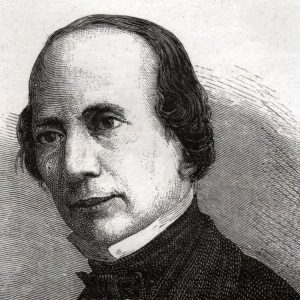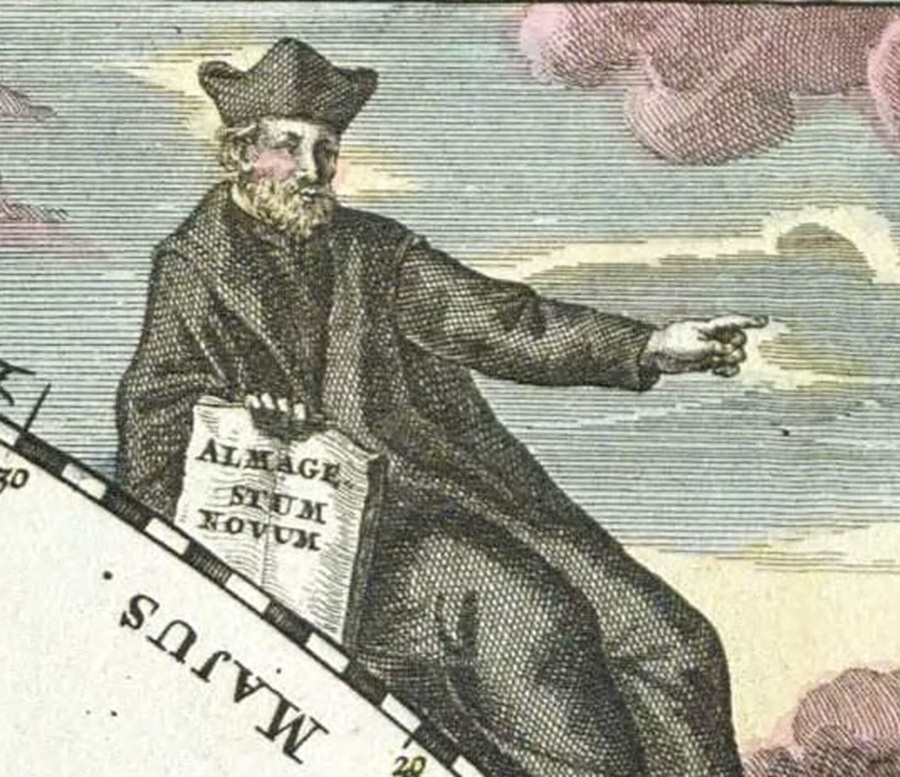
On 17 April 1598, one of the most influential figures of 17th-century science, Giovanni Battista Riccioli, was born in Ferrara. A dedicated Jesuit priest and a meticulous astronomer, Riccioli’s legacy remains visible to anyone who looks at the night sky through a telescope. His nomenclature for lunar features is still the international standard used today.
Riccioli entered the Society of Jesus at the age of 16. While his early training focused on the humanities, his time at the Jesuit College in Parma between 1620 and 1628 proved transformative. Under the tutelage of Giuseppe Biancani, Riccioli was introduced to revolutionary concepts, including the existence of lunar mountains. Although ordained to teach physics and metaphysics, his personal fascination with the mechanics of the universe began to take precedence over his theological duties.
Recognising his aptitude for observation, Riccioli’s superiors eventually assigned him to full-time astronomical research. He relocated to Bologna, where he established a sophisticated observatory equipped with the finest telescopes of the era. It allowed him to bridge the gap between ancient philosophy and the burgeoning scientific revolution.
Measuring the Laws of Physics
Before his work on the heavens made him famous, Riccioli focused on the behavior of objects on Earth. He was an early pioneer in the study of falling bodies and pendulums.
Historians believe he was the first scientist to accurately measure the rate of acceleration of a freely falling body. This discovery provided critical data for the development of classical mechanics. His experiments were characterised by a rigorous insistence on repeatable data. This became a hallmark of the modern scientific method.
The Lunar Legacy and the Almagestum Novum
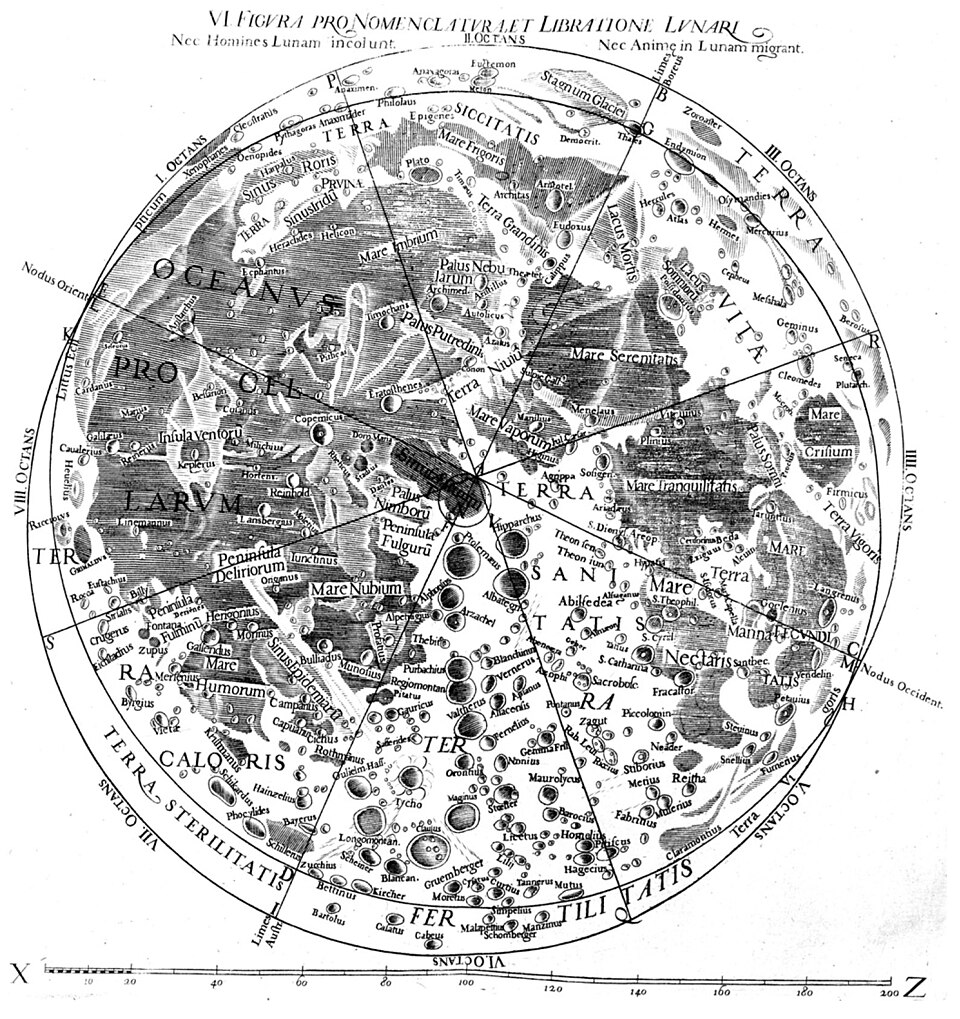
In 1651, Riccioli published his most significant work, the Almagestum Novum. This encyclopedic volume was a monumental achievement in 17th-century publishing, filled with detailed illustrations, star charts, and tables that served as a standard reference for astronomers for decades.
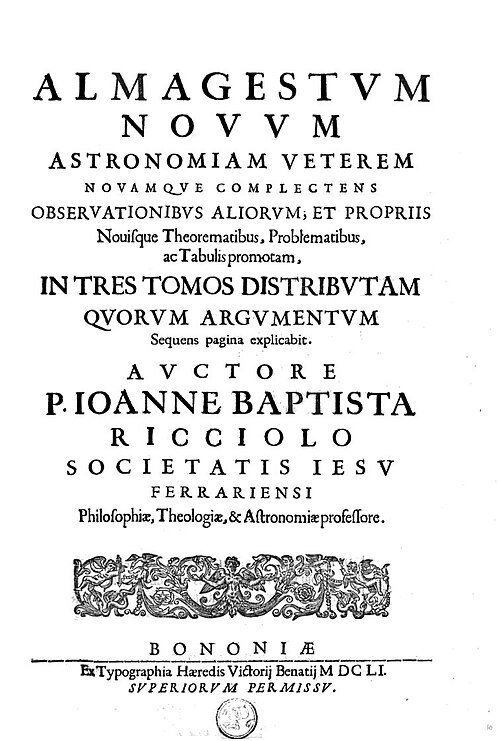
Perhaps his most enduring contribution is the lunar map within the volume. Working with his assistant, Francesco Maria Grimaldi, Riccioli named the various “seas” and craters of the moon. While he was a vocal critic of the Copernican system, proposing his own hybrid model of the solar system, he still named one of the moon’s most prominent craters after Copernicus.
His own contributions have not been forgotten by history. A significant crater on the western edge of the moon’s visible face is officially known as the Riccioli crater.