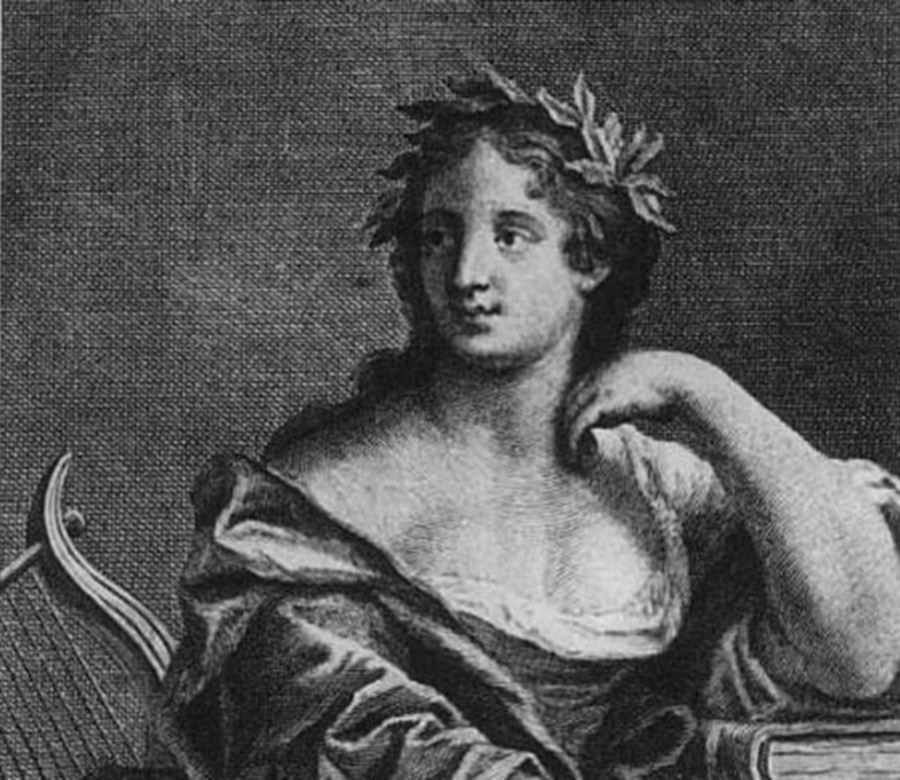
On 23 April 1554, Venice lost one of the most remarkable literary voices the Italian Renaissance had produced. Gaspara Stampa, considered the greatest woman poet of the Italian Renaissance, died at just 31 years old. She left behind a body of work that would take centuries to receive the recognition it deserved.
Stampa was born in Padua in 1523, the daughter of Bartolomeo, a jewel and gold merchant. When she was eight years old, her father died and her mother Cecilia moved the family to Venice, where she educated her children in literature, music, history, and painting.
It was an upbringing that set Gaspara apart. She and her sister Cassandra excelled at singing and playing the lute. The Stampa household quickly became a literary club, visited by many well-known Venetian writers, painters, and musicians. In a city already renowned as a centre of Renaissance culture, the Stampa home was a salon in the truest sense.
Gaspara was considered the most talented of her siblings, performing poetry and music for the distinguished scholars and artists who gathered there. The death of her beloved brother Baldassarre in 1544 dealt a devastating blow; she withdrew from society and reportedly contemplated entering a convent. But Venice, and poetry, drew her back.
Love, loss, and literary triumph
The great creative crucible of Stampa’s life was her relationship with Count Collaltino di Collalto, a Venetian nobleman who inspired the majority of her surviving poems. The affair lasted on and off for three years. Collaltino was apparently not as enamoured as Stampa, and was often away from Venice serving in the French army.
When the relationship finally ended, Stampa channelled her heartbreak into extraordinary art. The result was a collection of beautiful, intelligent, and assertive poems in which she triumphed over Collaltino, creating for herself a lasting reputation. She makes clear in her poems that she used her pain to inspire the poetry. The irony of posterity was not lost on later readers: Collaltino is only remembered today because of Stampa.
Her poetry is renowned for its deep emotional intensity, poetic craftsmanship, and exploration of themes such as love, loss, and the complexities of the human experience. Drawing on the Petrarchan sonnet tradition, she nonetheless pushed it towards something more raw and personal. She was a woman writing honestly about desire, abandonment, and the consolation of art.
The Final Chapter
Between 1551 and 1552, Stampa enjoyed a period of relative tranquillity and began a new relationship with Bartolomeo Zen. During 1553 and 1554, suffering poor health, she spent several months in Florence, hoping that the milder climate might help her recover.
It was not to be. She returned to Venice, became ill with a high fever, and after fifteen days she died on 23 April 1554. The parish register recorded her cause of death as fever, colic, and mal de mare, Venetian for “disease of the sea.” Some later scholars have speculated about other causes, including suicide, though the evidence remains inconclusive.
Rehabilitation as a writer of significance
The first edition of Stampa’s poetry, Rime di Madonna Gaspara Stampa, was published posthumously in October 1554 by Venetian printer Plinio Pietrasanta. The collection was edited by her sister Cassandra and dedicated to Giovanni della Casa. It contained 311 poem, a staggering output for a life that lasted just three decades.
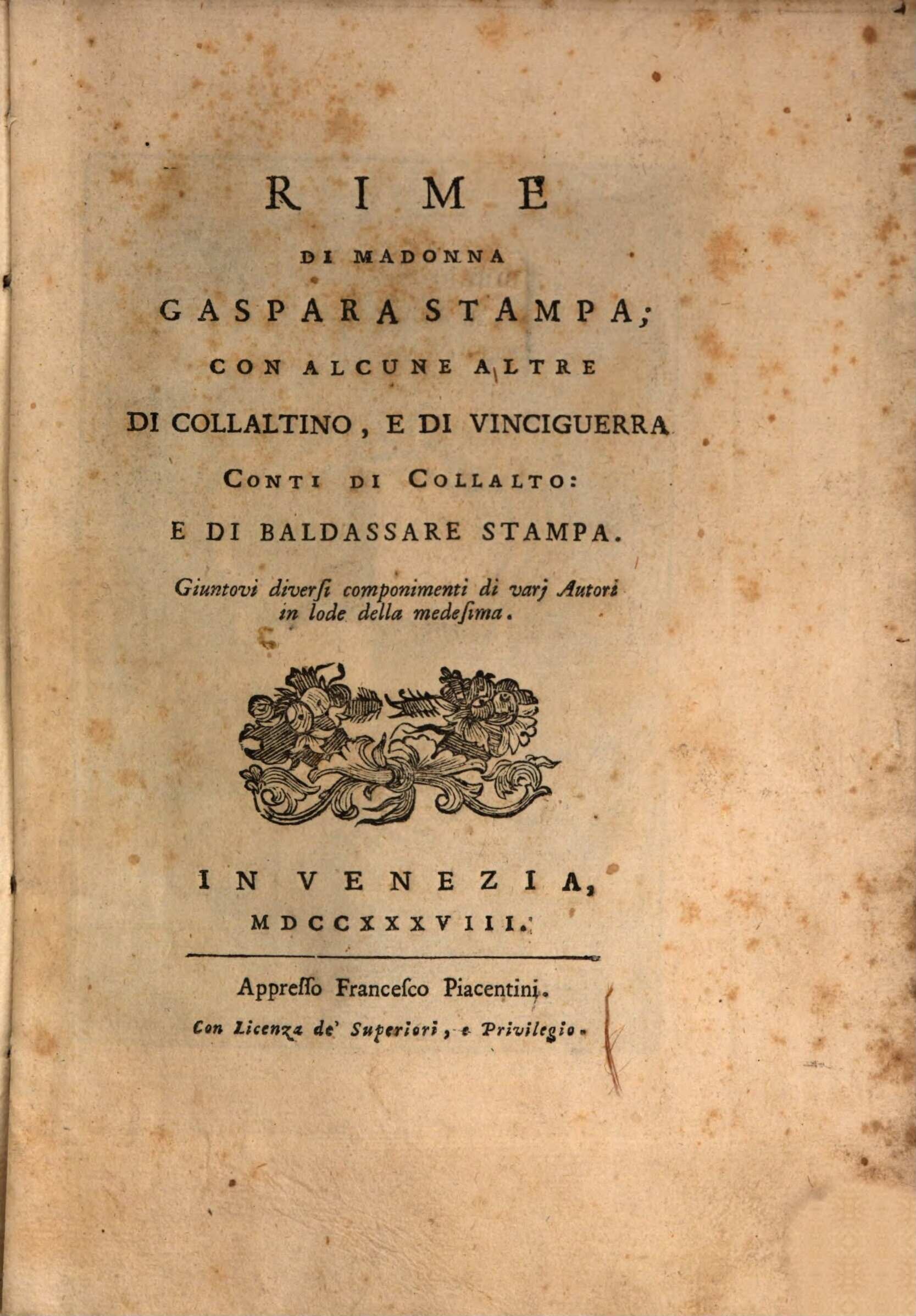
The book was not widely distributed, and for almost two centuries Stampa’s works were barely known. A descendant of Collaltino di Collalto had the poems republished in 1738, which again brought celebrity to her name. Romantic writers of the 19th century rediscovered her with enthusiasm, though they also, for a time, buried her under layers of legend and melodrama.
Her rehabilitation as a serious literary figure has been more recent. The German poet Rainer Maria Rilke invoked her in the first of his Duino Elegies, widely considered his greatest work, as an emblem of transformative, transcendent longing. Her 311 poems are now considered one of the most important collections of female poetry of the 16th century. Her work has also been included in Harold Bloom’s Western Canon.
That today is also World Book Day feels apt. Gaspara Stampa lived for the written word, transforming private anguish into public art, and ensuring that her voice would outlast the indifferent count who inspired it. On a day dedicated to the power of literature to move, endure, and illuminate the human condition, there are few better figures to celebrate than a young woman from Padua who wrote incredible poetry.
Also read: World Book Day – Top 10 Italian books