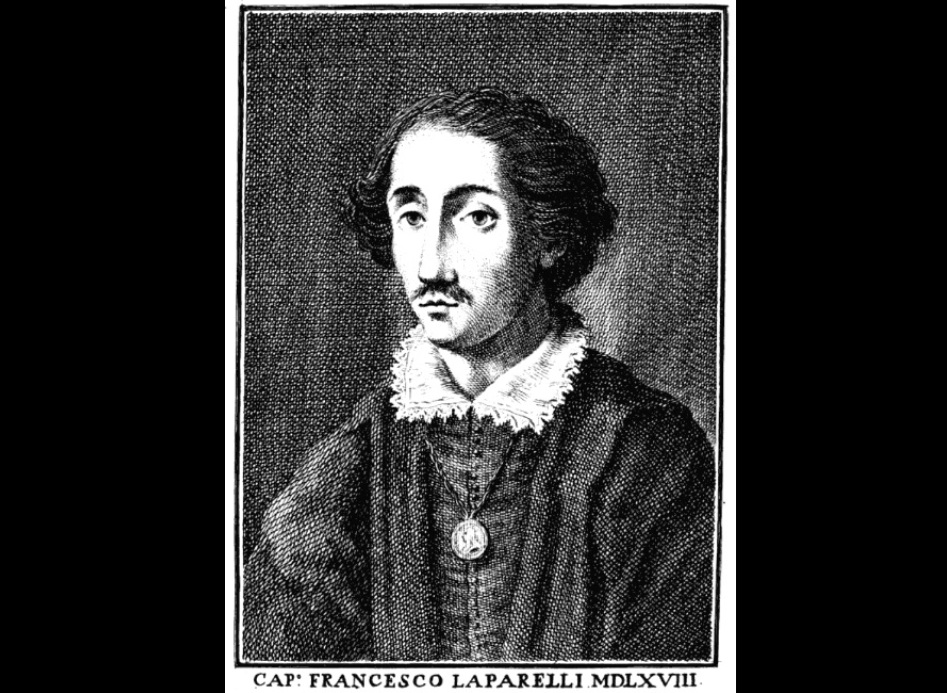
Francesco Laparelli was born on 5 April 1521 in Cortona, one of the ancient Etruscan cities of what is now Tuscany, into one of the city’s wealthiest and most distinguished families. It was a beginning that gave him access, education and connections, and the opportunity to create one of Europe’s most extraordinary capital cities – Valletta.
Laparelli’s early career combined military service with architectural ambition. Having served as an officer under Cosimo de’ Medici during the bitter campaign for control of the Republic of Siena in the 1550s, Laparelli brought a soldier’s eye to the problem of fortification. He understood not just how buildings were constructed, but how they could be taken apart by an enemy. He served on Cortona’s city council and contributed to work on the Fortezza del Girifalco above his home city, a project whose costs eventually bankrupted Cortona but cemented his reputation as an engineer of consequence.
That reputation carried him to Rome. Summoned in 1560 by Pope Pius IV on the recommendation of Gabrio Serbelloni, a condottiere and the pope’s cousin, Laparelli was set to work on the fortifications at Civitavecchia, Rome’s main port. He also worked on the defences for the mouth of the Tiber and the reinforcement of structures around the Vatican and the new suburb of Borgo Pio. In 1565 he completed the strengthening of the cylindrical Castel Sant’Angelo — now one of Rome’s most familiar landmarks — and collaborated with Michelangelo on the great dome of St Peter’s Basilica, with particular responsibility for ensuring its structural stability.
It was a remarkable ascent for a man from a Tuscan hill town. But his most lasting work lay not in Rome at all, and not even in Italy.
The Great Siege and the call to Malta
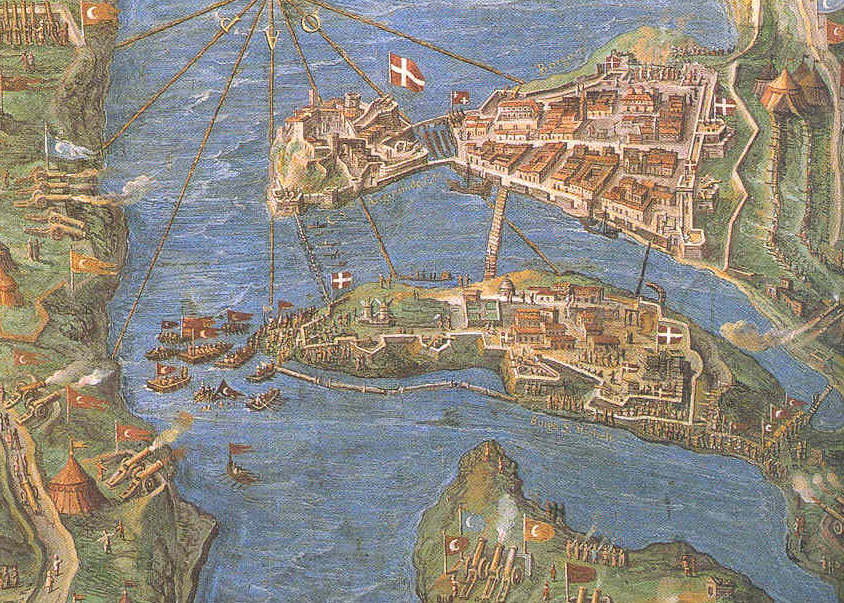
during the 1565 Great Siege.
In 1565, the Knights of St John had endured one of the most ferocious sieges in Mediterranean history. For more than three months, an Ottoman force estimated at between 30,000 and 40,000 men attempted to take Malta from its defenders, fewer than 700 knights supported by perhaps 8,000 Maltese and mercenary soldiers. The forts at Birgu, Senglea and St Elmo were battered to near-destruction. Fort St Elmo fell entirely, its entire garrison of knights killed. But the Ottomans, running out of time and men, eventually withdrew. It was a Christian victory of enormous symbolic importance but it had left Malta’s defences in ruins.
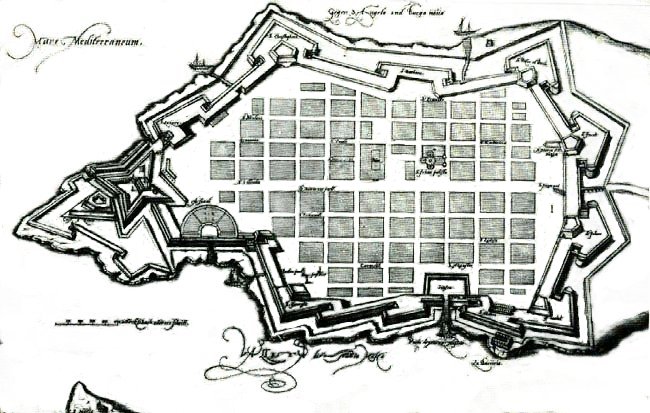
Pope Pius V sent Laparelli to Malta in late 1565 to assess what could be done. The Grand Master, Jean Parisot de la Valette, favoured rebuilding the existing fortifications. Laparelli, after surveying the damage, disagreed and made his case with the confidence of a man who understood both engineering and the mathematics of war. Repairing what existed, he calculated, would require 4,000 labourers working around the clock simply to achieve basic repairs. Instead, he proposed something bolder: a completely new fortified city on the Sciberras Peninsula, on the high ground overlooking the Grand Harbour. He believed it could be defended against any future Ottoman assault with just 5,000 men, far fewer than the 12,000 soldiers and 200 horses the island had previously required for its protection.
La Valette was persuaded, and construction began in 1566. The new city would bear his name: Valletta.
Building a capital from the ground up
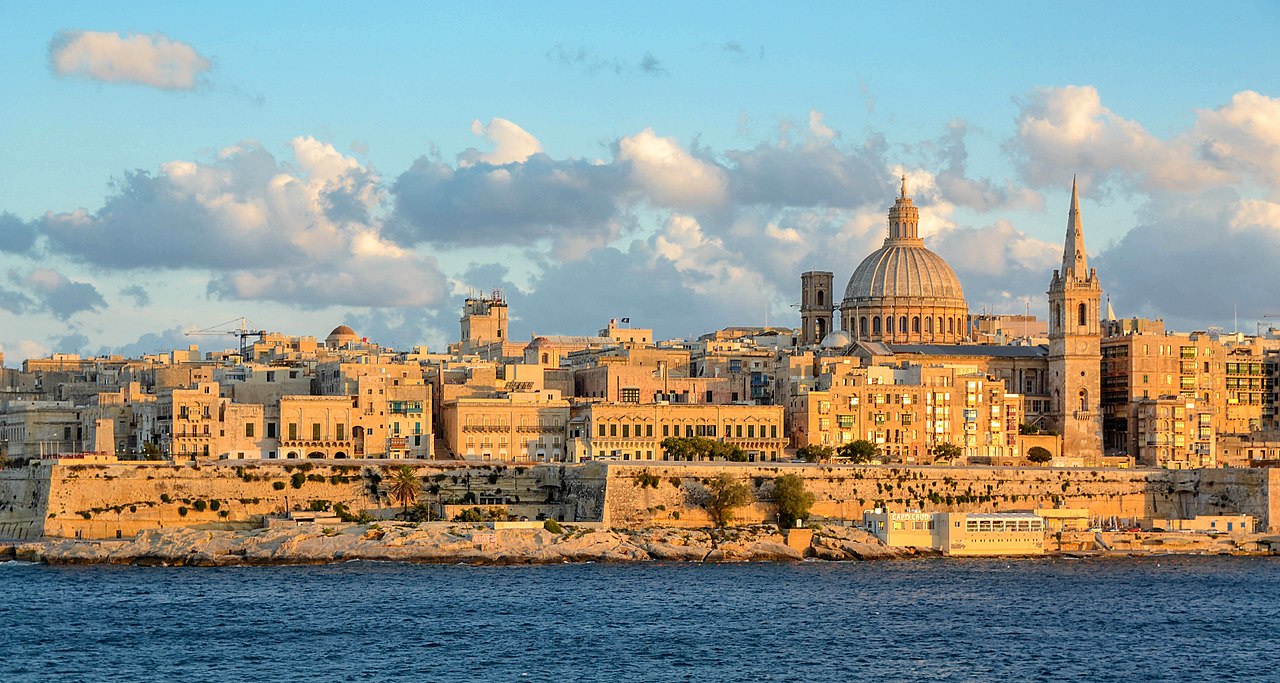
Laparelli’s design was a model of rational military planning. The city was laid out on a strict grid of wide, straight streets. This format allowed defenders to move quickly between positions and, if necessary, fire cannon down the thoroughfares at any force that breached the walls. The peninsula was ringed with ramparts, bastions and defensive ditches. At its seaward tip, Fort St Elmo was rebuilt by Laparelli as the primary naval defence. A great ditch was cut across the landward end of the peninsula to seal it from assault by land. It was later renamed the Ġnien Laparelli, the Laparelli Garden, in tribute to its creator.
By 1571 the Knights had moved their administrative offices from Birgu to Valletta, and by 1582 most of the work on the city was complete. The fortress-city that emerged has never ceased to be the capital of Malta. Walk through Valletta today and you walk, in every fundamental sense, through Laparelli’s mind.
A city that held a fugitive genius
Valletta’s walls would shelter many remarkable figures across the centuries but few as turbulent as the painter Michelangelo Merisi da Caravaggio, who arrived in the city in July 1607 as a fugitive from papal Rome.
Caravaggio’s motivations for seeking refuge in Malta were bound up with his ambition to be recognised with the Cross of Malta, a distinction that could confer a form of nobility and social advancement. The distinction also formed part of his broader strategy to obtain a papal pardon enabling his eventual return to Rome. The Grand Master, Alof de Wignacourt, was a cultured patron keen to bring great artists to embellish Valletta’s churches, and he welcomed Caravaggio with open arms.
However, Caravaggio’s self-destructive streak came to the fore not long after he had had a knighthood conferred on him. He was tried him in absentia and expelled in 1608 as a “putrid and fetid limb.”
A legacy completed by another
Laparelli himself had left Malta in 1569, before Valletta’s major construction work had even properly begun, called away to assist in the papal naval campaign against the Turks. He left the project in the hands of his Maltese assistant, Girolamo Cassar, who completed the city’s principal buildings including the Grand Master’s Palace and St John’s Co-Cathedral, the very church where Caravaggio’s masterpiece The Beheading of Saint John the Baptist would one day hang.
Laparelli never returned to Malta, and never saw what his vision had become. Born into one of Cortona’s most illustrious families, he still owned considerable land and estates in his home city and might reasonably have expected to end his days there. Instead, in 1570, while staying in Crete, he contracted plague and died at the age of 49.
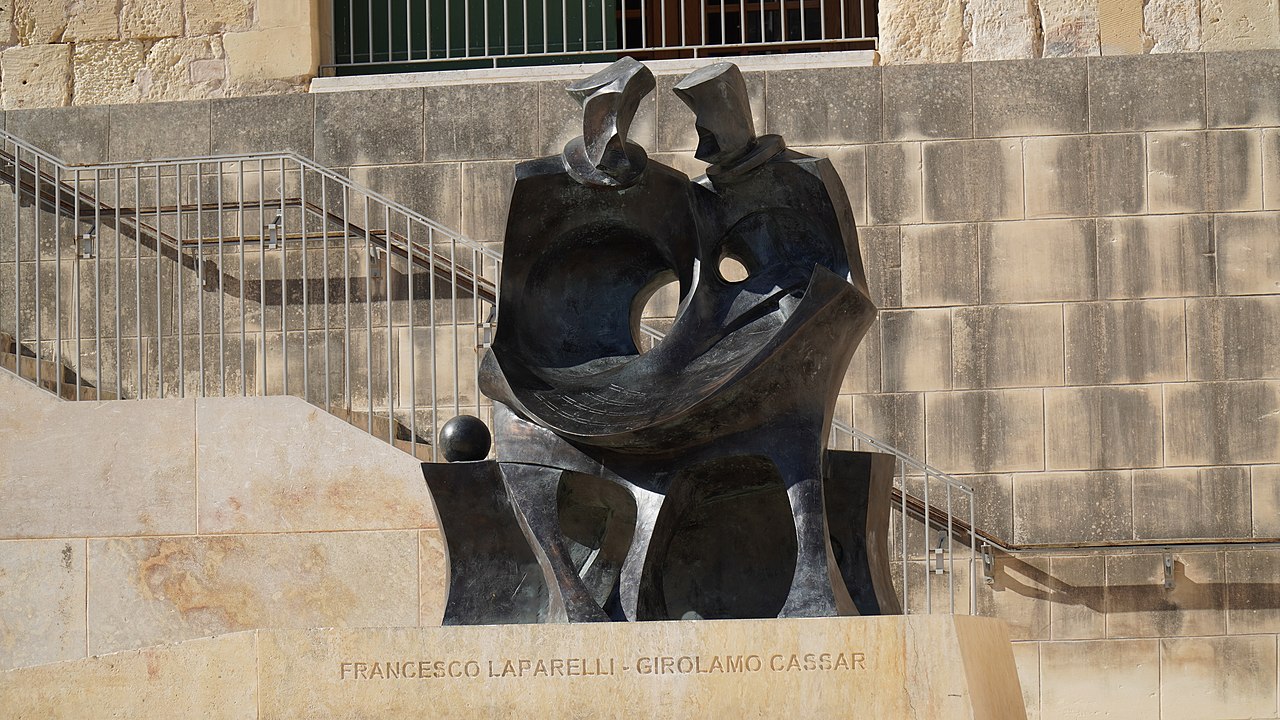
Today, both he and Cassar are commemorated with a monument between Valletta’s Parliament House and the ruins of its old Royal Opera House. It is a fitting tribute to two men, one Italian and one Maltese, whose collaboration produced a city that has outlasted empires.
Cortona, meanwhile, remembers its most famous architect with the bell tower of its duomo, one of Laparelli’s earliest works. It still stands above the rooftops of the Etruscan hilltop city where he was born.