On 30 July 1626, one of the most violent seismic events in European history struck the region surrounding Naples. Estimated to have measured approximately 7.0 on the Richter scale, the massive earthquake and subsequent tsunami devastated the bustling maritime hub and wiped out dozens of nearby settlements, claiming an estimated 70,000 lives.
The earthquake’s epicentre lay roughly 50 kilometres out to sea, beyond the Bay of Naples and the island of Capri. Despite the offshore origin, shockwaves tore through the city and surrounding countryside, leveling more than 30 small towns and villages. In Naples alone, between 10,000 and 20,000 residents perished beneath collapsing stone structures.
The destruction was compounded moments later by a catastrophic tsunami. Historical reports describe the sea receding by more than three kilometres (two miles) before returning as towering waves that battered the coastline, drowning survivors and destroying harbour infrastructure.
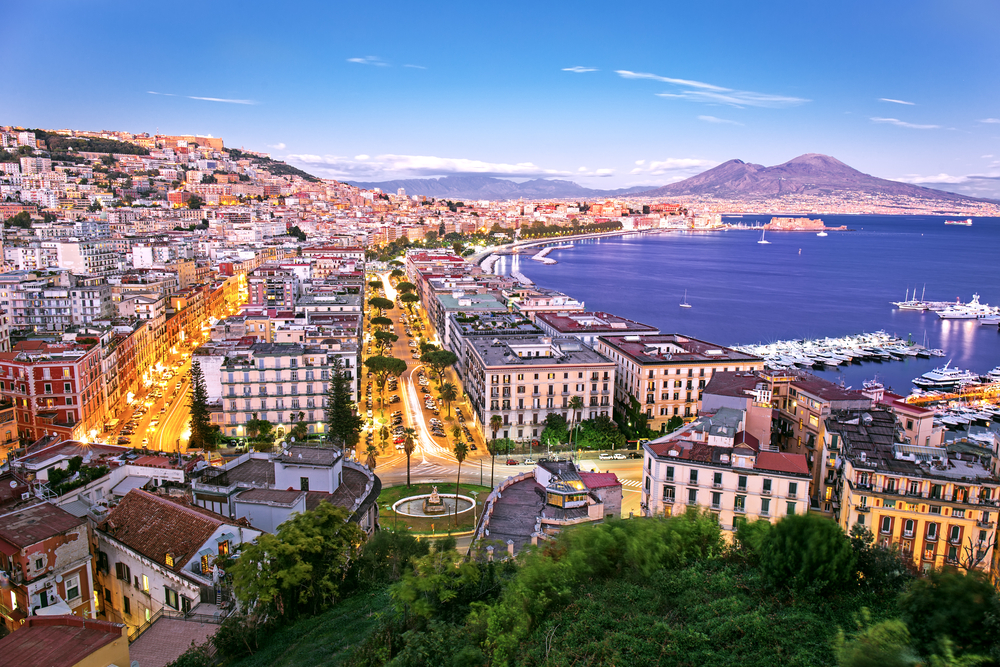
At the time, Naples was a major Mediterranean capital under Spanish rule. Home to roughly 300,000 people, it was Europe’s largest port city and second in population only to Paris. The cataclysm struck during a golden age of urban expansion—luxury estates were rising in the northern Chiaia district, and construction was nearing completion on the Royal Palace, designed by late-Renaissance architect Domenico Fontana.
A Volcanic powder keg
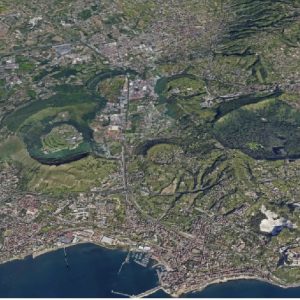
Naples occupies one of the most volatile geological zones on Earth, sandwiched between Mount Vesuvius to the south and the steaming, restless caldera of the Campi Flegrei (Phlegraean Fields) to the north.
The 1626 earthquake and tsunami was part of a prolonged period of intense tectonic instability across Southern Italy:
- 1622: Three major earthquakes struck the region within a single year.
- 1631: Just five years after the 1626 tremor, Mount Vesuvius erupted violently for the first time in nearly four centuries, killing up to 6,000 people.
- 1693: Another earthquake killed 90,000 across the broader region.
- 1783–1857: Over a 75-year span, frequent seismic and volcanic disasters claimed more than 110,000 lives—an average of 1,500 deaths per year.
Modern risks in a densely populated zone
The last major eruption of Vesuvius occurred in 1944, while the region’s last severe earthquake struck the nearby Irpinia region in 1980, killing nearly 3,000 people.
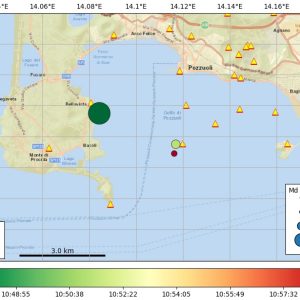
Today, over three million people live in the immediate metropolitan area of Naples. While the region had experienced relative calm in recent decades, in the last three years earthquakes have been swarming. Geologists and seismologists warn that the underlying magma chambers and fault lines remain fully active, making long-term monitoring and disaster preparation vital for the modern city.