Easter in Italy is a blend of solemn religious observance and joyful celebration, rooted in centuries-old traditions. From processions and fireworks to symbolic foods, each region adds its unique touch to the festivities. Here are five facts about Easter in Italy.
Easter, or Pasqua, is one of Italy’s most significant holidays, marked by a series of events during Holy Week. Palm Sunday initiates the week, with faithful Italians carrying blessed olive branches to symbolise peace and renewal.
The week continues with Maundy Thursday (Giovedì Santo), commemorating the Last Supper, and Good Friday (Venerdì Santo), observed with solemn processions reenacting the Passion of Christ. Holy Saturday (Sabato Santo) is a day of quiet reflection, leading up to the joyous celebrations of Easter Sunday. Easter Monday, known as Pasquetta, is a public holiday.
Food for thought
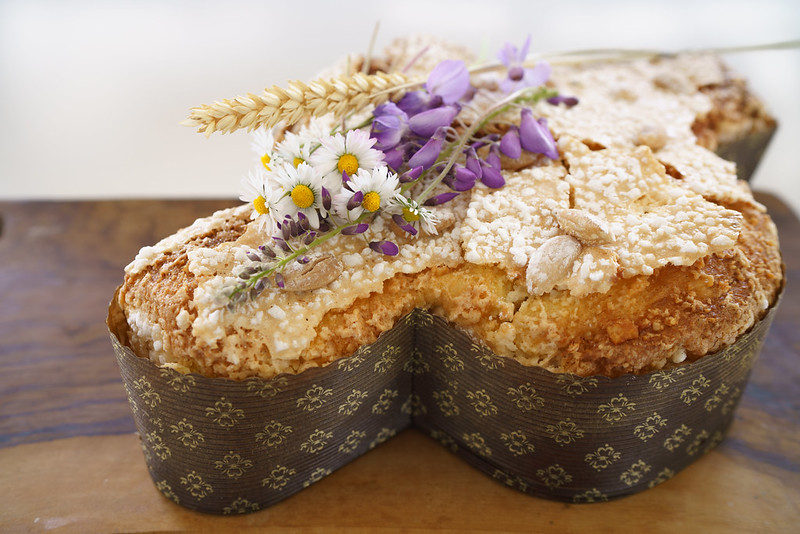
Food is an important part of Easter (Pasqua in Italian). During the Holy Week (Settimana Santa) chocolate eggs and the colomba bread are the most popular.
Lamb (Agnello) – Representing purity and sacrifice, roasted lamb is a staple on Easter Sunday tables across the country.
Colomba di Pasqua – Invented in Milan around 1930, colomba is the Easter version of the two Christmas desserts, panettone and pandoro, topped with pearl sugar and almonds and dove-shaped.
Pastiera Napoletana – A traditional Neapolitan tart made with ricotta cheese, cooked wheat, and candied fruit, embodying themes of rebirth and renewal.
Casatiello – A savoury Neapolitan bread filled with cheeses and cured meats, often adorned with whole eggs baked into the dough, symbolising fertility.
Sites open, shops closed
As it’s a long weekend, lots of Italians head to the countryside, the sea, or the mountains. Meanwhile, a lot of foreigners are heading to the popular sites in the cities.
Most major museums and sights will be open on Easter Sunday and Monday, but many shops and restaurants will be closed.
Picnic on Pasquetta
Despite the common phrase “Natale con i tuoi, Pasqua con chi vuoi” (Christmas with your family, Easter with whoever you want), Easter Sunday is usually spent with family. However, Easter Monday, or “Pasquetta,” is often time with friends.
Families and friends gather for picnics, often featuring leftovers from the Easter feast, in parks and countryside settings.
Religious Processions

There are religious processions across the country. The oldest Good Friday procession in Italy is in Chieti in the Abruzzo region; it’s very moving with Secchi’s “Miserere” played by 100 violins.
Trapani is another interesting place to see processions, held for several days during Holy Week. The Good Friday procession there, Misteri di Trapani, lasts 24 hours.
Sorrento features a hauntingly beautiful procession with participants in hooded robes carrying statues through candlelit streets.
Enna in Sicily hosts one of the most significant Good Friday processions. Over 2,000 friars in traditional attire parade through the city.
Scoppio del Carro
Florence celebrates Easter Sunday with the Scoppio del Carro (Explosion of the Cart), a tradition dating back to the 12th century. A decorated cart filled with fireworks is ignited by a mechanical dove at the Cathedral of Santa Maria del Fiore. The successful explosion is believed to ensure a prosperous year ahead.
Easter in Italy is a time for celebrations, family and food.