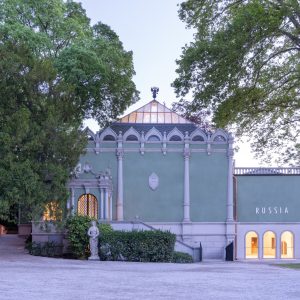
Venice mayor Luigi Brugnaro has said the Russian Pavilion at this year’s Venice Biennale will be closed if it is used for political propaganda, as controversy continues to surround Moscow’s participation.
Speaking on Thursday, Brugnaro stressed the city would not tolerate any attempt to use the prestigious international exhibition as a platform for state messaging.
“If the Russian government were to carry out propaganda, we would be the first to close the Pavilion,” he said. Brugnaro added that there were differing views on the issue between himself and Culture Minister Alessandro Giuli.
The decision to allow Russia to return to the Biennale has drawn strong criticism at both national and European level. The European Commission has warned that the move could jeopardise EU funding for the event, arguing that it risks undermining the bloc’s unified stance against Moscow following its invasion of Ukraine.
Giuli has also urged organisers to revoke the invitation, reflecting broader concerns that participation by Russian artists could blur the line between cultural exchange and political messaging. Brugnaro, however, defended a more nuanced position, emphasising Venice’s long-standing identity as an open cultural centre.
“I am pro-Ukrainian, we have twinned Venice with Odessa, and Russia is the aggressor, but we are not at war with the Russian people, and art is open,” he said.
“We have always been an open, democratic city. We owe respect to people, and we must continue along the path of diplomacy and openness, because that’s how peace is created.”
Uncertainty over Russian participation
The Russian Pavilion has been a focal point of debate since the outbreak of the war in Ukraine, with previous editions seeing artists and curators withdraw in protest.
For the 2026 edition, organisers have indicated that participation will go ahead, although details of the artistic team and exhibition concept remain limited. Reports suggest that the pavilion may feature figures linked to the contemporary Russian art scene who are not officially sanctioned but whose positions on the war remain unclear.
This ambiguity has fuelled concern among critics, who argue that even indirect state influence could turn the pavilion into a vehicle for soft power.
In response, Biennale president Pietrangelo Buttafuoco has said the exhibition will also include projects dedicated to dissident voices, aiming to provide a platform for artists from countries where freedom of expression is restricted.
Supporters of Russia’s inclusion argue that cultural events should remain spaces for dialogue, independent of political conflict. Opponents counter that allowing participation risks legitimising a government engaged in an ongoing war.