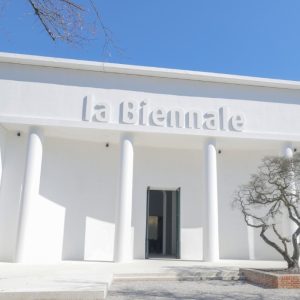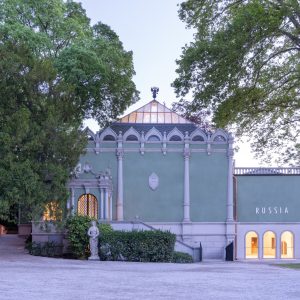
The 61st International Art Exhibition, titled In Minor Keys and curated by Koyo Kouoh, will bring together 99 National Participations and 31 Collateral Events. When it opens later this year, seven new countries will be taking part in Venice Art Biennale 2026.
The scale of participation underlines the Biennale’s status as one of the most significant events in the global contemporary art calendar, with countries from every continent using the platform to present artists and cultural narratives to an international audience.
Seven countries will take part in the Art Biennale for the first time: the Republic of Guinea, the Republic of Equatorial Guinea, the Republic of Nauru, Qatar, the Republic of Sierra Leone, the Federal Republic of Somalia and the Socialist Republic of Viet Nam. El Salvador will also debut with its own national pavilion.
An open framework
La Biennale di Venezia described itself as an open institution, noting that National Participations arise from independent initiatives by individual states. Any country recognised by the Italian Republic may request to participate. Nations that own a permanent pavilion in the Giardini can notify organisers directly, while others must submit a letter from the relevant government authority.
Over the years, countries not formally recognised by Italy have also found ways to contribute through Collateral Events, which run alongside the main exhibition and national pavilions.
In a statement accompanying the announcement, the Biennale said it rejects “any form of exclusion or censorship of culture and art”. It reaffirmed its commitment to dialogue, openness and artistic freedom, describing Venice as a place that encourages connections between peoples and cultures, with the hope of easing conflict and suffering through exchange.
Italy’s pavilion: Chiara Camoni
Italy will be represented at the 2026 Biennale by Chiara Camoni, an artist known for her exploration of collective creation, craft traditions and the relationship between nature and community.
Born in Piacenza in 1974, Camoni developed a practice that blends sculpture, drawing and installation, often incorporating ceramics, natural materials and collaborative processes. Her work frequently engages with themes of memory, ritual and the transmission of knowledge, placing emphasis on shared authorship and the role of manual labour in artistic production.
Camoni has exhibited widely in Italy and internationally, gaining recognition for projects that dissolve boundaries between art and everyday life. Her selection for the Italian Pavilion signals a focus on practices rooted in participation and ecological awareness, in dialogue with the broader curatorial vision of In Minor Keys.