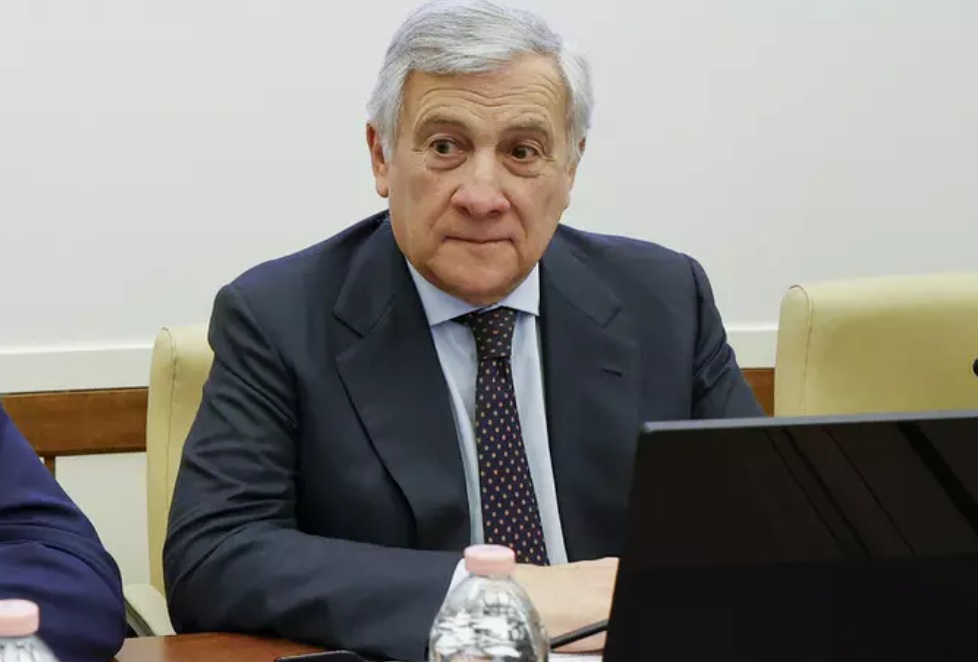
Italy is expelling two officials from the Russian embassy in Rome after accusing them of espionage, Deputy Premier and Foreign Minister Antonio Tajani announced on Thursday. The move follows the arrest this week of two former Italian intelligence officials, who are accused of spying for Russia.
Writing on X, Tajani said the government had decided to expel two military attachés from the Russian embassy, identifying them as Ivan Petrovich Gorbachev and Mikhail Vasilyevich Astakhov. He said the pair were responsible for espionage activity uncovered during an investigation by the Rome Public Prosecutor’s Office, and that the Secretary General of the Ministry of Foreign Affairs had informed the Russian ambassador that both men must leave Rome within three days.
Tajani described the episode as part of a broader pattern of Russian interference, saying Moscow continues to use hybrid tactics against Italy and the West. He called the affair a serious and unacceptable intrusion into Italian institutions and national security.
Russia’s state news agency RIA Novosti quoted the Russian Foreign Ministry as saying Moscow “will respond” to the expulsions.
Tajani defends decision as fact-based
Asked about the prospect of a retaliatory move from Moscow, Tajani said the two expelled individuals had been engaged in espionage activity that undermined Italy’s national security, and that this had been established through evidence rather than being an arbitrary decision.
He said Russia was free to take whatever retaliatory steps it chose, but characterised any such move as revenge rather than a substantiated response.Tajani further added that Moscow would need to demonstrate that anyone it expelled in turn was genuinely involved in espionage. He summed up the contrast by saying Italy’s decision rested on facts, while Russia’s would be political.
Russia’s ambassador to Rome, Alexei Paramonov, addressed the expulsions in a post on his Telegram channel. He argued that Rome’s attempt to limit Russian influence by expelling diplomats would not succeed, pointing to the stature of President Vladimir Putin and Foreign Minister Sergey Lavrov as figures Russia could rely on. By contrast, he suggested Italy currently lacked leaders of comparable standing, despite what he described as the country’s considerable intellectual and political heritage.
Paramonov also noted that he had been summoned to the Italian Ministry of Foreign Affairs on 9 July. He shared a photograph of himself outside the Farnesina holding an image of Lavrov paired with a wry comment suggesting that, unlike other parts of Rome he frequents, nothing good ever seems to happen at the ministry.