
The feast of Sant’Eustachio (Saint Eustace), one of Rome’s most enduringly popular legendary martyrs, falls on 20 September. His story blends a vision of a stag bearing a crucifix, years of family hardship, and a brutal death under the emperor Hadrian.
Every 20 September, Italy marks the feast of Sant’Eustachio, Saint Eustace, a Christian martyr venerated since at least the early medieval period. His story, as it survives today, took shape as legend centuries after his supposed death.
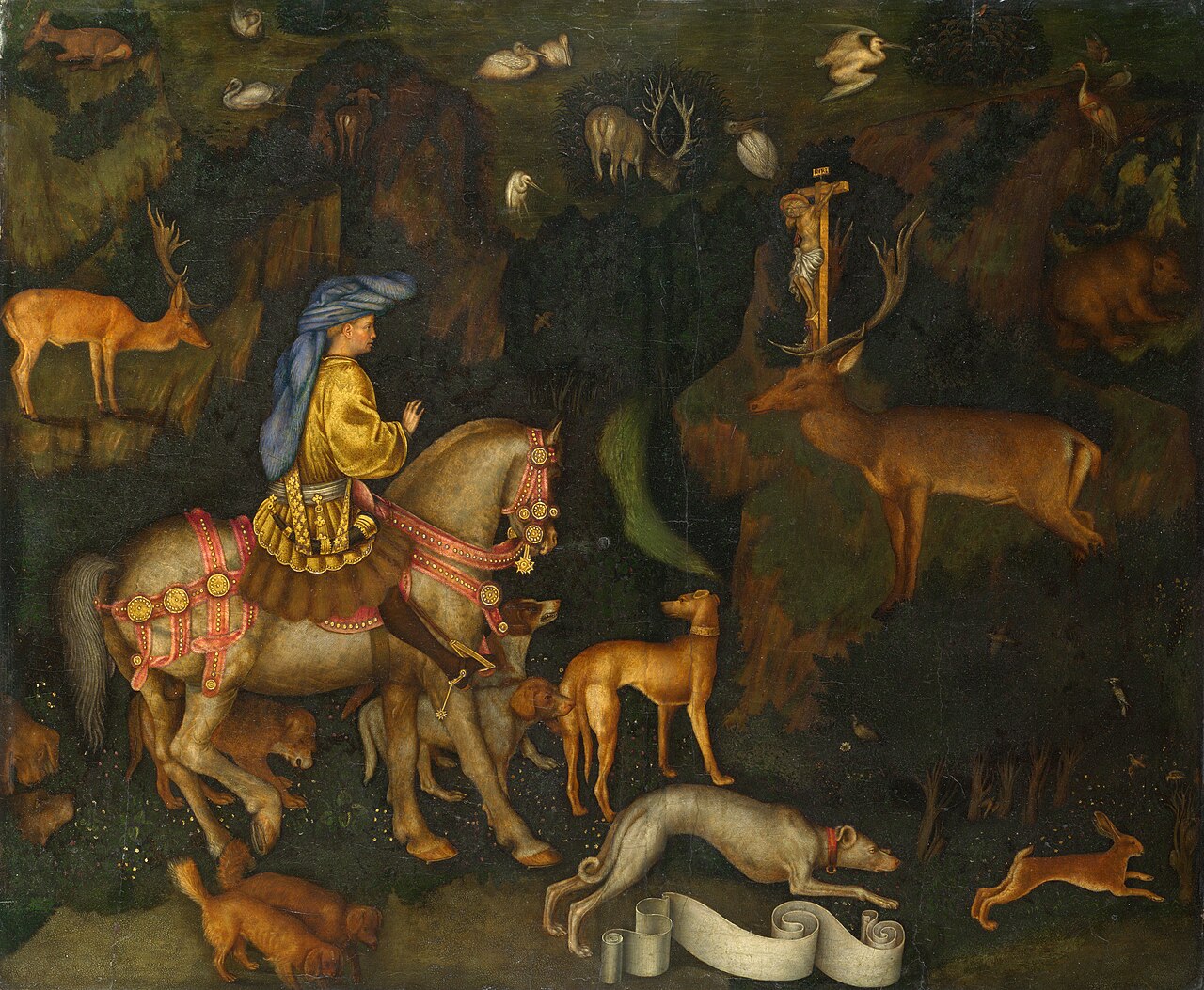
According to tradition, Eustace was originally named Placidus, a Roman general serving under the emperor Trajan. He was admired for his skill in battle and his generosity towards the poor. While out hunting near Tivoli, he pursued a magnificent stag, only for a crucifix to appear glowing between its antlers. The figure of Christ then addressed him directly, asking why he persecuted him without knowing it. Placidus converted on the spot, taking the baptismal name Eustachius — from the Greek for “fruitful” or “abundant in grain”. So did his wife, who took the name Theopista, and their two sons, Agapius and Theopistus.
A trial of losses
In a story that echoes the biblical Book of Job, the newly converted Eustace was said to lose his wealth, then his wife, and finally his sons. He lived for years in poverty and obscurity, only to be recalled to military service when barbarian incursions threatened Rome’s borders.
Eustace led his troops to victory and, in the process, was miraculously reunited with his wife and sons.
On his triumphant return to Rome, Eustace was ordered to give thanks to the pagan gods for the victory. He refused, declaring his Christian faith, and was condemned along with his family. According to tradition they were first thrown to the lions in the Colosseum, but the animals would not touch them. Hadrian then had the family shut inside a bronze bull — a brazen torture device heated from below until those trapped inside were roasted alive.
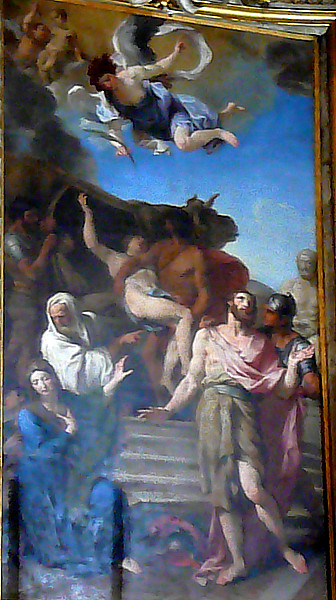
Eustace, Theopista, Agapius and Theopistus are all said to have died together in this manner in Rome around AD 118. Christians are said to have secretly recovered and buried their remains. The church of Sant’Eustachio in central Rome claims to hold his relics to this day.
Legend v history
Modern scholars are cautious about how much of the story reflects real events. Eustace does not appear in the earliest Roman martyrologies. His legend closely echoes older non-Christian tales that were reworked into a Christian martyr’s story, likely from around the seventh century onward.
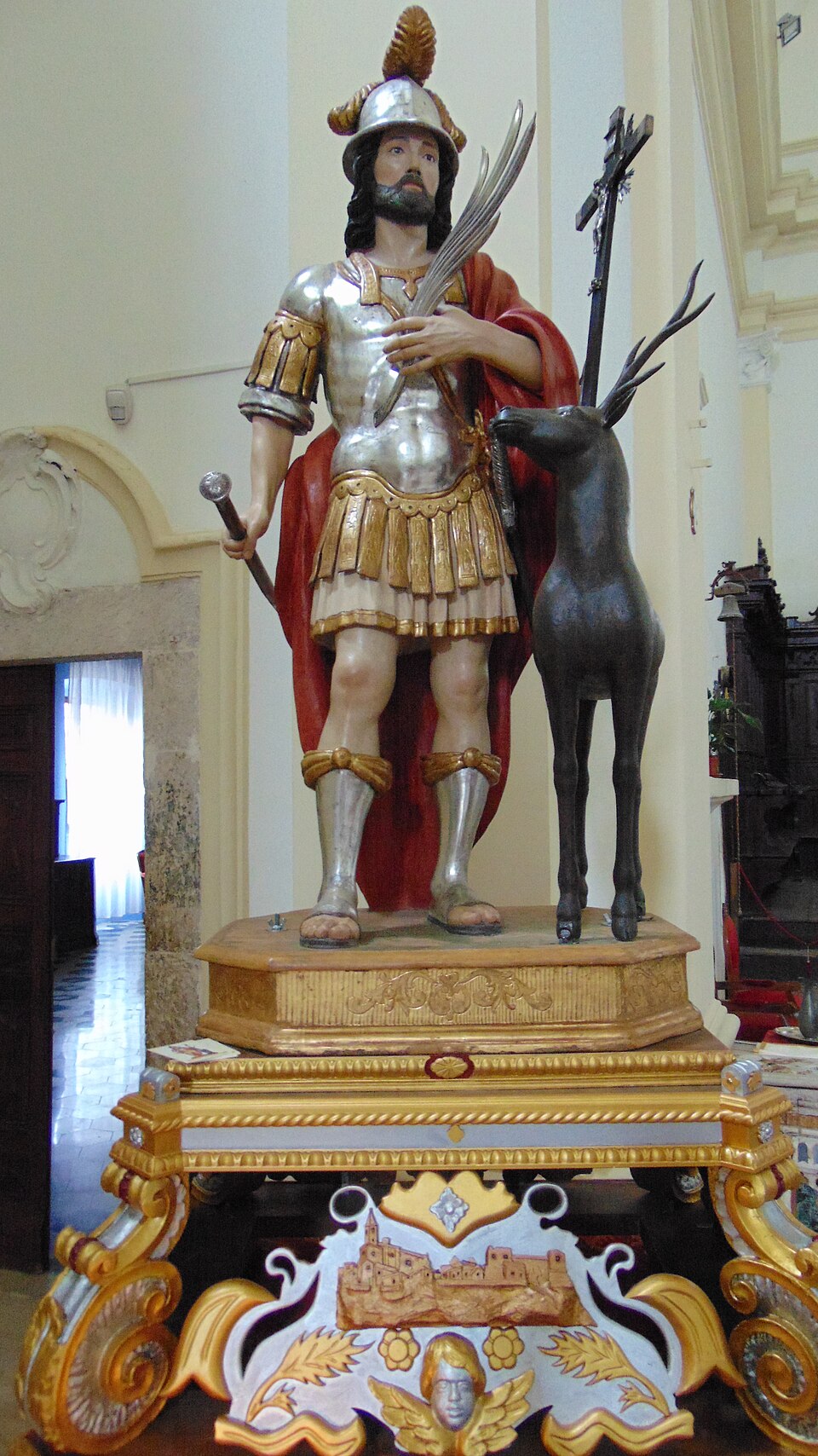
Whatever its historical basis, devotion to the saint spread widely and endured. He is counted among the Fourteen Holy Helpers, is a patron of hunters, and remains particularly venerated in the southern city of Matera. There he is one of the patron saints and credited with saving the city from a Saracen siege in 994. Matera marks his feast each year with a procession of his statue through the city.


