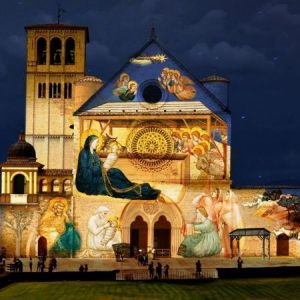
In 2026, Italy marks 800 years since the death of St Francis of Assisi. Few medieval figures still command such wide attention, yet Francis speaks across centuries because his ideas confront enduring human tensions. We only have to look at news articles to understand that wealth, power, violence, and humanity’s place in the natural world still resonate with the public.
Born in Assisi in 1181 or 1182, Francis lived during a time of rapid social change. Trade expanded. Cities grew richer. The Church accumulated land, influence, and political authority. Yet against this background, Francis chose radical poverty – a decision which unsettled both civic leaders and Church officials.
Francis did not begin life as a religious outsider. He was the son of a prosperous cloth merchant. He enjoyed comfort, ambition, and public recognition. Indeed, early sources describe a young man who loved fine clothes and social prestige which makes his later choices all the more striking.
Conversion and message
Francis’s conversion unfolded gradually, shaped by illness, captivity, and disillusionment with military glory. However, Francis did not reject the world through anger, he stepped away through obedience and conviction. He believed Christ called him to live without possessions or status.
This choice challenged accepted religious practice. Medieval holiness often appeared behind monastery walls, but Francis rejected enclosure. He preached in streets, fields, and marketplaces and his message reached people excluded from formal theology.
Francis also reshaped attitudes towards authority. He refused power within his own movement, insisting that leadership meant service. This approach influenced later religious orders and reformers.
Nature played a central role in his spirituality. Francis spoke of animals, fire, and water as kin, not treating creation simply as symbolic decoration. He believed it reflected divine order and deserved respect.
Modern environmental movements frequently reference Francis, even outside religious contexts. His language offers an ethical framework rather than technical solutions. He asked how humans should live within nature, not how they should dominate it.
Francis’s commitment to peace further expanded his influence. During the Fifth Crusade, he travelled to meet Sultan al-Kamil in Egypt, crossing enemy lines without weapons or protection. The encounter did not end the war, but it set a rare example of dialogue.
Canonisation
The Catholic Church formally recognised Francis’s influence quickly, canonising him in 1228, only two years after his death. Since then, artists, writers, and theologians have returned to his life repeatedly, and each era finds new meaning in his actions.

In 2026, Assisi and Italy will host major commemorations, pilgrimages, and scholarly events. A major event will be the display of his relics, when his body be moved from its crypt to the lower church of the Basilica for public veneration from 22 February to 22 March. Italy will also be restoring 4th October, the feast day of St Francis, as a national holiday.
Yet Francis’s appeal does not depend on ceremony. His life remains compelling because it exposes uncomfortable questions. What does a good life require? What should be renounced? What responsibilities accompany belief?
At Italy News Online, we will be providing original articles on the life and teachings of St Francis of Assisi, in each month of 2026.