Construction workers preparing a residential development in an eastern suburb of Rome have uncovered two large Roman pools dating back around 1,800 years.
The structures emerged beneath a former scrapyard during preliminary excavation work on a one-hectare site surrounded by parkland and apartment blocks.
Archaeologists say the basins likely date to around 200 BC, during the Republican period, when wealthy Romans built rural estates in the area.
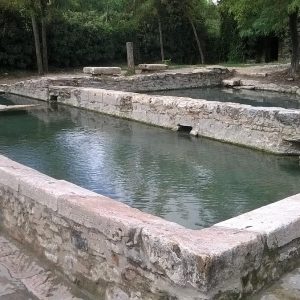
Each of the Roman pools was constructed using stone and Roman concrete and supplied by water channels linked to a nearby stream. The pools reach depths of up to four metres. The larger structure measures nearly 29 metres in length.
Despite their size, researchers remain uncertain about their original function. Archaeologist Fabrizio Santi said specialists have ruled out several explanations. “These were not swimming pools, sheep-dipping tanks or ship-building basins,” Santi said on Wednesday.
Experts initially considered water storage, but architectural features suggest a different purpose.
Wide ramps descend directly into the water. The longer basin contains two large recesses carved into its side walls. A circular opening appears at one end.
That opening contains a ceramic dolium embedded into the wall. Dolia were usually used to store wine or olive oil.
Sealed sarcophagus and shrine discovered nearby

Nearby, archaeologists uncovered a monumental tomb containing a sealed sarcophagus and three funerary urns. One urn held part of a human skull which showed signs of ancient surgery, including a drilled hole.
Santi said the tomb’s scale is unusual for the period, suggesting it may mark the boundary of a wealthy landowner’s estate.
Just metres away, archaeologists also found the remains of a shrine. Offerings included ceramic foot models and six bronze figurines. Three depict Hercules, shown with a club and a lion’s pelt, leading researchers to believe the shrine was dedicated to him. In Roman culture, Hercules was closely associated with water.
A similar pool was previously discovered at a Hercules shrine in Cerveteri, north of Rome. That comparison has led archaeologists to conclude the pools likely had a sacred role, although their exact ritual use remains unclear.
Authorities will preserve the tomb and shrine, reburying the pools after study and banning construction above them.
Also read: House of the Griffins to open in March