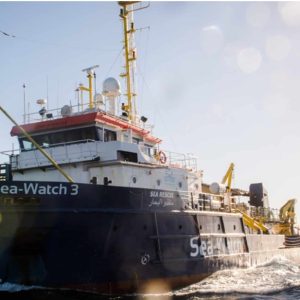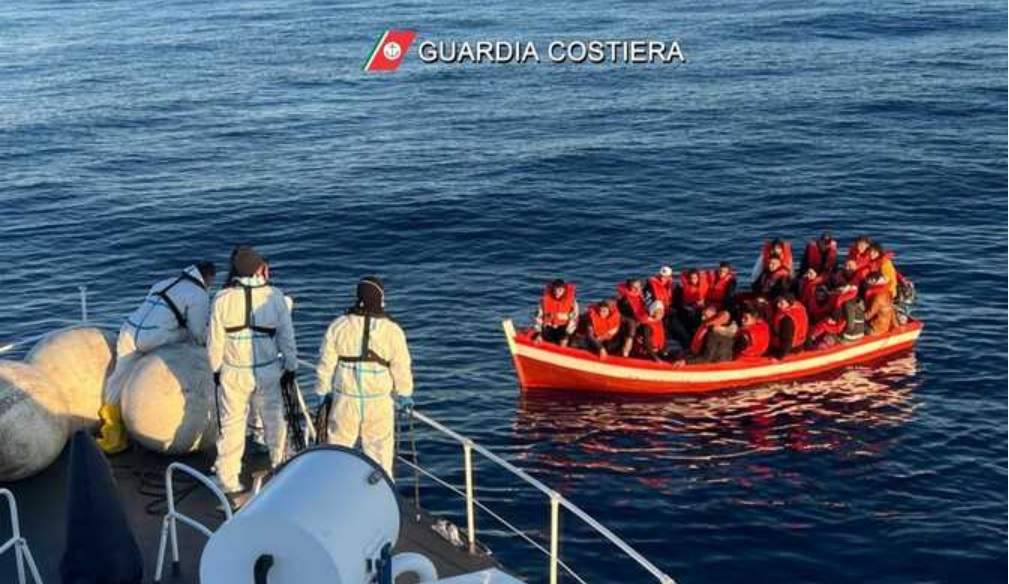
Migrant rescue NGOs on Thursday accused the government of seeking to exclude them from search-and-rescue operations in the Mediterranean. This came after the cabinet approved a new anti-immigration package that includes powers to impose a so-called “naval blockade”.
In a joint statement, groups including Alarm Phone, Emergency, Doctors Without Borders, Mediterranea Saving Humans, Open Arms, Sea-Watch and SOS Humanity said the new measures mark “a new chapter” in what they described as a strategy to marginalise civilian rescue organisations at sea. They argued that previous legislation had already severely restricted their ability to operate.
The NGOs said the “naval blockade” package follows earlier measures such as the Piantedosi Law and the Flows Decree and represents a further crackdown on humanitarian rescue. They warned that the rules do not address migration management but instead target and block rescue vessels, increasing the risk of deaths in the Mediterranean.
EU Pact on Migration and Asylum
According to the organisations, the bill to be submitted to parliament risks making Italy the first country to implement the new EU Pact on Migration and Asylum in a way that undermines fundamental rights. They said the measures would accelerate border and repatriation procedures, expand the list of so-called safe countries of origin to include Egypt and Tunisia, and facilitate transfers of asylum seekers to third countries even when they have no genuine links there.
The NGOs argued that these changes restrict the right to asylum and could expose migrants to persecution or inhumane treatment. They also pointed to existing constraints, including operational limits, compulsory returns after a single rescue, the assignment of distant ports and sanctions against those providing assistance.
The new package, they said, introduces the possibility of banning vessels for up to six months after entering Italian territorial waters. The rescue organisations described the measure as a violation of international maritime and rescue law, questioning the obligation to save lives at sea. The NGOs added that the proposed naval blockade relies on vaguely defined criteria, leaving wide discretion to authorities and reducing protection for people in distress.
“It is unacceptable that the government considers people at risk of drowning and those who attempt to save them a threat to national security,” the statement said. The groups insisted that the rules will not make Italy safer and accused the government of weakening the rule of law by limiting asylum rights and criminalising protesters and rescuers.
Despite the criticism, the NGOs said they will continue to operate in line with international law to provide assistance and save lives. They called on European states to adopt the same commitment without exception.
Meloni: We have fulfilled a promise to voters
Prime Minister Giorgia Meloni defended the package, saying her government had fulfilled a promise to voters. In a video message released late on Wednesday after her arrival in Belgium for an informal EU summit, she said the measures would allow Italy to prevent vessels from entering its territorial waters in cases of serious threats to public order or national security, including terrorism risks and exceptional migratory pressure.
Meloni said the powers would also allow authorities to transfer migrants on board banned vessels to third countries with which Italy has specific agreements. She described the option as compatible with the new EU Pact on Migration and Asylum, which comes into force in June, and urged parliament to approve the bill quickly.
The package allows the authorities to ban access to Italian territorial waters for up to 30 days, extendable to a maximum of six months. It also enables the use of the measure when migratory pressure risks undermining secure border management. Intercepted migrants could be transported to third countries other than their country of origin.
The cabinet also approved a bill to implement the new EU migration pact. The move follows a European Parliament vote this week approving a revised list of safe countries for returns and endorsing offshore processing hubs, such as Italy’s centres in Albania. While courts have so far limited their operation, Meloni has repeatedly said the Albanian centres will function and act as a deterrent to irregular migration from Africa.