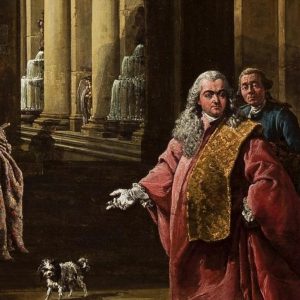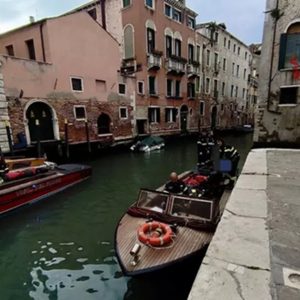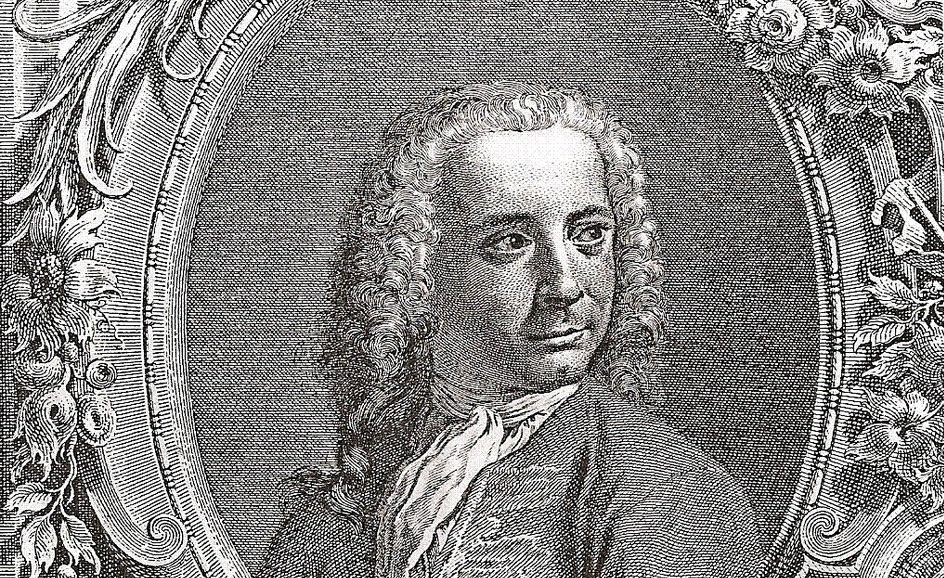
Born Giovanni Antonio Canal, Canaletto became the greatest view-painter of the 18th century. His luminous vedute of Venice, Rome and London still the definitive image of a city at the height of its gilded, fading glory.
On 19 April 1768, after five days of fever, Giovanni Antonio Canal, known to the world as Canaletto, died at his home in the Castello sestiere of Venice. He was seventy years old.
Born in the same city on 18 October 1697, the son of a theatrical scene painter named Bernardo Canal, he took his moniker Canaletto, meaning “little Canal”, simply to distinguish himself from his father. The nickname stuck, and with it came a reputation that would make him one of the most celebrated artists in Europe during his lifetime and, arguably, the most influential cityscape painter in the history of Western art.
From stage sets to sunlit canals
Canaletto came to painting through the theatre. Working alongside his father and brother on stage scenery in Venice, he travelled to Rome in 1719 to paint backdrops for operas by Alessandro Scarlatti. It was Rome, however, that redirected him entirely. Inspired by the Roman vedutista Giovanni Paolo Pannini and captivated by the city’s architectural grandeur, he abandoned theatrical work and resolved to paint cities as they actually were — streets, canals, light, people and all.
Returning to Venice, he began the topographical career that would define him. Where other painters of urban views made their pictures in the studio from notes and sketches, Canaletto frequently worked from nature, bringing an immediacy and atmospheric accuracy to his canvases that struck contemporaries as something entirely new. One art agent, writing in 1725 to a collector considering a purchase, described a young painter of Venetian views. He said, “it is like Carlevaris, but you can see the sun shining in it.” The painter was Canaletto, and the observation captured something essential, his ability to flood a scene with light without sacrificing precision.
The Grand Tour and the English connection
Canaletto’s fame grew rapidly and his market, crucially, was not primarily Venetian. The English aristocracy, making their obligatory Grand Tour of Europe, arrived in Venice in their hundreds and found in Canaletto the perfect souvenir. His were paintings that were not merely accurate but genuinely beautiful, that captured the city’s ceremony and its melancholy, its pageantry and its quiet decay.
The mechanism of his success was Joseph Smith, an English businessman and art collector living in Venice who became Canaletto’s agent and most important patron. Smith’s home on the Grand Canal functioned almost as a showroom for the artist’s work. Smith sold his collection to the young King George III in 1762, for the sum of £20,000. The bulk of what is now one of the world’s finest collections of Canaletto’s paintings passed permanently into the Royal Collection.
The works of Canaletto
Canaletto’s output was prodigious, some 500 paintings, hundreds of drawings and a significant body of etchings. However, certain works have come to define both his art and the world’s image of Venice itself.
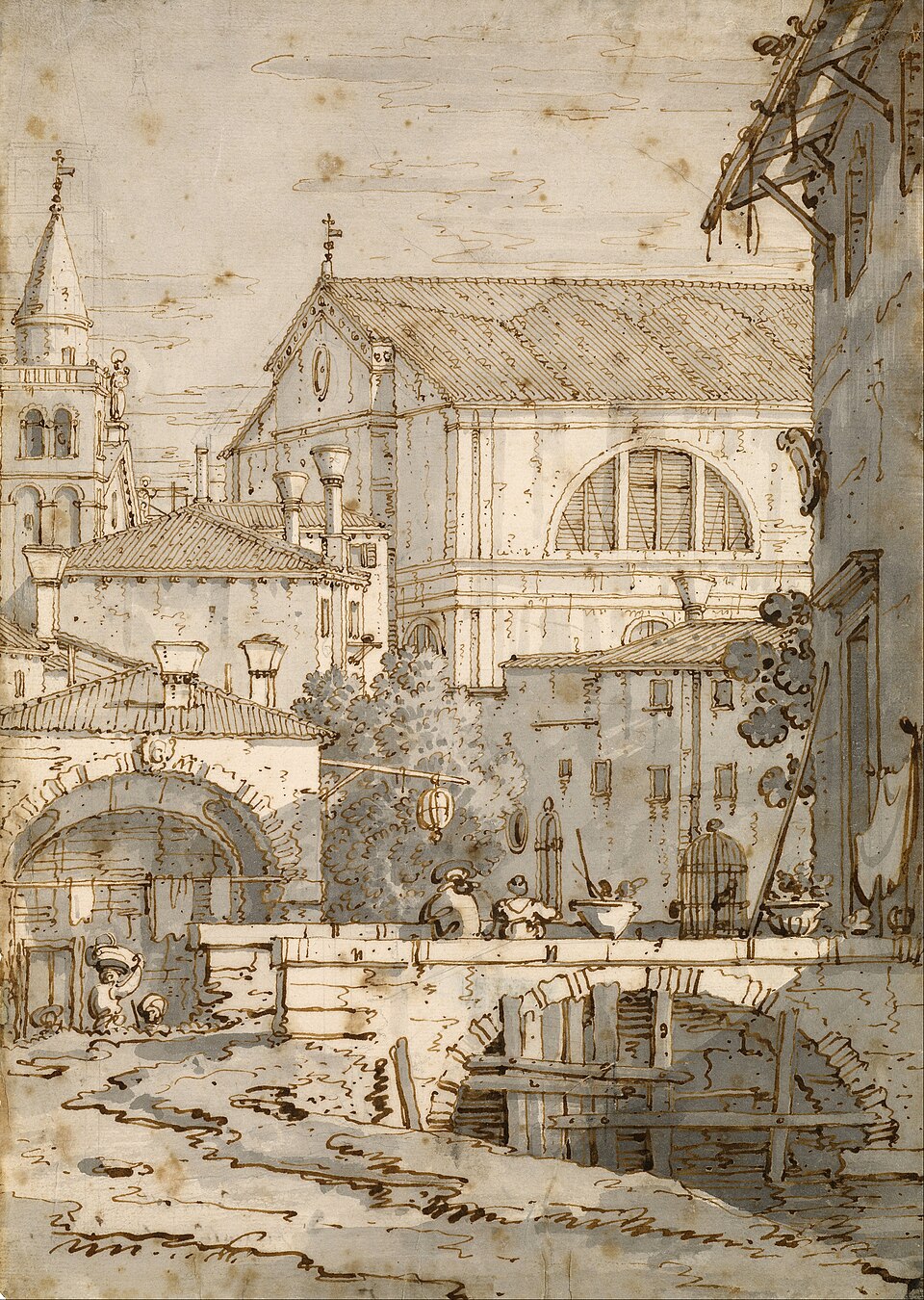
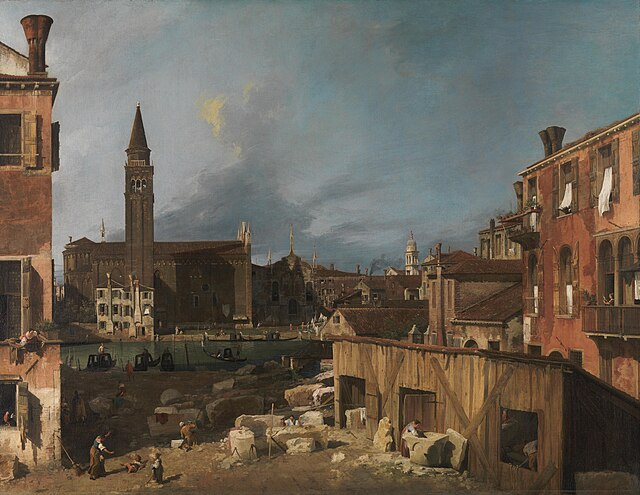
His earliest surviving signed and dated painting, Architectural Capriccio (1723), announced the precision and compositional confidence that would become his hallmark. But it is The Stonemason’s Yard (c. 1725, National Gallery, London) that most critics regard as his masterpiece. Rather than a grand ceremonial view, it shows a humble corner of the city — a makeshift workshop in Campo San Vidal, workmen chiselling stone in the morning light, a mother comforting a child, a woman watching from a balcony above. Intimate, closely observed and alive with the texture of ordinary Venetian life, it represents Canaletto at his most unselfconsciously brilliant, before the demands of the Grand Tour market pushed him towards more formulaic grandeur.
Capturing the life of Venice
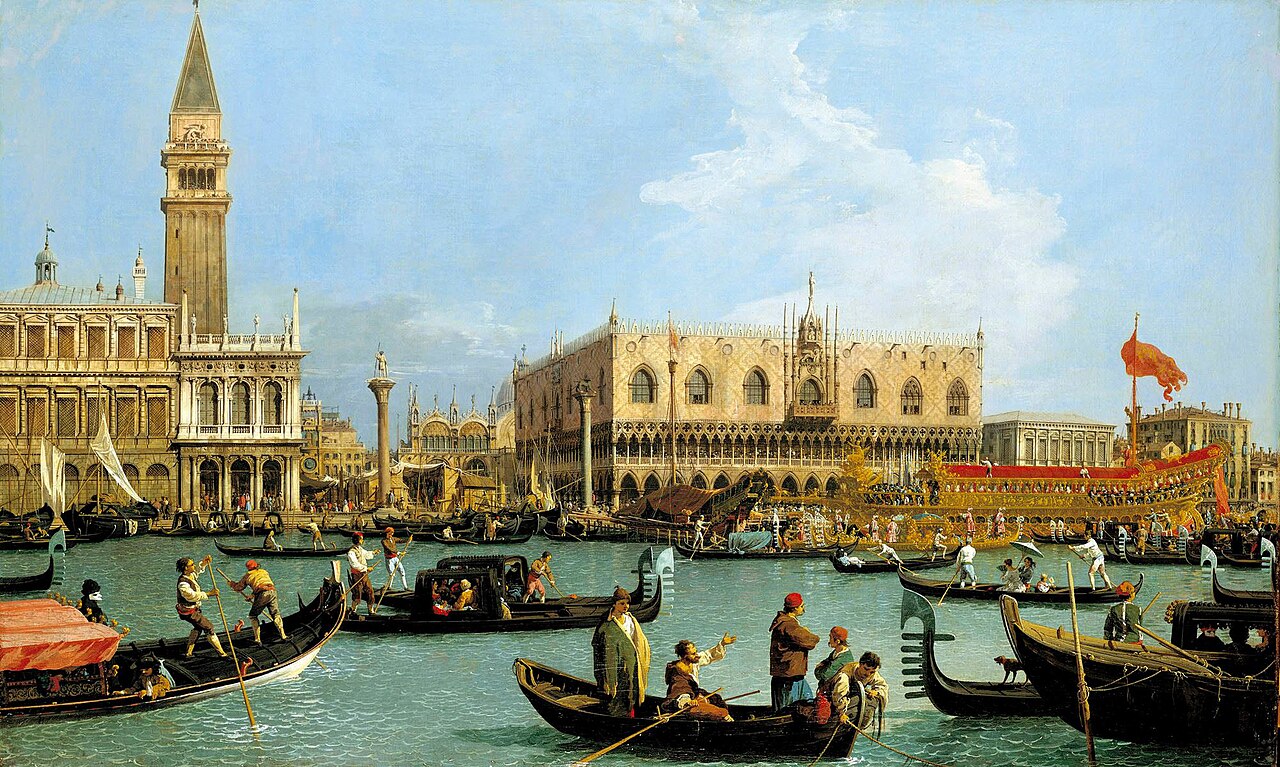
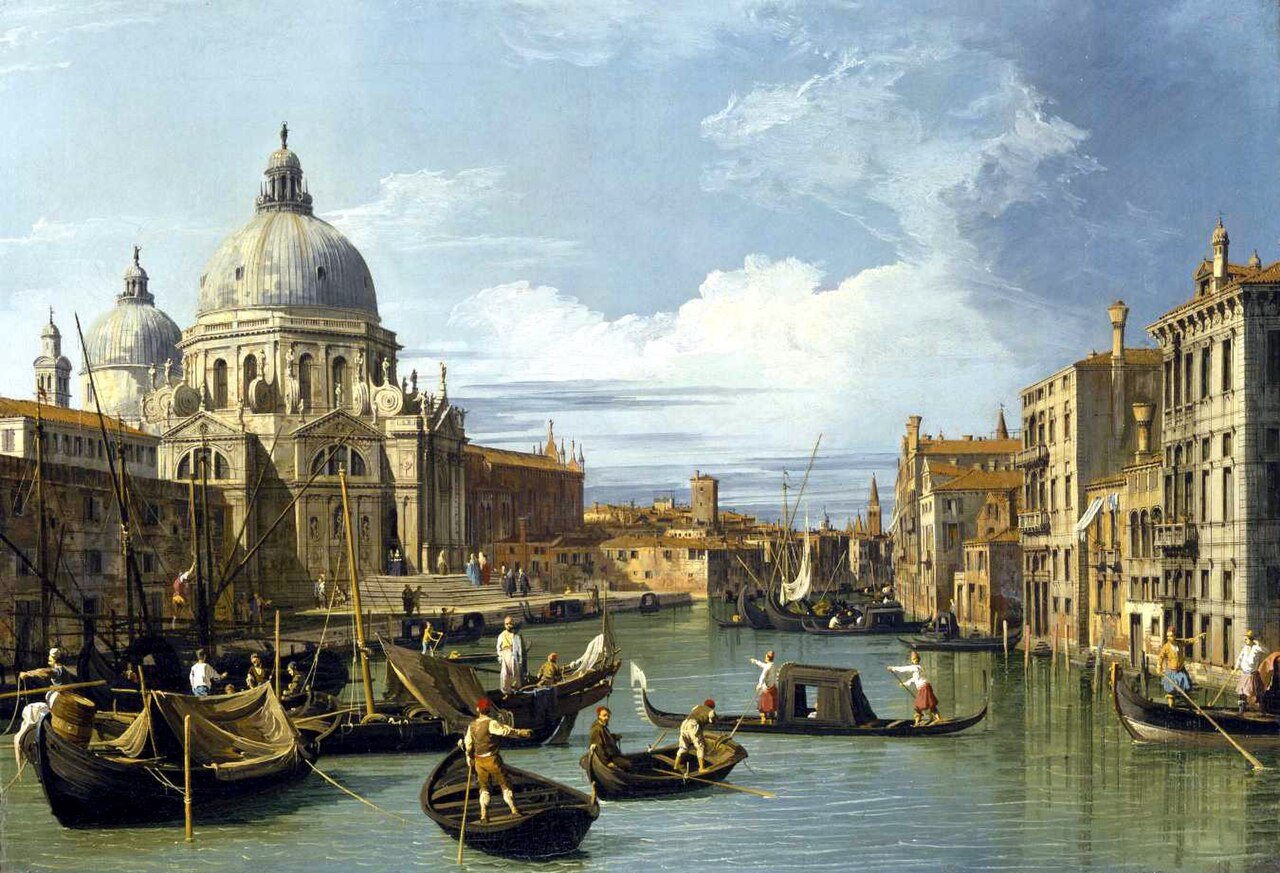
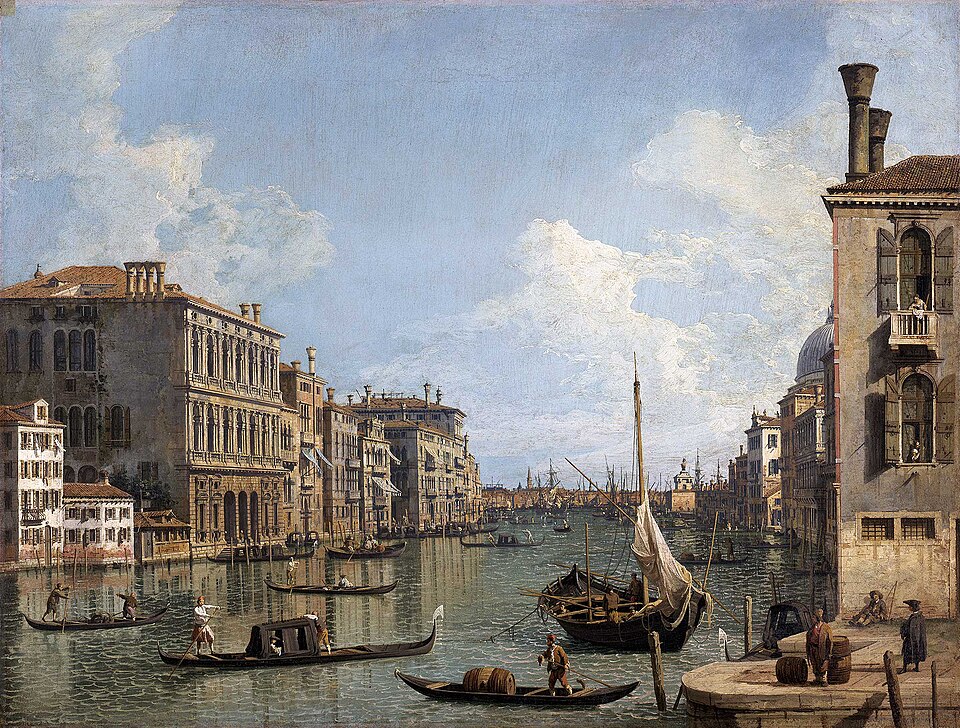
That grandeur, however, he delivered with unmatched skill. His sweeping views of the Grand Canal, painted repeatedly and from multiple vantage points throughout his career, remain the series for which he is most widely known. Works such as The Grand Canal from the Rialto Bridge and The Bacino di San Marco capture the full theatre of the Venetian Republic: gondolas threading through sparkling water, the Doge’s Palace glowing in afternoon light, crowds gathered for the city’s elaborate public ceremonies. His series of twelve Grand Canal views commissioned by Joseph Smith in the early 1720s, completed over the course of a decade and now largely in the Royal Collection, established the template for how Venice would be seen and painted for the rest of the century.


![View of the Arsenal entrance Por Canaletto - Web Gallery of Art: Imagen Info about artwork Transferido desde en.wikipedia a Commons. ([1]) —Dacxjo 17:47, 1 March 2006 (UTC), Dominio público, https://commons.wikimedia.org/w/index.php?curid=606582](https://italynews.online/wp-content/uploads/2026/04/1280px-View_of_the_entrance_to_the_Arsenal_by_Canaletto_1732.jpg)

Venetian ritual
Canaletto was equally at home with Venice’s great set-pieces of civic ritual. For example, Regatta on the Grand Canal captures Venice’s love of elaborate public spectacle, the canvases crowded with figures in costumes and boats decked for ceremony. His paintings of the Piazza San Marco, revisited throughout his career under different light conditions, chart both the changing face of the city and his own evolving technique.
He also produced a significant body of capricci, imaginary architectural views that combined real buildings, invented structures and fantastical settings, which demonstrate a playful, inventive side to his art that his reputation for topographical precision sometimes obscures. His etchings, too, are remarkable: a series of thirty-one prints produced in the late 1730s and 1740s ranks among the finest examples of the medium in 18th-century Italy.
During his years in England, Canaletto turned his eye to the Thames and the English landscape. Eton College (National Gallery, London) shows his ability to adapt his style to new material — the soft English light quite different from the crystalline brightness of Venice, though he handled it with characteristic assurance. Views of the City of London from the river, of Westminster Bridge under construction and of various aristocratic country houses added a substantial English chapter to his body of work, even if these paintings have never attracted quite the same devotion as the Venetian masterpieces.
His final years in Venice produced work of a more introspective character. A drawing of the interior of the Basilica of San Marco, completed in 1766, bears the quietly proud inscription “eseguito senza occhiali” “executed without glasses.” He was sixty-eight. The line, technical as it is, reads now like a valediction from a man who had spent half a century training his eyes on the most beautiful city in the world.
A decade in England
When the War of the Austrian Succession disrupted the flow of wealthy travellers to Venice in the 1740s, Canaletto’s income contracted sharply. In 1746 he made a bold decision: he moved to England. He remained for roughly a decade, painting views of London and the Thames, of Eton College, Alnwick Castle and the country seats of the English nobility. The work he produced there is technically accomplished, though critics have generally judged it less vital than his Venetian paintings. The English light and architecture suited him less naturally than the shimmering reflections of the Grand Canal.
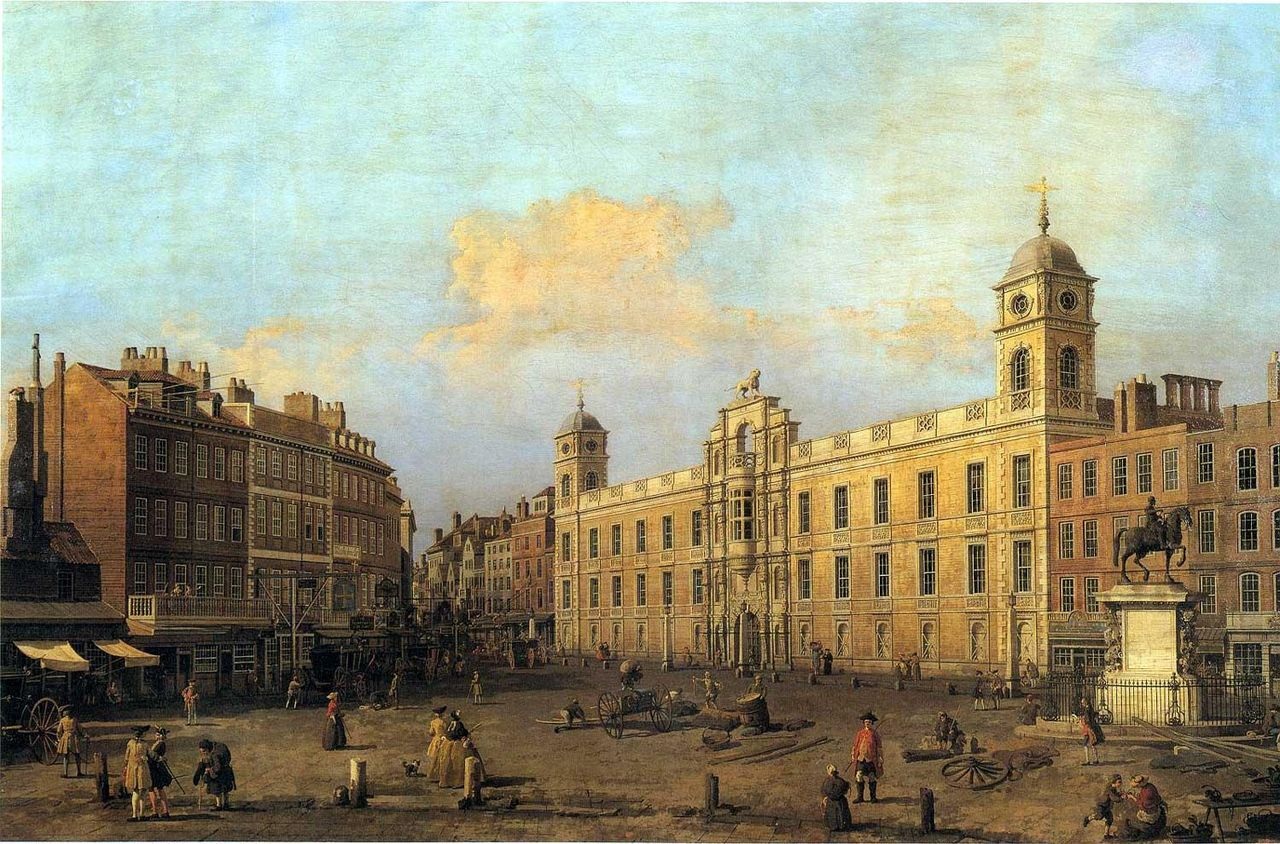
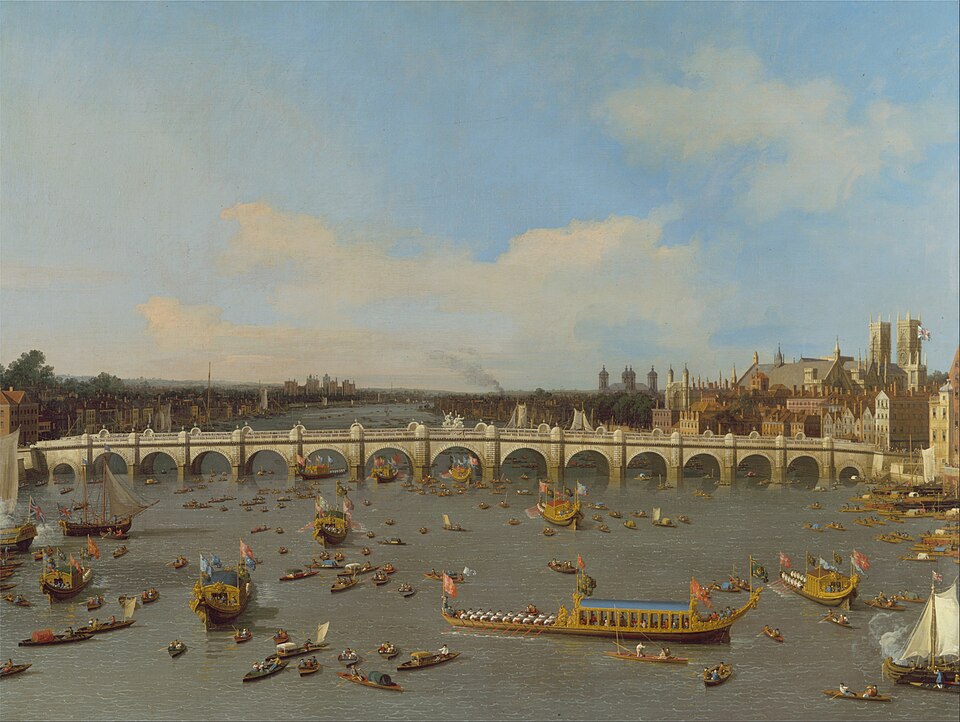
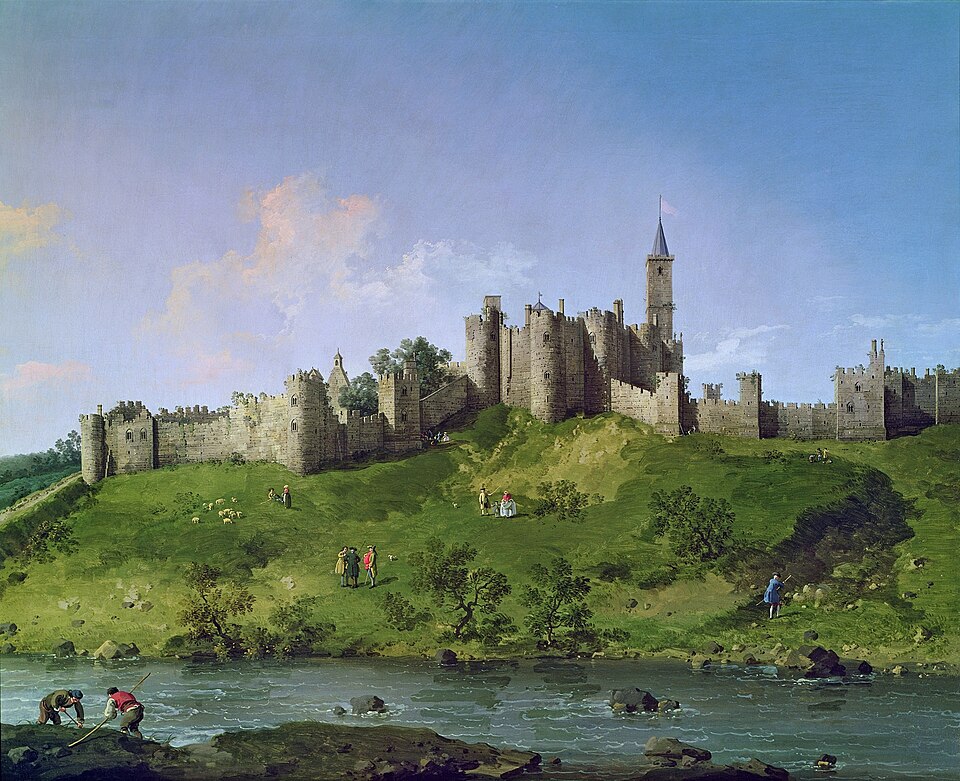
The English years were not without difficulty. Rivals put about rumours that the man presenting himself as the great Canaletto was an impostor. He was so prodigious, and his output so prolific, that some refused to believe one artist could produce it all. He survived the slander, but his English reputation never fully recovered the heights of his early success there.
Return to Venice
Back in Venice from around 1756, Canaletto continued to work, though he never regained his former position at the centre of fashionable patronage. The taste for vedute was shifting; younger painters were beginning to find their audiences. In 1763, the Venetian Academy finally elected him to its membership, a recognition that had come very late. He died the following year, in the city of his birth.
Canaletto’s influence extended far beyond Venice. His nephew and pupil Bernardo Bellotto carried his style across Central Europe, to Dresden, Vienna and Warsaw. In England, painters including Samuel Scott and William Marlow worked consciously in his tradition. His technique, his command of perspective and his integration of human life into architectural grandeur cast a long shadow over landscape painting for generations.
But it is Venice, above all, that belongs to Canaletto. His paintings of the Grand Canal, the Piazza San Marco, the Doge’s Palace and the glittering basin of the lagoon created what has become the world’s collective mental image of the city.