Growing numbers of dolphin sightings near the lagoon city point not to a recovery but to overfishing and warming seas pushing the mammals closer to shore, say experts.
The increasing frequency of dolphin sightings in the waters around Venice is a sign of an Adriatic Sea being steadily stripped of fish by overfishing and rising water temperatures, rather than a conservation success story, authorities and marine researchers said Friday.
Mimmo, Nane, and now others
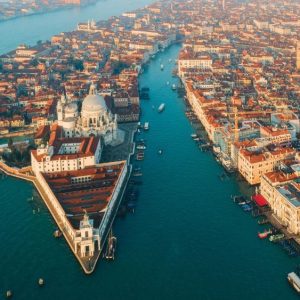
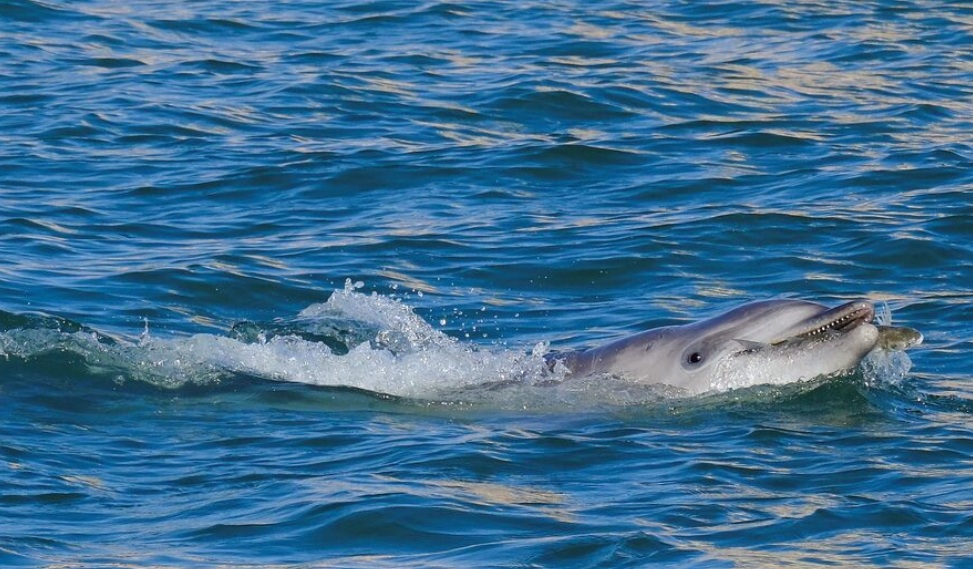
Venice currently has two “official” resident dolphins, affectionately named Mimmo and Nane by locals — in fact widely believed to be the same bottlenose dolphin known to researchers as Mimmo. the dolphin was first spotted in the lagoon in June 2025 and is still present more than a year later. It has become something of a local celebrity around San Marco Basin, the Grand Canal and the Rialto Bridge.
But this summer has brought a marked rise in additional reports. A dolphin sighted in the Grand Canal in mid-August prompted Mayor Simone Venturini to urge boat traffic to take extra care. Meanwhile, researchers from Venice’s Natural History Museum and the University of Padova have since been trying to establish whether Venice’s waters may now host as many as three separate animals.
The picture darkened this week with the death of another dolphin found in the lagoon. It is only the second dolphin whose presence in the area has been confirmed with certainty over the past year. There have been numerous, not always verifiable, reports of bottlenose dolphins in the area and increasingly frequent sightings near the lagoon’s port entrances.
Experts point to a depleted sea
Researcher Giovanni Bearzi of Dolphin Biology and Conservation said dolphins were being drawn closer to the coast as they follow fishing boats out at sea in search of prey — mullet in particular — wherever it can still be found. That behaviour, he stressed, is not a sign of a healthy ecosystem but of a depleted one.
Bearzi said the natural prey of Adriatic dolphins has been overfished, with destructive, intensive trawling responsible for an initial collapse in fish stocks. Sea warming, he added, has since delivered a further blow, allowing tropical species to displace native ones.