![Cardinal Scipione Borghese By Ottavio Leoni - [1], Public Domain, https://commons.wikimedia.org/w/index.php?curid=101285191](https://italynews.online/wp-content/uploads/2026/09/Portrait_of_Cardinal_Scipione_Borghese_by_Ottavio_Leoni-cropped.jpg)
Cardinal Scipione Borghese, nephew of Pope Paul V, used his vast wealth and power to build one of history’s greatest art collections. He championed the young Bernini and recognised Caravaggio’s genius from the beginning.
Cardinal Scipione Borghese, patron of Gian Lorenzo Bernini and Caravaggio and creator of one of the most important art collections ever assembled by an individual, was born on 1 September 1576 in Artena, a small town southeast of Rome.
From Caffarelli to Borghese
He was born Scipione Caffarelli, the son of Francesco Caffarelli and Ortensia Borghese. When his father ran into financial difficulty, his uncle Camillo Borghese stepped in to pay for his education. Everything changed in 1605, when Camillo was elected Pope Paul V. He promptly made his nephew a cardinal and granted him the right to bear the Borghese name and coat of arms — transforming Scipione, virtually overnight, into one of the most powerful men in Rome.
As Cardinal Nephew, cardinale nipote, Scipione became the effective head of the Vatican’s government, and used the papal fees and taxes that flowed through his hands to amass an extraordinary personal fortune, along with vast landholdings. It was this wealth, combined with his position, that gave him the means to build one of the era’s defining art collections.
Acquiring art by any means necessary
Scipione was, by most accounts, as ruthless as he was discerning. In 1607, the Pope handed him 107 paintings confiscated from the studio of the painter Cavalier d’Arpino over an unpaid tax bill — a haul that included two important early Caravaggio works, the self-portrait known as Sick Bacchus and Boy with a Basket of Fruit. That same year he acquired the collection of the Patriarch of Aquileia, and in 1608 obtained 71 further paintings from Cardinal Sfondrato, reportedly including Titian’s Sacred and Profane Love and works by Raphael.
His methods could be brazen. He arranged for Raphael’s Deposition to be removed from a church in Perugia and brought to Rome for his collection, later being forced to supply the city with two faithful copies to head off public unrest. He is also said to have appropriated Caravaggio’s Madonna and Child with St Anne, a large altarpiece originally commissioned for a chapel in St Peter’s Basilica.
Discovering Bernini and championing Caravaggio
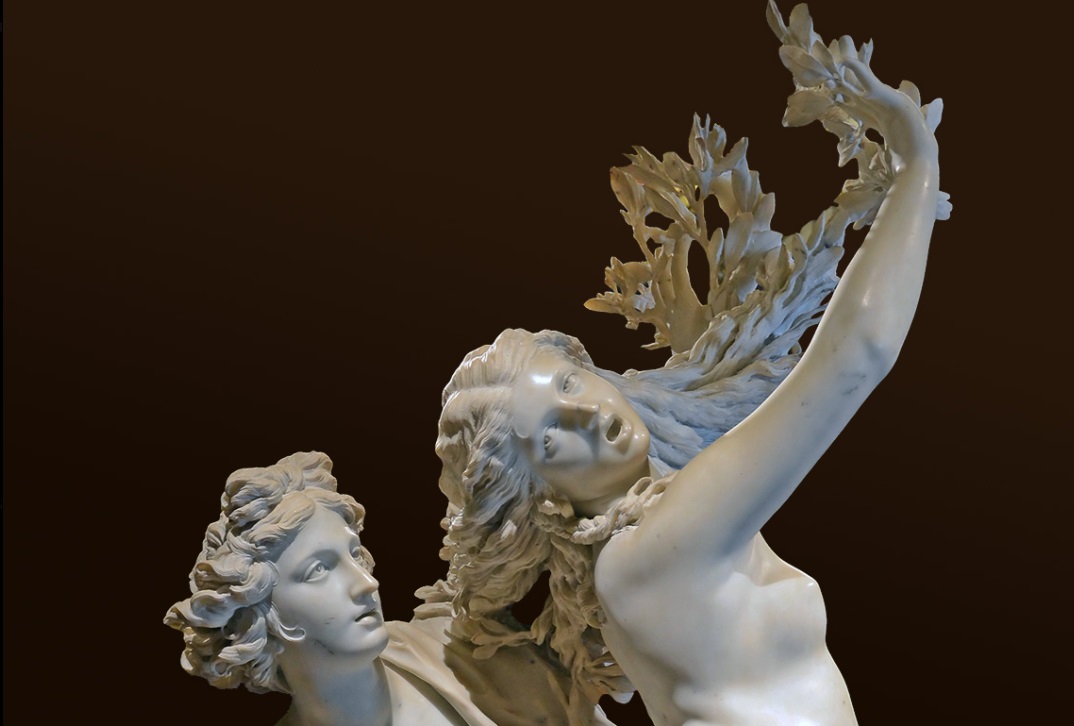
Whatever his methods, Scipione’s eye for talent was exceptional. He was the first major patron to recognise the genius of the young Gian Lorenzo Bernini, commissioning the sculptor, between 1615 and 1623, to create the marble groups that remain the centrepieces of the Galleria Borghese today: the Goat Amalthea, Aeneas and Anchises, the Rape of Proserpina, David, and Apollo and Daphne.
Read: The day I fell in love with sculpture
He was equally quick to grasp the originality of Caravaggio’s painting at a time when the artist’s brief, turbulent career was only beginning to unfold — a judgment that has been thoroughly vindicated by history, even if it was not universally shared at the time.
Late in his life, in 1632, Bernini also produced two marble portrait busts of the cardinal, now among the most celebrated Baroque portrait sculptures in existence. According to his biographer Filippo Baldinucci, Bernini spotted a crack in the marble of the first bust after completing it and, rather than presenting a flawed work, quietly carved a second version in a matter of days.
The Villa Borghese
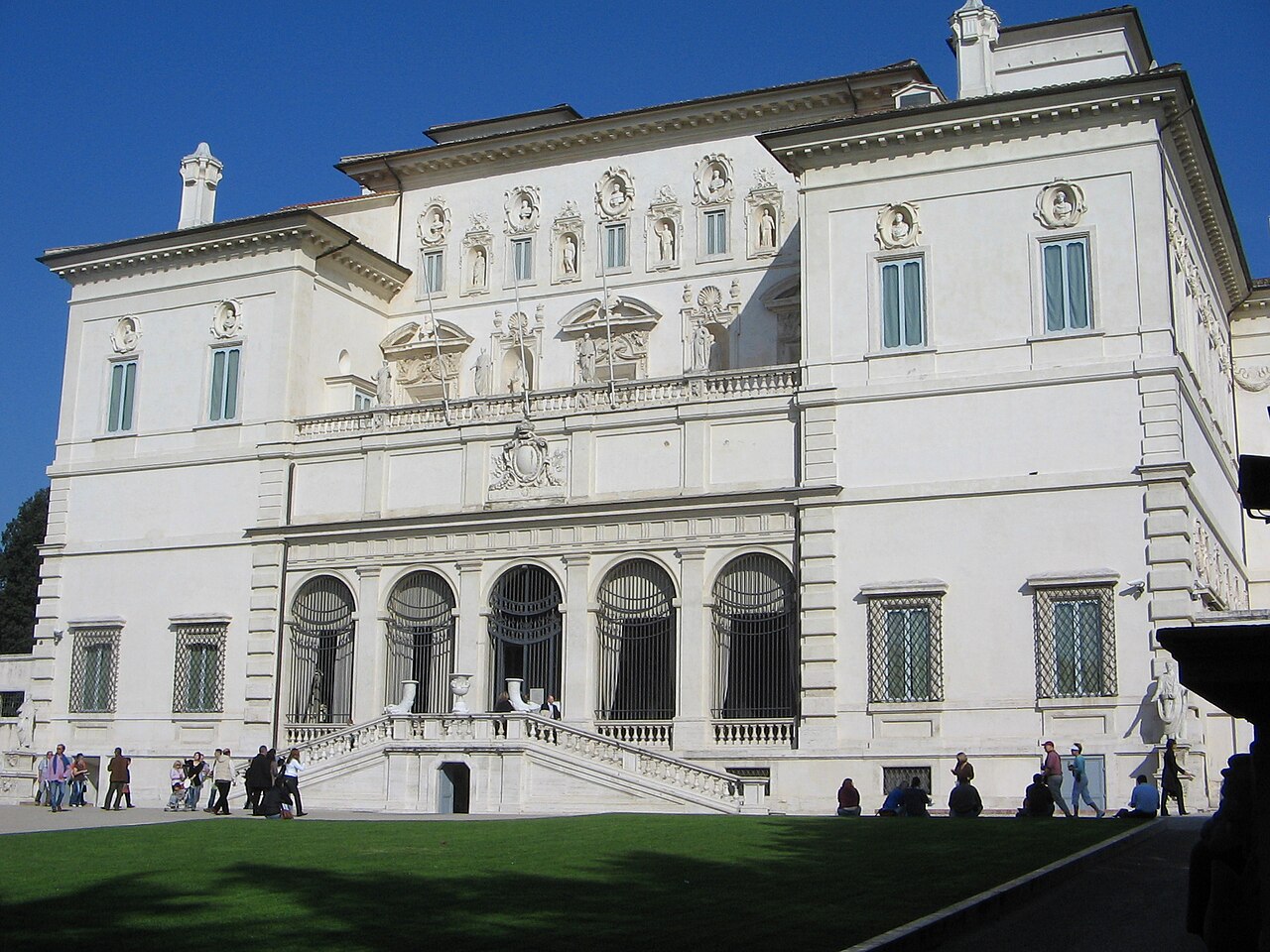
To house his growing collection, Scipione built the Villa Borghese on Rome’s Pincian Hill, along with improvements to the Villa Mondragone, assembling paintings, ancient Roman sculpture and contemporary commissions on a scale that few private collectors of any era have matched. His holdings extended well beyond his best-known Baroque works, encompassing pieces as varied as Fra Angelico’s Last Judgment, Renaissance altarpieces, and northern European painting.
Scipione Borghese died in Rome on 2 October 1633. The collection he assembled through decades of acquisition, confiscation and outright appropriation remains on public display today at the Galleria Borghese, still regarded as one of the finest small museums in the world.