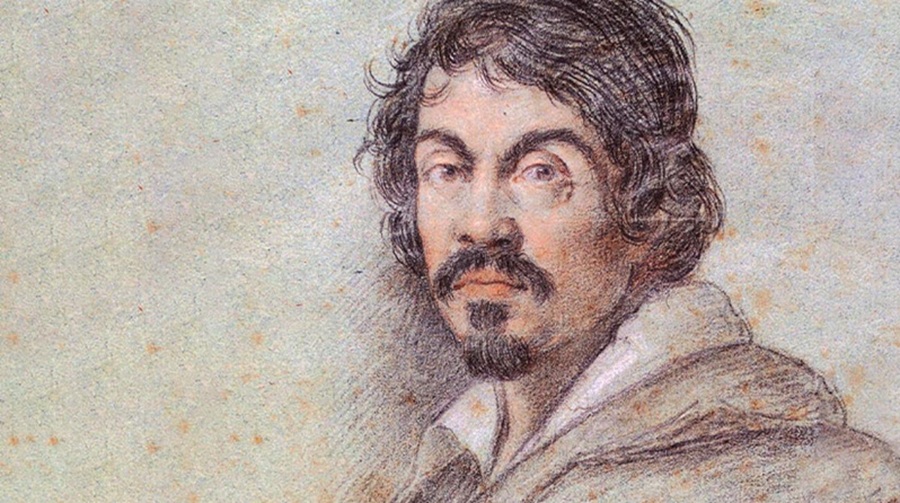
Fleeing a death sentence, chasing a papal pardon, and having seen the boat carrying his precious paintings sail away, Michelangelo Merisi da Caravaggio died alone and feverish on a Tuscan beach on 18th July 1610.
Caravaggio died on this day in 1610 at Porto Ercole, on the Tuscan coast, bringing an abrupt and mysterious end to one of the most turbulent careers in the history of art.
A killer on the run
By the time of his death, Caravaggio had spent four years as a fugitive. In May 1606, following a brawl – ostensibly during a game of pallacorda in Rome – he killed a man named Ranuccio Tomassoni and fled the city under a death sentence. The years that followed took him first to Naples, then to Malta — where he was briefly inducted as a Knight before wounding another knight in a fight and being expelled in disgrace — and on to Sicily, before he returned once more to Naples in 1609.
Throughout his exile, Caravaggio continued to paint, and continued to pursue the one thing that could restore his freedom: a pardon from Pope Paul V. His powerful connections in Rome, including the Colonna family, worked on his behalf, and by the summer of 1610, word reached him that the pardon was finally close.
A fatal decision
In July 1610, Caravaggio boarded a felucca — a small coastal vessel — in Naples, bound north for Rome. With him were several paintings, among them works intended as gifts for his patrons in the city, insurance for his return to favour.
The voyage went wrong almost immediately. The boat put in at the small port of Palo, where Spanish authorities detained Caravaggio, apparently mistaking him for someone else named in an outstanding warrant. He was held for two or three days before being released. By then, the boat had already sailed on without him, taking his paintings with it.
Left stranded on the coast, Caravaggio made the fateful decision to press on toward Rome by land, setting out along the shoreline beneath the full force of the summer sun in pursuit of the vessel and the pardon he believed was almost within reach.
Death on a Tuscan beach
He never reached Rome. Exhausted, and weakened further by the punishing heat, Caravaggio fell ill and died at Porto Ercole, then a small Spanish enclave on the Tuscan coast, at the age of 38. His rival and early biographer, the painter Giovanni Baglione, wrote that he died “as miserably as he had lived”.
The precise cause of death has never been settled. Contemporary reports pointed to fever, but later theories have ranged from sepsis linked to a violent attack he suffered in Naples the previous autumn, to malaria, brucellosis contracted from unpasteurised dairy, and even lead poisoning from decades of handling paint. Rumours of murder, at the hands of enemies who had pursued him since Malta, have also never entirely gone away.
A dodgy reputation yet undeniable artistic brilliance
His body was buried in Porto Ercole, and in 2014 local authorities identified bones believed to be his in a nearby crypt, later placing them in a striking, reliquary-style tomb.
Caravaggio’s influence on painting proved far more durable than his reputation as brawler and murderer. His innovations in the dramatic use of light and shadow reshaped the course of Baroque art. Twentieth-century scholarship has restored him to his place as one of the most important painters in Western art history.